Classroom Learning: What Works, What Doesn't, and How It Compares to Modern Methods
When you think of classroom learning, a structured, teacher-led environment where students gather in person to absorb knowledge. Also known as in-person learning, it has been the backbone of education for over a century. But with online courses, apps, and AI tutors everywhere, is it still worth it? The answer isn’t yes or no—it’s about who it helps, when, and why.
Classroom learning isn’t just about lectures. It’s about the quiet moment when a student finally gets a math concept because the teacher noticed their confused look. It’s the group debate in history class that sparks a new way of thinking. It’s the accountability of showing up every day, the rhythm of bell schedules, and the social feedback loop you can’t replicate on a screen. Studies show students in traditional settings often retain information better when they’re actively participating—raising hands, asking questions, working in teams. But here’s the catch: it only works if the teacher is engaged, the class size is manageable, and the student feels seen. Too many classrooms today are overcrowded, underfunded, or stuck in outdated routines. That’s why some students thrive there, and others barely survive.
That’s where eLearning, digital education that lets students learn anytime, anywhere, using videos, quizzes, and interactive modules. Also known as online learning, it’s become a major alternative. Platforms like those covered in our posts on the four stages of eLearning—engagement, delivery, practice, assessment—show how structured digital learning can be. But eLearning doesn’t replace classroom learning; it complements it. The best outcomes happen when you blend both. Think of it like this: you learn the theory in a classroom, then practice it at your own pace online. Or you watch a video lesson at home, then come in for hands-on labs and discussions. That’s blended learning, a hybrid model that combines face-to-face instruction with digital tools. It’s the future—but only if done right.
What’s clear from the posts here is that education isn’t about choosing between old and new. It’s about matching the method to the goal. If you’re preparing for JEE Mains or NEET, classroom coaching still dominates because of the discipline it demands. If you’re learning English speaking skills, apps and online courses give you daily practice without leaving home. And if you’re trying to understand how CBSE exams work across India, you need the structure of a real school system to make sense of it all. Classroom learning isn’t outdated—it’s just one tool in a bigger box. The question isn’t whether it’s still relevant. The question is: how do you use it wisely?
Below, you’ll find real stories and data from students and educators who’ve walked both paths—some stuck in noisy lecture halls, others scrolling through online modules at 2 a.m. What they learned might surprise you.
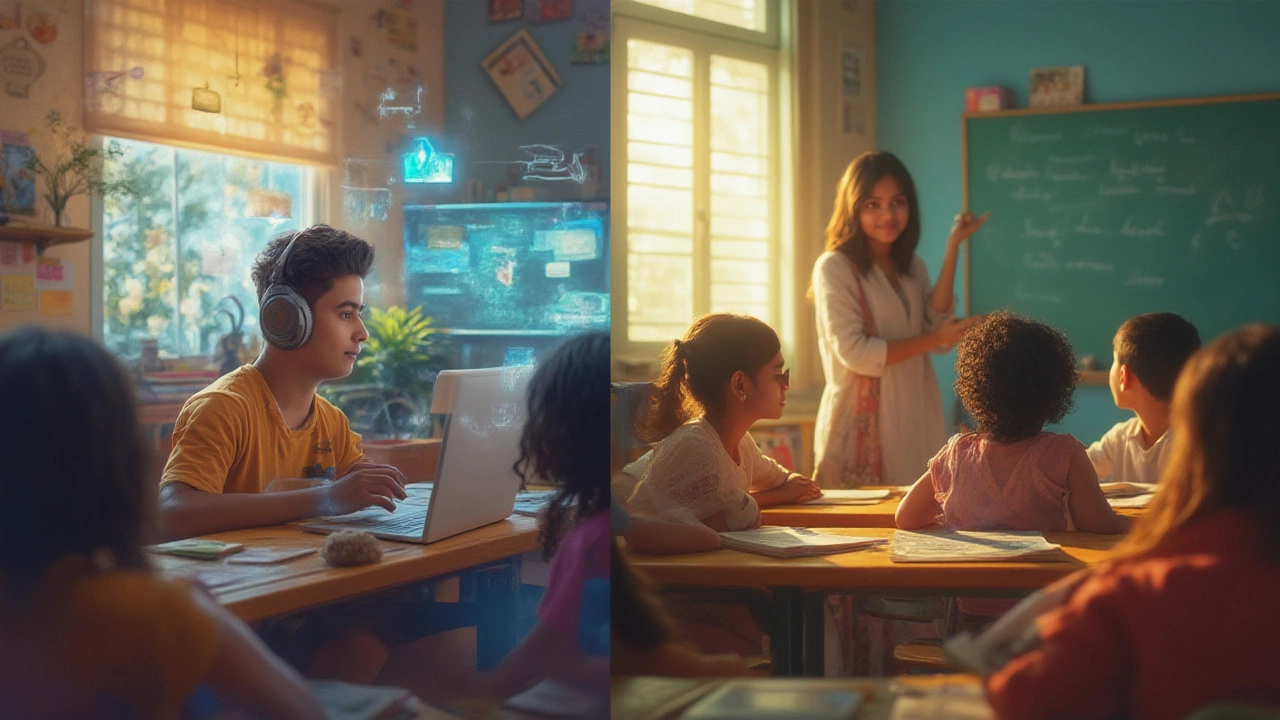
Distance Learning vs Classroom: Which Education Method Works Best in 2025?
Is distance learning really better than classroom teaching in 2025? Uncover the real advantages, drawbacks, and surprising facts about modern education choices.
view more