Vocational Career Path Finder
Not sure which trade is right for you? Answer a few quick questions to find your ideal high-paying vocational match for 2026.
Your Recommended Path: ...
Description will appear here.
Quick Guide: Top Career Picks
- Healthcare: Nursing and Dental Hygiene (Highest stability).
- Tech: Cybersecurity and Cloud Computing (Highest growth).
- Trades: Electricians and HVAC Techs (Highest demand).
- Creative: Digital Design and UX (Best for freelancers).
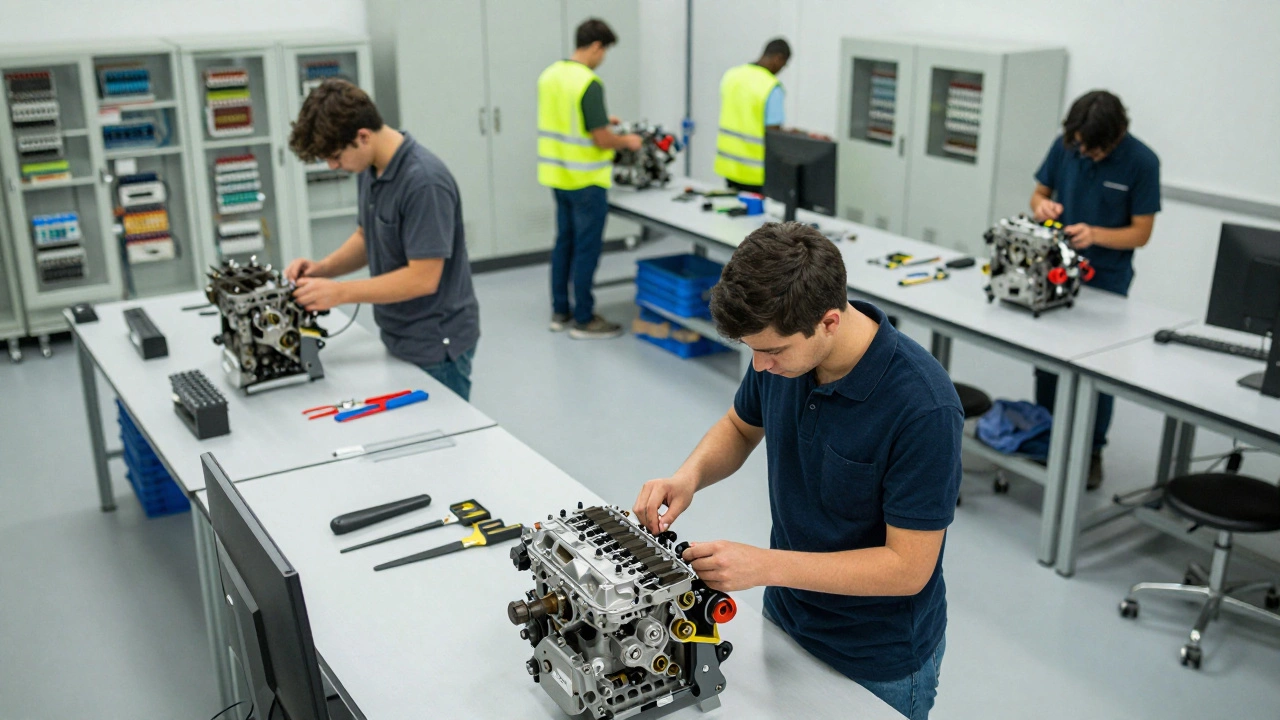
First, let's get the basics straight. Vocational Education is practical, skill-based training that prepares students for a specific trade, craft, or technical profession. Unlike academic degrees that focus on theory, vocational training focuses on "doing." It's the difference between reading a book about how an engine works and actually taking one apart in a workshop.
The Heavy Hitters: High-Demand Skilled Trades
If you like working with your hands and seeing a tangible result at the end of the day, the traditional trades are where the money is. We're seeing a massive "skills gap" because a generation of master tradespeople is retiring, and there aren't enough new recruits to replace them. This supply-and-demand imbalance means salaries are spiking.
Take Electricians is professionals who design, install, and maintain electrical systems in residential and industrial settings. With the global shift toward electric vehicles (EVs) and smart home integration, an electrician isn't just a guy with a wire stripper anymore; they're essentially energy consultants. In many regions, a licensed master electrician can easily outearn a corporate middle manager without ever stepping foot in a boardroom.
Then there's HVAC (Heating, Ventilation, and Air Conditioning). As global temperatures fluctuate and urban centers grow, climate control is no longer a luxury-it's a necessity. HVAC technicians handle complex thermodynamics and electronic controls. It's a hybrid of mechanical work and digital diagnostics, making it one of the most stable best vocational courses you can pursue.
| Trade | Training Duration | Key Skill | Growth Potential |
|---|---|---|---|
| Electrician | 2-5 Years | Circuitry & Safety | Very High (EV/Green Energy) |
| HVAC Tech | 1-2 Years | Refrigeration/Thermodynamics | High (Climate Change) |
| Welder | 6 Months - 2 Years | Metallurgy & Precision | Moderate (Infrastructure) |
| Plumber | 3-5 Years | Hydraulics & Piping | Very High (Essential Service) |
The Modern Shift: Tech-Based Vocational Paths
You don't need to get grease under your fingernails to be a "vocational" student. The digital world has created its own version of trades. These are highly specific, technical roles that require certifications rather than a broad liberal arts degree.
Consider Cybersecurity. It's not just about "hacking"-it's about defending critical infrastructure. A vocational path in cybersecurity focuses on network security, ethical hacking, and risk management. Instead of spending four years studying sociology and calculus, you spend eighteen months mastering tools like Wireshark and learning how to stop a ransomware attack in real-time. This is high-stakes work with immediate financial rewards.
Similarly, Cloud Computing has become a fundamental trade. Every company is moving its data to the cloud. Whether it's through AWS (Amazon Web Services) or Microsoft Azure, the demand for people who can actually build and maintain these virtual environments is astronomical. This is the digital equivalent of plumbing-you're managing the flow of data so the business doesn't crash.

Healthcare: The Recession-Proof Choice
If your priority is absolute job security, look at healthcare. People get sick regardless of whether the economy is booming or crashing. Vocational healthcare courses get you into the clinic faster than a full medical degree.
Registered Nursing (via an Associate Degree in Nursing) is a powerhouse. You get the clinical hours and the license to practice without the massive overhead of a BSN in some jurisdictions. You're on the front lines of patient care, and the ability to switch specialties-from pediatrics to emergency care-gives you incredible flexibility.
Another underrated gem is Dental Hygiene. It's a specialized role that focuses on preventative oral health and periodontal therapy. These programs are competitive, but once you're certified, you have a high hourly rate, set hours, and a very low stress environment compared to a hospital ER. It's an ideal balance of technical skill and lifestyle.
How to Actually Pick the Right Course
Don't just pick the one with the highest starting salary. A high salary in a job you hate is just a fancy way of being miserable. Ask yourself these three questions:
- Do I enjoy physical movement or sitting at a desk? If you can't stand the thought of a 9-to-5 office chair, avoid the tech paths. Go for HVAC or Electrical.
- How much debt can I realistically handle? Vocational courses are usually cheaper and shorter. If you want to be debt-free in two years, look for certifications or apprenticeships.
- Does the work require a high level of precision? Welders and Dental Hygienists need a steady hand and an eye for detail. If you're a "big picture" person who hates minutiae, you might struggle here.
One pro tip: look for "earn-while-you-learn" programs. An Apprenticeship is a gold standard. You get paid to learn the trade on the job, meaning you gain experience and a paycheck simultaneously. It's the ultimate hedge against student loan debt.

Common Pitfalls to Avoid
Not all vocational schools are created equal. Some are essentially "diploma mills" that charge huge fees for a certificate that employers don't recognize. Before you sign any contracts, check for industry accreditation. If a school claims you'll make six figures immediately after a six-week course, run the other way. Real skills take time to develop.
Another mistake is ignoring the "soft skills." You can be the best welder in the city, but if you can't communicate with a client or show up on time, you'll never grow your own business. The most successful vocational graduates are those who pair their technical expertise with basic business management and communication skills.
Are vocational courses looked down upon compared to degrees?
That old stigma is dying fast. In 2026, employers care more about what you can actually do than what piece of paper you have. With the shortage of skilled tradespeople, the "blue-collar" label has become a badge of high-earning potential. Many companies now prioritize certifications and portfolios over generic degrees.
Can I move from a vocational course into a management role?
Absolutely. In fact, some of the most successful business owners in construction and tech started as technicians. Once you master the trade, you can take short courses in project management or business administration to move into leadership. Having the actual technical skill makes you a much more respected manager.
How do I find the best accredited vocational school?
Look for programs that have direct partnerships with local companies. If a school has a high placement rate and a clear pipeline to employment, it's usually a good sign. Check for government-recognized certifications and talk to alumni to see if the training actually prepared them for the real-world demands of the job.
Which vocational course is easiest to start?
If you want a quick entry, IT certifications (like CompTIA A+) or basic welding certificates often have the shortest training windows. However, "easiest to start" doesn't always mean "best long-term." The courses that take slightly longer-like electrical or nursing-usually offer much higher stability and pay.
Is AI going to replace vocational trades?
AI is great at processing data, but it can't fix a burst pipe in a basement or rewire an old house. Physical, tactile work in unpredictable environments is the hardest thing to automate. While AI might help with diagnostics or design, the actual execution will require human hands for a long time.
Next Steps for Your Career Journey
If you're still undecided, start by shadowing someone. Reach out to a local electrician or a dental hygienist and ask if you can follow them for a day. You'll learn more in eight hours of real-world observation than in eight weeks of reading brochures.
If you're leaning toward tech, start with a free online module to see if you actually enjoy the logic of coding or networking. If you're leaning toward the trades, look for local apprenticeship portals. The goal is to test the water before you jump in. Your career is a marathon, not a sprint, and picking a path that aligns with your natural strengths is the only way to win.