
Self-Taught Developer Roadmap Tracker
Your Learning Path
0% CompleteCurrent Focus
Click on a step above to see detailed instructions and resources.
It’s 2 AM. You’ve been staring at a line of Python code that refuses to run for three hours. There is no teacher to ask, no classmate to compare notes with, and your motivation is hanging by a thread. This is the exact moment most people decide they can’t code on their own.
But here is the truth: thousands of developers today are completely self-taught. They didn’t attend bootcamps or get computer science degrees. They figured it out through grit, community, and smart resource management. The question isn’t whether you *can* code on your own-it’s whether you have the right strategy to survive the loneliness and confusion that comes with it.
The Reality of Learning Without a Classroom
When you remove the structure of a formal coding class, you gain freedom but lose accountability. In a traditional setting, deadlines force you to move forward. When you teach yourself, procrastination is your biggest enemy. You might spend weeks watching tutorials instead of writing actual code. This is known as "tutorial hell," where you feel productive because you’re consuming content, but you aren’t building anything.
However, self-teaching offers unique advantages. You can move at your own pace. If you understand loops in JavaScript quickly, you don’t have to wait for the rest of the class to catch up. If you struggle with data structures, you can pause and research until it clicks. This flexibility often leads to deeper understanding, provided you stay disciplined.
Step-by-Step Roadmap for the Self-Taught Developer
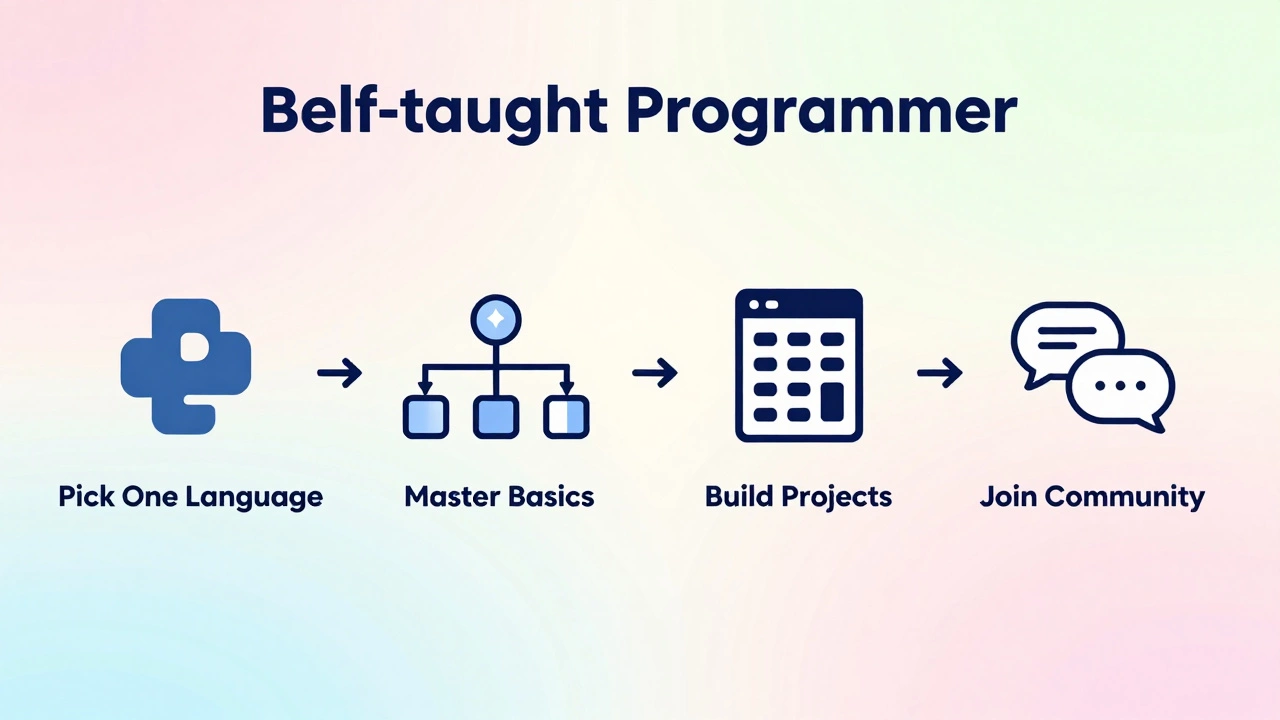
To succeed without a mentor, you need a structured plan. Randomly jumping between topics will leave you with fragmented knowledge. Here is a proven path:
- Pick One Language First: Don’t try to learn everything at once. Start with Python for beginners due to its readable syntax, or JavaScript if you want to see visual results on the web immediately.
- Master the Basics: Focus on variables, loops, conditionals, and functions. These concepts are universal across almost all programming languages.
- Build Tiny Projects: Stop watching videos after two weeks. Build a calculator, a to-do list, or a simple website. Breaking things is how you learn.
- Learn Version Control: Set up Git and create a GitHub account. This becomes your portfolio and proof of work.
- Join the Community: Isolation kills progress. Engage with forums like Stack Overflow or Reddit’s r/learnprogramming.
Essential Free Resources That Replace Paid Courses
You do not need to spend thousands of dollars to learn to code. The internet is flooded with high-quality, free materials that rival expensive bootcamps. The key is curation-choosing the right resources rather than hoarding them.
| Resource | Type | Best For |
|---|---|---|
| freeCodeCamp | Interactive Curriculum | Web development basics and certifications |
| The Odin Project | Full-Stack Pathway | Structured, project-based Ruby and JavaScript learning |
| MDN Web Docs | Documentation | Authoritative reference for HTML, CSS, and JavaScript |
| Harvard CS50 | University Course | Computer science fundamentals and problem-solving logic |
| Codecademy (Free Tier) | Interactive Exercises | Syntax practice and quick language introductions |
Overcoming the Biggest Hurdles in Self-Study
Self-teaching is mentally tough. You will face moments where you feel stupid. This is normal. Professional developers still Google basic syntax every day. The difference is that they know how to search for answers effectively.
Imposter Syndrome: You will look at other developers’ portfolios and feel inadequate. Remember that everyone starts somewhere. Compare yourself only to who you were last month, not to someone with five years of experience.
Debugging Frustration: When your code breaks, don’t panic. Read the error message carefully. It usually tells you exactly what went wrong. Learn to use browser developer tools or print statements to trace your code’s execution.
Lack of Feedback: Without a teacher, you might develop bad habits. To fix this, share your code online. Ask for code reviews on platforms like GitHub or Discord communities. Constructive criticism accelerates learning faster than solitary practice.
Building a Portfolio That Gets You Hired
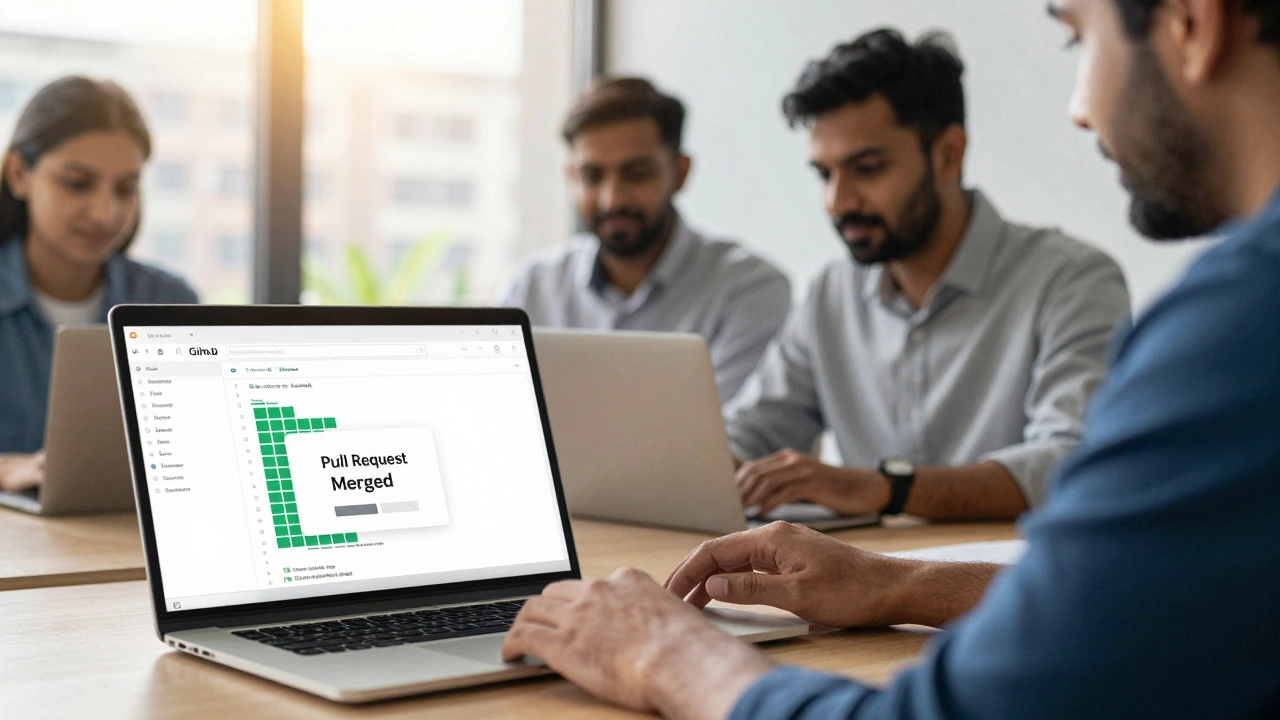
Employers care about what you can build, not how you learned it. Your portfolio is your strongest asset as a self-taught developer. It proves you can solve real problems.
- Quality Over Quantity: Three well-built projects are better than ten half-finished ones. Include a README file explaining what each project does and how to run it.
- Diverse Skills: Show variety. If you’re a web developer, include a static site, a dynamic app with a database, and an API integration.
- Open Source Contributions: Contributing to existing projects shows you can collaborate and read other people’s code-a crucial skill in any job.
When to Consider Supplementing with Classes
While you *can* code on your own, there are times when external help makes sense. If you hit a plateau where you can’t progress despite trying different resources, a short course or mentorship session can break through the block. Additionally, networking events or local meetups provide human connection that online forums cannot replicate. Think of these as supplements, not replacements, for your self-study routine.
Is it harder to get a job as a self-taught developer?
Not necessarily. Many companies prioritize skills and portfolio over degrees. However, you may need to work harder to prove your abilities during interviews. Focus on building a strong GitHub profile and practicing technical interview questions to level the playing field.
How long does it take to learn to code on my own?
It varies based on time commitment. With consistent daily practice (1-2 hours), you can build basic projects in 3-6 months. Reaching job-ready proficiency typically takes 6-12 months of dedicated study and project building.
Do I need a computer science degree to be a good programmer?
No. While CS degrees provide theoretical depth, many successful developers are self-taught. Practical experience and problem-solving skills often matter more in entry-level roles. You can always learn advanced theory later if needed.
What is the best first programming language for beginners?
Python is widely recommended for its simplicity and readability. JavaScript is also excellent if you are interested in web development. Choose based on your career goals: Python for data science/backend, JavaScript for frontend/web apps.
How do I stay motivated when learning alone?
Set small, achievable goals and celebrate milestones. Join online communities for accountability. Build projects that interest you personally. Remember why you started coding in the first place.