CBSE Study Strategy & Score Estimator
Fill in your preparation details to get a personalized study strategy and score estimate.
Choosing the right path within the Central Board of Secondary Education (CBSE) system isn't about picking a "better" syllabus from a list of options. It’s about understanding how the board structures its curriculum to balance foundational knowledge with modern skill sets. For students and parents navigating the Indian education landscape, the question often shifts from "which syllabus is best" to "how do we maximize the benefits of the current framework?" The answer lies in mastering the integration of NCERT textbooks, digital resources, and the new competency-focused assessment methods introduced in recent years.
The CBSE syllabus is not a static document; it evolves. In 2026, the focus is heavily on Competency-Based Education. This means rote memorization is losing ground to application-based learning. If you are looking for the "best" approach, it is one that aligns with this shift. Let’s break down what this actually looks like in practice, how to navigate the subjects, and why the traditional reliance on coaching materials might need a rethink.
Understanding the Core: NCERT as the Foundation
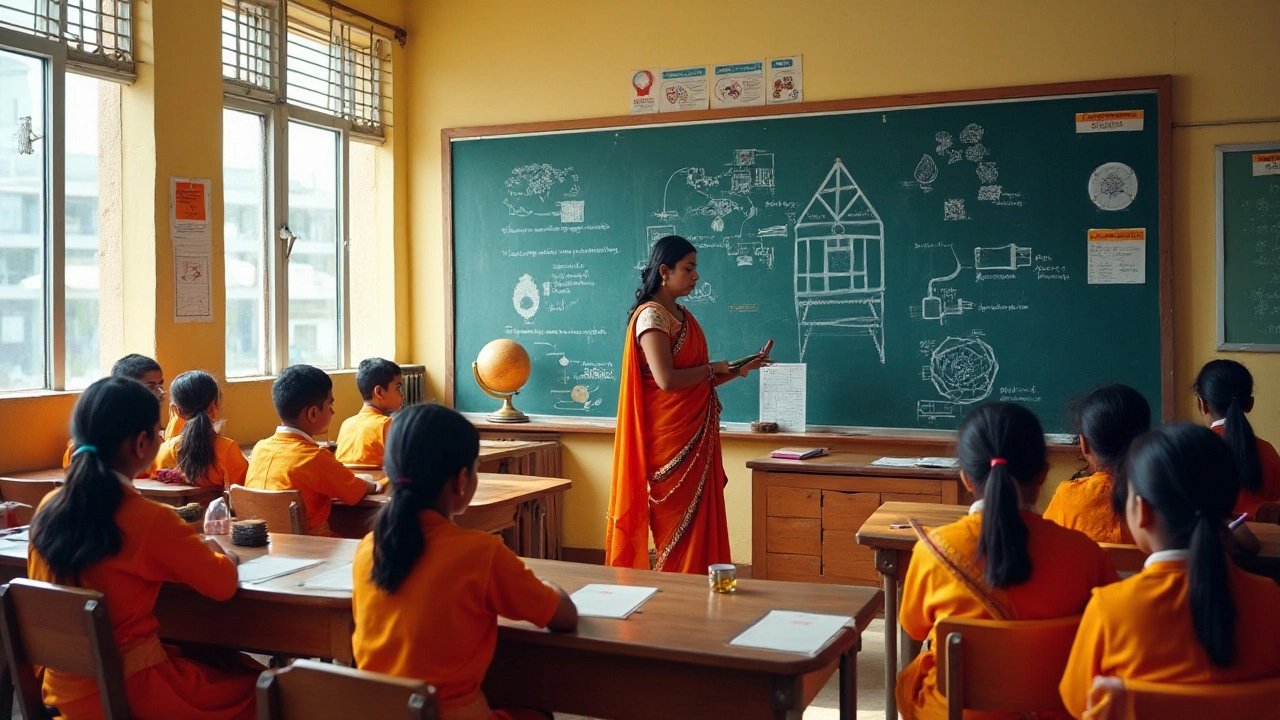
When people ask about the best syllabus, they are often confused by the sheer volume of supplementary material available online. The truth is simpler: the National Council of Educational Research and Training (NCERT) books are the gold standard. They are not just textbooks; they are the blueprint for the entire examination system. Every question in the Class 10 and Class 12 board exams is derived directly from these texts.
Why does this matter? Because deviating too early into advanced reference books can create gaps in conceptual clarity. Imagine building a house without checking the foundation. You might get fancy walls, but the structure will fail under pressure. For subjects like Science and Mathematics, the NCERT explanations provide the logical steps required to solve complex problems later. Skipping these basics leads to confusion when facing higher-order thinking questions.
- Read actively: Don’t just highlight text. Summarize each chapter in your own words.
- Solve exercises: Complete every single exercise at the end of the NCERT chapters before moving to other sources.
- Use diagrams: In Biology and Physics, drawing diagrams from the book helps visualize concepts better than reading descriptions.
The Shift to Competency-Based Learning
The biggest change in the CBSE ecosystem over the last few years is the move toward competency-based assessment. This is where many students struggle because they are still preparing for the old style of exams. The "best" strategy now involves practicing skills, not just facts.
What does this look like in an exam? Instead of asking "Define Newton's Second Law," a question might present a real-world scenario involving a car crash and ask you to calculate the force involved using specific variables. This requires you to apply knowledge, not recall it. To prepare for this, you need to engage with case studies and practical applications.
This shift also affects language subjects. English and Hindi papers now include more comprehension passages that test critical thinking and inference rather than grammar rules alone. Reading diverse content-news articles, short stories, and editorials-is no longer optional; it’s part of the syllabus preparation.
Subject-Specific Strategies for Success
Different subjects require different approaches within the same syllabus framework. Here is how to tackle the major categories effectively.
| Subject Category | Key Focus Area | Common Pitfall |
|---|---|---|
| Mathematics | Problem-solving speed and accuracy | Relying on formulas without understanding derivation |
| Science (Physics/Chem/Bio) | Conceptual links between topics | Memorizing definitions instead of understanding mechanisms |
| Social Science | Chronology and cause-effect relationships | Treating history and geography as separate silos |
| Languages (English/Hindi) | Reading comprehension and expression | Ignoring grammar nuances in writing sections |
In Mathematics, consistency is key. The syllabus covers Algebra, Geometry, Trigonometry, and Statistics. The best approach is daily practice. One hour of focused problem-solving beats five hours of passive reading. For Science, connect the dots. How does electricity relate to magnetism? How do chemical reactions impact biological systems? These connections are frequently tested in integrated questions.
Social Science requires a narrative approach. Treat History as a story with characters and events. Geography is about patterns and processes. Political Science is about systems and power dynamics. Economics is about choices and resources. When you understand the underlying logic, memorization becomes easier.

Digital Resources and AI Integration
In 2026, the definition of "syllabus" extends beyond paper textbooks. Digital platforms play a crucial role. The DIKSHA platform and other government-backed initiatives offer interactive lessons, simulations, and assessments. Ignoring these tools is missing out on half the preparation spectrum.
AI-driven tutoring apps can help identify weak areas quickly. If you consistently miss questions on Quadratic Equations, an AI tool can suggest targeted practice problems. However, use them wisely. They are supplements, not replacements for deep study. The goal is to use technology to personalize your learning path within the fixed CBSE framework.
Also, keep an eye on official updates. The CBSE website regularly releases circulars regarding exam patterns, marking schemes, and syllabus reductions or additions. Bookmarking the official site and checking it monthly ensures you are never caught off guard by changes.
Balancing Board Exams and Competitive Prep
A common dilemma for high-performing students is balancing CBSE board preparation with competitive exams like JEE or NEET. The good news is that the CBSE syllabus forms the perfect base for these exams. The NCERT concepts are identical to the foundational requirements for engineering and medical entrance tests.
The difference lies in depth and speed. Board exams test breadth and clarity; competitive exams test depth and speed. You don’t need two different syllabi. You need one strong foundation (CBSE/NCERT) and additional practice for higher-level problems. Trying to skip NCERT to jump straight into advanced coaching material is a recipe for disaster. Master the basics first, then expand.

Practical Tips for Effective Study Planning
Having the right syllabus is only half the battle. Execution matters more. Here are some practical tips to stay on track.
- Create a backward plan: Start from the exam date and work backward. Allocate time for revision, mock tests, and initial learning.
- Weekly reviews: Spend Sunday mornings reviewing what you learned the previous week. This reinforces memory retention.
- Mock tests: Take full-length mock tests under timed conditions. This builds stamina and helps manage anxiety during the actual exam.
- Health first: Sleep, nutrition, and exercise impact cognitive function. A tired brain learns slower and retains less.
Remember, the "best" syllabus is the one you engage with consistently. Perfection is not the goal; progress is. Small, daily improvements compound over time to produce excellent results.
Navigating Subject Choices and Electives
In Classes 11 and 12, students choose their streams: Science, Commerce, or Humanities. Each stream has core subjects and electives. The choice should align with career goals and personal strengths, not peer pressure.
If you are interested in engineering, Science with Mathematics is essential. For business careers, Commerce with Accountancy and Business Studies provides a solid foundation. Humanities offers diverse paths in law, media, and social sciences. Once chosen, stick to the plan. Switching streams mid-way disrupts learning continuity and adds unnecessary stress.
Elective subjects can boost your overall score if chosen strategically. Pick subjects where you have a natural interest or aptitude. A high score in an elective can compensate for moderate performance in a core subject, depending on the university admission criteria.
Is the CBSE syllabus difficult compared to other boards?
Difficulty is subjective. CBSE is known for its structured and comprehensive approach. While some find the volume of content challenging, others appreciate the clarity and alignment with national standards. Compared to state boards, CBSE often has a more rigorous evaluation process. Compared to IGCSE, it is more theory-heavy but less flexible in subject choices.
Can I rely solely on NCERT books for CBSE exams?
For most subjects, especially Science and Mathematics, NCERT is sufficient for scoring well. However, for competitive exams or deeper understanding, supplementary guides may be helpful. Always prioritize NCERT first. Only move to other books after mastering the textbook content completely.
How has the CBSE exam pattern changed recently?
The exam pattern now includes more competency-based questions, case studies, and source-based questions. There is a reduced emphasis on rote memorization and increased focus on application and analysis. Practical internal assessments also carry significant weightage in the final grade.
What is the role of digital tools in CBSE preparation?
Digital tools like DIKSHA, Khan Academy, and AI tutors provide interactive learning experiences, instant feedback, and personalized practice. They complement traditional study methods by offering visualizations and simulations that make complex concepts easier to grasp. However, they should supplement, not replace, textbook study.
How do I balance CBSE boards with JEE/NEET preparation?
Start with NCERT for both. Build a strong conceptual foundation through CBSE materials. Then, add advanced problem-solving practice for JEE/NEET. Use weekends for intensive competitive exam prep and weekdays for maintaining board syllabus coverage. Regular mock tests for both types of exams help manage time and stress effectively.