
You’ve probably seen those bold claims online: "Speak English in 30 days" or "Master the language in just 90 hours." It’s tempting, isn’t it? We all want a shortcut. But here is the hard truth: there is no single number of days that applies to everyone. If someone tells you they will guarantee fluency in a specific timeframe, they are likely selling you a dream rather than a method.
So, how long does it actually take? For most adult learners aiming for professional-level fluency, the answer is usually between two to five years of consistent study. This might sound discouraging, but it depends entirely on what you define as "fluency," your native language, and how many hours you dedicate daily. Let’s break down the reality behind the hype so you can set a realistic goal for yourself.
Defining "Fluency": What Are You Actually Trying to Achieve?
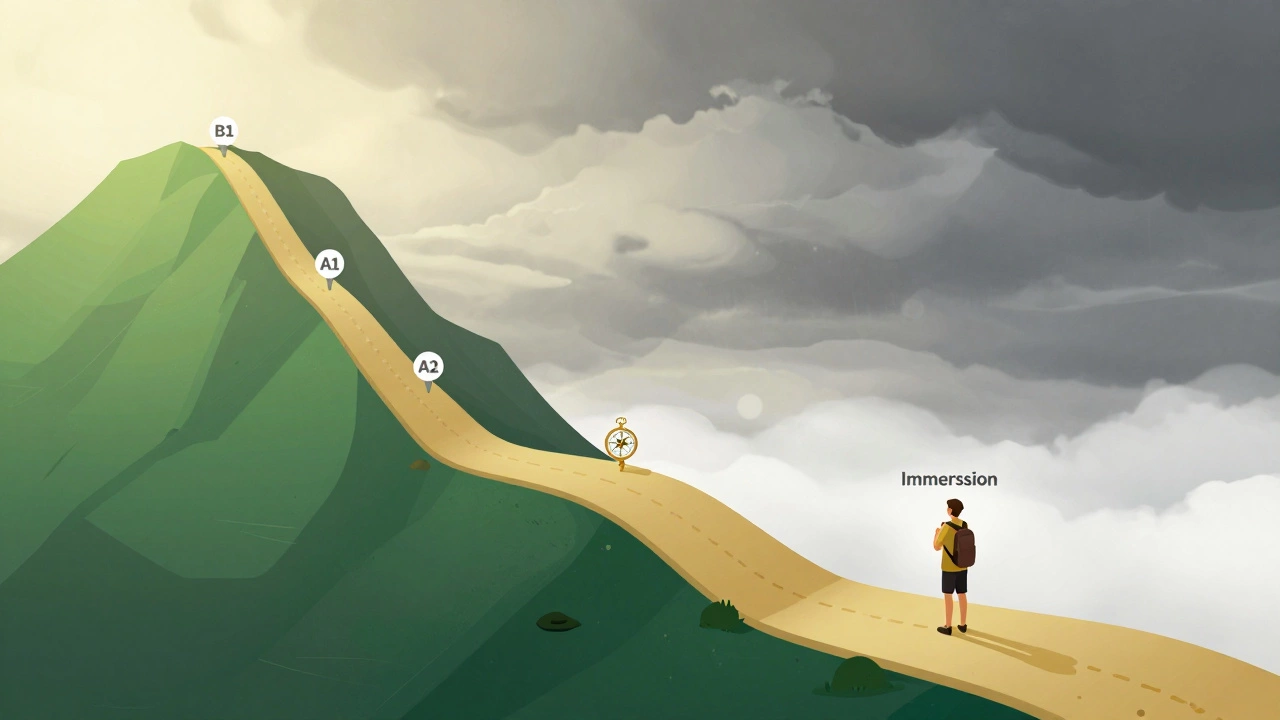
Before we talk about time, we need to talk about targets. "Fluency" is a vague word. To one person, it means ordering coffee without stuttering. To another, it means debating policy at a United Nations conference. In the world of language education, we use the Common European Framework of Reference for Languages (CEFR) to measure progress. This framework divides proficiency into six levels, from A1 (beginner) to C2 (mastery).
If your goal is B2 Level, you can hold a conversation with native speakers without strain for either party. You can understand complex texts and produce clear, detailed text on a wide range of subjects. Most people consider this "professional fluency." Reaching B2 typically takes around 600 to 750 guided learning hours.
If you aim for C1 or C2 Level, you are looking at near-native capability. You can understand implicit meaning, use the language flexibly for social, academic, and professional purposes, and express yourself spontaneously. This level requires an additional 400 to 600 hours of study. That brings the total to over 1,000 hours. Doing the math, if you study two hours a day, reaching C1 could take nearly two years. If you study four hours a day, you might cut that in half.
The Cambridge English Study Time Estimates
We don’t have to guess these numbers. Cambridge Assessment English, a leading authority in language testing, provides estimated study times based on extensive research. These estimates assume you are studying in a classroom setting with additional self-study. Here is a rough breakdown of the hours required to move from one level to the next:
- A1 (Breakthrough): 70-100 hours. You can understand and use familiar everyday expressions and very basic phrases.
- A2 (Waystage): 100-180 hours. You can communicate in simple and routine tasks requiring a direct exchange of information.
- B1 (Threshold): 150-250 hours. You can deal with most situations likely to arise while traveling in an area where the language is spoken.
- B2 (Vantage): 200-300 hours. You can interact with a degree of fluency and spontaneity that makes regular interaction with native speakers possible.
- C1 (Effective Operational Proficiency): 200-300 hours. You can express yourself fluently and spontaneously without much obvious searching for expressions.
- C2 (Mastery): 200-300 hours. You can understand with ease virtually everything heard or read.
Notice that the jump from B1 to B2 is significant. This is often called the "intermediate plateau." Many learners get stuck here because they feel they aren’t improving fast enough. The key to breaking through is immersion and active usage, not just passive study.
Factors That Speed Up or Slow Down Your Progress
Your personal timeline will vary wildly based on several key factors. Understanding these helps you adjust your expectations and strategy.
1. Your Native Language
If you speak Spanish, Italian, or French, you already share a massive vocabulary base with English due to Latin roots. You might reach B2 significantly faster than someone whose native language is Mandarin, Japanese, or Arabic. The Foreign Service Institute (FSI) categorizes languages by difficulty for English speakers. Category I languages (like Dutch or Swedish) are easier, while Category IV and V languages (like Chinese or Arabic) require nearly three times as many hours to reach proficiency. While FSI focuses on English speakers learning other languages, the principle works both ways: linguistic distance matters.
2. Age and Neuroplasticity
Children absorb languages effortlessly because their brains are wired for pattern recognition. Adults, however, have better analytical skills and discipline. While you might never lose an accent completely, adults can often grasp grammar rules faster than children. Don’t let age discourage you; consistency beats natural talent every time.
3. Immersion vs. Classroom Learning
Living in an English-speaking country like Australia, the UK, or the US accelerates learning dramatically. You are forced to use English for survival-buying groceries, asking for directions, making friends. This is known as Comprehensible Input. If you are studying in a non-English speaking environment, you must create artificial immersion. Change your phone language, watch movies without subtitles, and find language partners online.
4. Consistency Over Intensity
Studying for ten hours once a week is far less effective than studying for one hour every day. Language acquisition relies on memory consolidation, which happens during sleep. Daily exposure keeps the neural pathways active. Think of it like going to the gym: showing up daily with moderate effort builds muscle better than one massive workout on Sunday.
A Realistic Roadmap: From Zero to Fluent
Let’s map out a practical plan. Assume you are starting from scratch (A0) and aiming for B2 (Professional Fluency). Let’s say you can dedicate 1.5 hours a day to focused study and practice.
| Level | Hours Needed | Time to Reach (Months) | Key Activities |
|---|---|---|---|
| A1 | 100 | ~2.5 months | Basic vocabulary, pronunciation drills, simple apps (Duolingo/Babbel) |
| A2 | 180 | ~4 months | Simple conversations, listening to podcasts for beginners, reading graded readers |
| B1 | 250 | ~5.5 months | Talking with tutors (iTalki/Preply), watching TV shows with subtitles, journaling |
| B2 | 300 | ~6.5 months | Debating topics, consuming native content without subtitles, professional writing |
| Total | 830 | ~18.5 months | Consistent daily practice |
This timeline assumes steady progress without major breaks. If you increase your daily study time to 3 hours, you could potentially halve this period. However, burnout is real. Find a rhythm you can sustain for years, not just weeks.
Common Mistakes That Delay Fluency
Many learners spend years stuck at the same level. Why? Usually, it’s because of these common pitfalls:
- Perfectionism: Waiting until your grammar is perfect before speaking. This is counterproductive. Communication comes first; accuracy follows. Make mistakes. They are data points for improvement.
- Passive Learning Only: Watching Netflix doesn’t make you fluent unless you actively analyze the dialogue, repeat phrases, and try to use them. Passive input is good, but active output is essential.
- Ignoring Pronunciation Early On: If you learn words with incorrect pronunciation, unlearning them later is twice as hard. Use tools like Shadowing Technique early in your journey. Listen to a native speaker and repeat immediately, mimicking their intonation and speed.
- Switching Methods Constantly: Jumping from one app to another every month prevents deep learning. Stick to a core curriculum for at least three months before evaluating its effectiveness.
How to Accelerate Your Learning Naturally
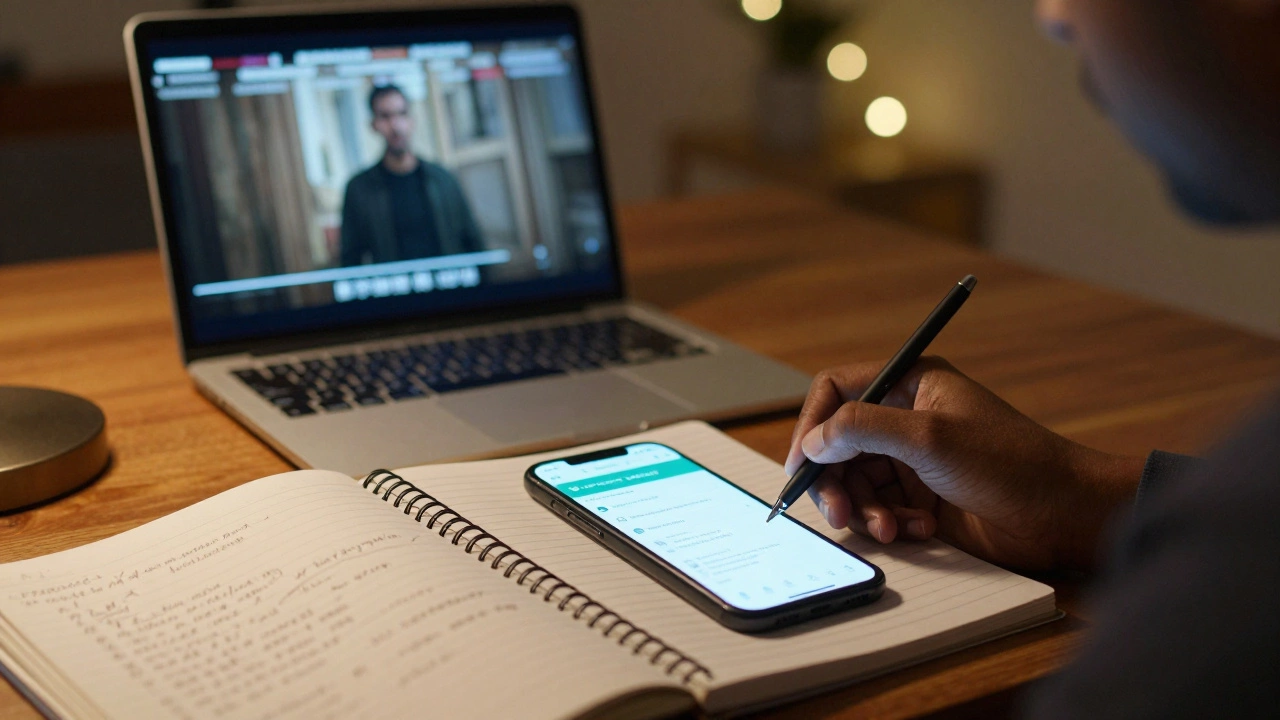
If you want to shave months off your timeline, focus on high-impact activities. The Pareto Principle (80/20 Rule) applies heavily to language learning. The top 1,000 most frequent words in English make up about 75% of everyday conversation. Master these first.
Engage in Spaced Repetition Systems (SRS) like Anki for vocabulary retention. Instead of cramming, review words at increasing intervals. This leverages the psychological spacing effect to move information from short-term to long-term memory efficiently.
Find a language exchange partner. Platforms like Tandem or HelloTalk connect you with native speakers who want to learn your language. Regular conversation forces your brain to process English in real-time, building the neural speed required for fluency.
Conclusion: It’s a Marathon, Not a Sprint
So, back to the original question: How many days will it take to speak English fluently? If you define fluency as B2 level, expect roughly 600-750 hours of work. At two hours a day, that’s about 18 to 30 months. If you immerse yourself fully, you might do it in 6 to 12 months. There is no magic pill, but there is a proven path.
Start today. Be consistent. Embrace the awkward phases. Fluency isn’t about knowing every word in the dictionary; it’s about connecting with others effectively. The sooner you start speaking, even imperfectly, the sooner you’ll reach that milestone.
Can I become fluent in English in 3 months?
Reaching true fluency (B2/C1) in 3 months is extremely unlikely for most adults unless you are immersing yourself full-time (8+ hours a day) and already have a strong foundation in a related language. However, you can reach a functional conversational level (A2/B1) in 3 months with intense, focused study. Set realistic goals: aim for communication first, perfection later.
Is it too late to learn English if I am over 30?
Absolutely not. While children may acquire accents more easily, adults often learn grammar and vocabulary faster due to better cognitive strategies and discipline. Many successful professionals learn English fluently in their 30s, 40s, and beyond. The key is consistency and overcoming the fear of making mistakes.
What is the difference between B2 and C1 English?
At B2 level, you can handle most social and professional interactions comfortably. At C1 level, you can understand implicit meanings, nuance, and humor. You can write complex essays and speak spontaneously without pausing to search for words. C1 is often required for university admission or high-level corporate roles in English-speaking countries.
Do I need to live in an English-speaking country to become fluent?
No, but it helps. You can achieve fluency anywhere by creating an "immersion bubble." Use English-only media, join online conversation clubs, hire online tutors, and change your digital environments to English. Active engagement is more important than physical location.
How many hours a day should I study to see results?
Even 30 minutes a day is better than nothing. For noticeable progress within a year, aim for 1-2 hours of focused practice daily. Quality matters more than quantity: active speaking and listening exercises are more valuable than passive reading or memorizing lists.