
10-Day English Speaking Challenge Tracker
Your 10-Day English Fluency Challenge
Track your daily practice and monitor your progress toward English fluency
Daily Practice Log
Daily Challenge Guide
Day 1
Start by changing your digital environment. Switch your phone language to English. Follow English-speaking influencers on social media. Watch English cooking shows or tech reviews relevant to your interests.
Day 2
Continue immersive listening. Focus on understanding connected speech. Listen to podcasts designed for learners, but also native content. Write down phrases you hear, not just single words.
Day 3
Intensify your listening with varied content. Try to catch the intonation patterns. Practice shadowing with a short clip. Record yourself reading a paragraph and compare to the original audio.
Day 4
Begin output practice. Start with shadowing technique. Find a video clip of a speaker you like. Listen to a sentence, pause, and repeat it exactly as they said it.
Day 5
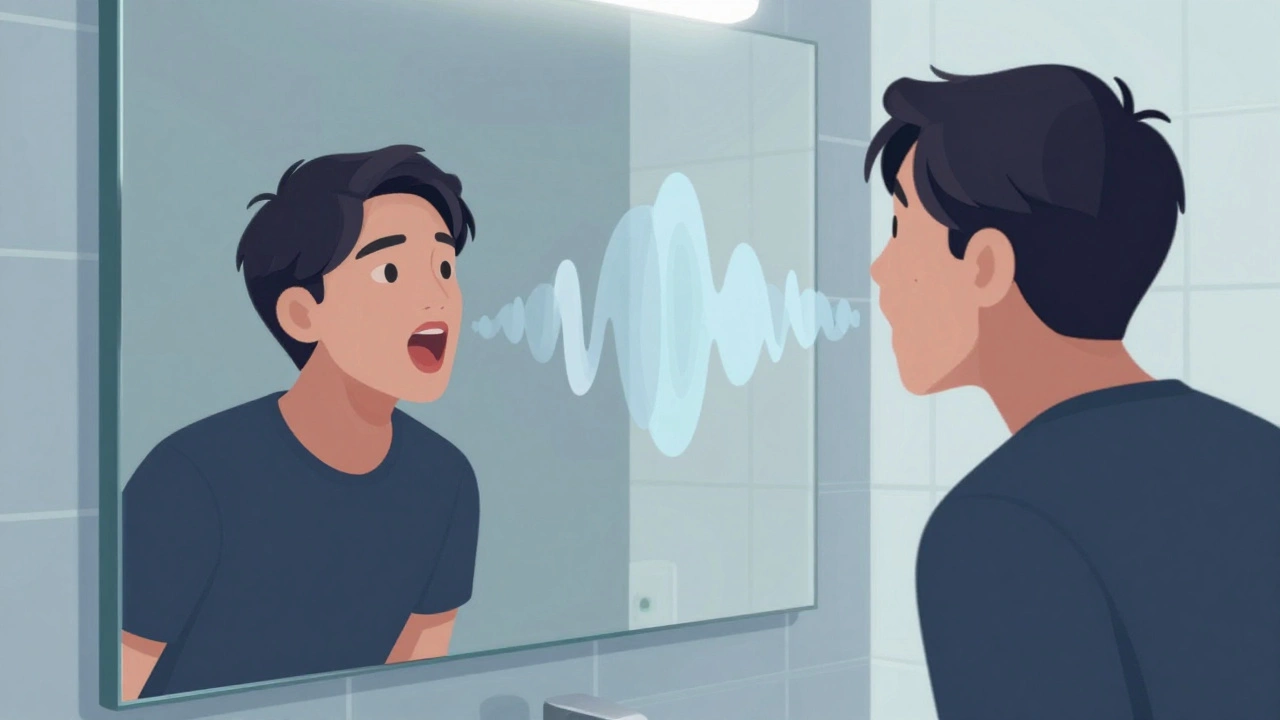
Practice shadowing for 20 minutes every morning. Record a 2-minute voice note summarizing your day. Speak to your reflection in the mirror for 10 minutes.
Day 6
Continue shadowing practice. Learn 5 new phrases daily and use them in sentences. Narrate your day out loud in English.
Day 7
Practice speaking for five minutes straight about your daily routine without stopping. Focus on pronunciation of challenging sounds like "th" in "think," "this," and "that."
Day 8
Find a language partner. Join an online community or local meetup group. Hold a conversation for at least 15 minutes without switching to your native language.
Day 9
Practice real conversations with native speakers. Ask them to correct your mistakes. Use hand gestures or synonyms when you get stuck. Keep the flow going.
Day 10
Hold a conversation for at least 15 minutes without switching languages. Ask for clarification when needed. You will still make grammar errors, but you won't be paralyzed by fear.
Progress Summary
Total time spent
Daily consistency
Daily tasks completed
You have heard the promise before. Ten days. That is all it takes to master a new language. It sounds incredible, right? But here is the truth: you cannot learn to English fluency is the ability to express ideas smoothly and accurately in English. in a week without years of study. However, you can make massive strides in your confidence and ability to communicate. This plan is not about magic. It is about intensity. If you commit to a strict routine, you can change how you speak English by the time the clock strikes Day 10.
The Reality of Rapid Language Improvement
Before we start the countdown, we need to align our expectations. True fluency takes years of immersion and practice. What we are aiming for here is functional communication. Think of it as an emergency bootcamp. You will not sound like a native speaker from London or New York after ten days. Instead, you will break the silence. You will stop translating in your head. You will learn to handle common conversations without freezing up.
Many people fail because they treat learning like a hobby. They watch a video once and expect results. To succeed in this 10-day sprint, you need to treat English like your job. You need to spend at least three to four hours every single day on this. If you cannot commit that time, the timeline will need to stretch. But if you are ready to prioritize this above your Netflix binge or social media scrolling, let's look at the roadmap.
Days 1 to 3: Immersion and Input
The first three days are about flooding your brain with the sounds and rhythms of the language. You cannot output what you have not input. Most learners skip this because they are too eager to talk. That is a mistake. Your ears need to tune into the specific frequencies of English before your mouth can mimic them.
Start by changing your digital environment. Switch your phone language to English. Follow English-speaking influencers on social media who talk about topics you enjoy. If you like cooking, watch English cooking shows. If you like tech, watch tech reviews. This makes the input relevant. Boring textbooks kill motivation. Real content keeps you engaged.
During this phase, focus heavily on listening. You need to understand connected speech. Native speakers do not say "I am going to." They say "I'm gonna." You need to hear the contractions. Listen to podcasts designed for learners, but also listen to native content. Try to catch the intonation. Does the voice go up at the end of a question? Does it drop when stating a fact? Write down phrases you hear, not just single words. Context is key.
- Listen to 1 hour of English podcasts daily.
- Watch 30 minutes of English YouTube videos with subtitles.
- Read one news article in English every morning.
- Record yourself reading a short paragraph and compare it to the original audio.
Days 4 to 7: Output and Shadowing
Now it is time to move your mouth. The most effective technique for this is the Shadowing Technique is a method where you repeat speech immediately after hearing it to improve pronunciation and rhythm.. This is not just repeating words. It is mimicking the emotion, the speed, and the pauses. Find a video clip of a speaker you like. Listen to a sentence. Pause. Repeat it exactly as they said it. Then try to say it while they are speaking.
This feels awkward at first. Your brain will tell you to stop. Do not listen to it. You are training your muscles. Speaking a new language is a physical skill, like playing an instrument. You need to build muscle memory. Focus on the sounds that do not exist in your native language. For many learners, the "th" sound is difficult. Practice words like "think," "this," and "that" until your tongue stops feeling clumsy.
Start talking to yourself. It sounds silly, but it works. Narrate your day. "I am making coffee. The water is hot." This removes the pressure of an audience. You can make mistakes without anyone judging you. By Day 7, you should be able to speak for five minutes straight about your daily routine without stopping to think about grammar.
- Practice shadowing for 20 minutes every morning.
- Record a 2-minute voice note summarizing your day.
- Speak to your reflection in the mirror for 10 minutes.
- Learn 5 new phrases daily and use them in sentences.
Days 8 to 10: Real Conversation and Feedback
The final three days are about testing your skills in the real world. You need human interaction. You can practice alone for weeks, but real conversation throws curveballs. People interrupt. They speak fast. They use slang. You need to get used to this chaos.
Find a language partner. There are many apps where you can chat with native speakers. Look for a Language Exchange is a partnership where two people teach each other their native languages.. Tell them you are doing a 10-day challenge. Ask them to correct your mistakes. Do not be defensive. When someone corrects you, say "thank you" and try to say the sentence correctly again immediately.
Join an online community or a local meetup group. If you are in a city, there are often free conversation clubs. If you are remote, join a Discord server or a forum. The goal is to hold a conversation for at least 15 minutes without switching to your native language. If you get stuck, use hand gestures. Use synonyms. Do not stop. Keep the flow going.
By Day 10, you should feel a shift. You will still make grammar errors. That is normal. But you will not be paralyzed by fear. You will know how to ask for clarification. You will know how to keep a conversation alive. That is the definition of fluency for this stage.
Essential Tools for Speed
You do not need expensive courses to improve quickly. You need the right tools. First, use a dictionary app that gives you audio pronunciation. Do not just read the word. Listen to it. Second, use a grammar checker. It helps you see patterns in your mistakes. Third, use a timer. Timeboxing your practice ensures you stay focused.
There are also speech recognition tools available now. You can speak into your phone and see if the device understands you. If Siri or Google Assistant cannot understand you, a human probably won't either. This gives you instant feedback on your clarity. Use these tools daily to track your progress.

Overcoming the Mental Block
The biggest barrier is not grammar. It is fear. You are afraid of sounding stupid. You are afraid of being judged. You need to accept that mistakes are part of the process. Every native speaker made mistakes when they were learning. Even the best speakers stumble over words sometimes.
Change your mindset. You are not trying to be perfect. You are trying to be understood. Communication is about connection, not perfection. If you make a mistake and the other person understands you, you succeeded. Celebrate small wins. Did you order food in English? Did you introduce yourself? That is progress. Keep a journal of these wins to stay motivated.
Frequently Asked Questions
Can I really learn English in 10 days?
You cannot become fully fluent in 10 days, but you can significantly improve your confidence and basic speaking ability. This plan focuses on rapid functional improvement rather than mastery.
What is the best way to practice speaking alone?
The Shadowing Technique is highly effective. You repeat audio clips immediately after hearing them to mimic pronunciation and rhythm. Narrating your daily actions also helps build confidence.
Do I need a teacher for this plan?
A teacher is helpful for feedback, but not strictly necessary for the first 10 days. You can use language exchange apps and self-recording to get corrections and practice speaking.
How many hours should I study daily?
For rapid results, aim for 3 to 4 hours of focused practice daily. This includes listening, speaking, reading, and writing activities to ensure comprehensive exposure.
What if I make mistakes while speaking?
Mistakes are essential for learning. Focus on being understood rather than being perfect. Ask partners to correct you gently so you can learn from errors in real-time.