IIT vs Harvard: Admissions Difficulty Calculator
Compare the statistical odds and nature of difficulty between entering a top Indian Institute of Technology (IIT) and Harvard University based on applicant pool size and selection stages.
You’ve probably heard the myth: getting into an IIT is harder than getting into Harvard University. It’s a common bragging point in Indian households and a frequent topic on social media. But does the data actually support this claim? The short answer is no, not if you look at the raw numbers. However, the *nature* of the difficulty is completely different. One tests your ability to solve problems under extreme pressure; the other evaluates your entire life story.
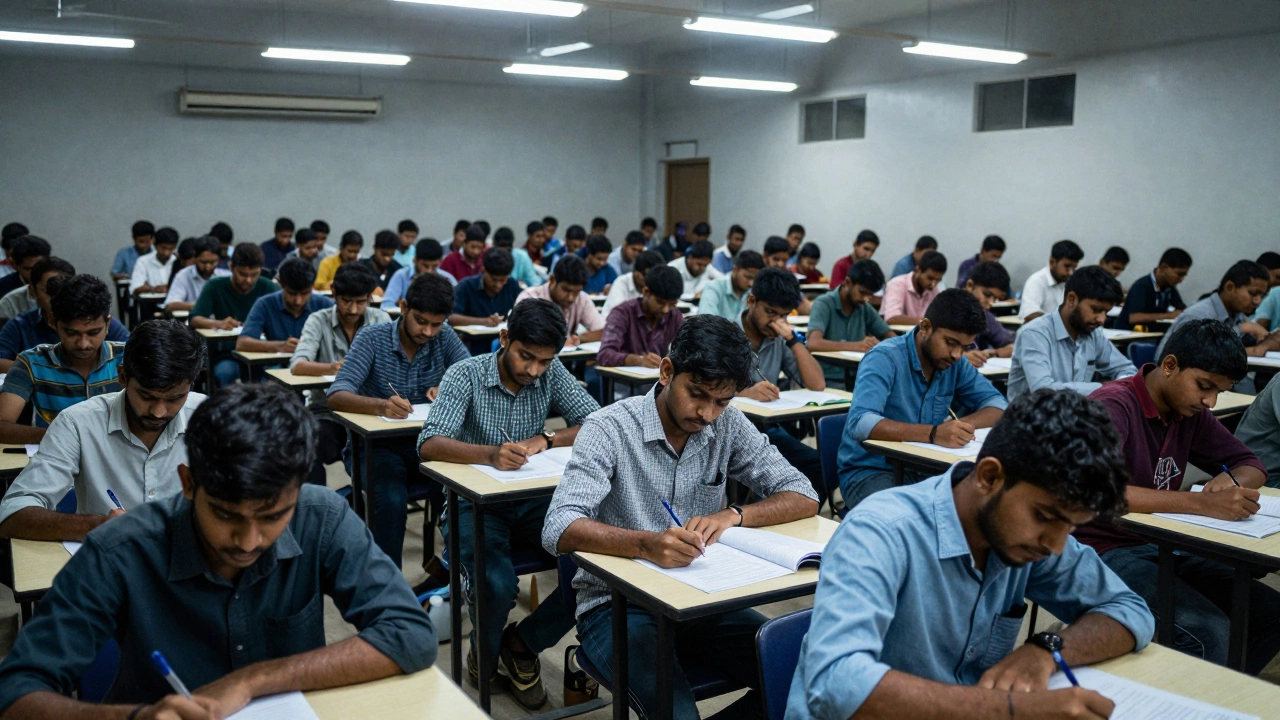
To understand why people think IIT is tougher, we have to look at the funnel. For millions of students in India, the dream is to enter one of the seven original Indian Institutes of Technology (IITs), specifically the top three: Bombay, Delhi, or Kanpur. These institutes are the gatekeepers to elite engineering jobs in India. The barrier to entry is the JEE Advanced exam. This isn’t just a test; it’s a two-stage filter that eliminates 99.9% of candidates before they even see the final question paper.
The Numbers Game: Acceptance Rates Don't Tell the Whole Story
Let’s look at the statistics first, because that’s where the "Harvard is easier" argument usually starts. In recent years, Harvard University has accepted roughly 3-4% of its applicants. That sounds incredibly low. Now, look at IIT Bombay. If you consider only those who qualify for the JEE Advanced stage, the acceptance rate might look similar or even higher. But here is the catch: the pool for Harvard is global, and many applicants are well-prepared. The pool for JEE Main (the first stage) includes over 1 million students from across India, many of whom come from rural areas with limited resources.
The real metric isn’t the acceptance rate of the final exam. It’s the drop-off rate. Out of 1.2 million students who attempt JEE Main, only about 250,000 qualify for JEE Advanced. Of those 250,000, only around 15,000 get seats in all IITs combined. So, the effective competition ratio for a top IIT seat is closer to 1 in 80 among qualified candidates, but 1 in 80,000 among all aspirants. Harvard doesn’t have this multi-layered elimination process. You apply once. You either get in, waitlisted, or rejected. There is no preliminary round that wipes out 80% of the field based on a single standardized test score.
| Feature | IIT (Top Colleges) | Harvard University |
|---|---|---|
| Applicant Pool Size | ~1.2 Million (JEE Main) | ~60,000 - 70,000 |
| Selection Stages | Two (JEE Main + JEE Advanced) | One (Holistic Review) |
| Primary Selection Criteria | Exam Rank (Merit-based) | Holistic (Grades, Essays, Activities) |
| Geographic Scope | National (India) | Global |
| Effective Competition Ratio | 1 in 80,000 (All Aspirants) | 1 in 20 (All Applicants) |
The Nature of Difficulty: Standardized Test vs. Holistic Profile
So, if Harvard has more applicants per seat, why do Indians feel IIT is harder? It comes down to control. With JEE Advanced, the criteria are objective. You solve the problem, you get the marks. There is no bias, no favoritism, and no room for interpretation. The difficulty lies in the sheer volume and complexity of the questions. You need to master Physics, Chemistry, and Mathematics to a level that exceeds most undergraduate curricula worldwide. The mental stamina required to sit for two long shifts of exams, solving tricky problems while managing time, is grueling.
Harvard, on the other hand, uses a holistic admission process. They don’t just care about your SAT or ACT scores. They want to know who you are. Did you start a non-profit? Are you a national-level violinist? Do you have leadership qualities? This introduces a different kind of difficulty: the ambiguity of success. You can have perfect grades and still be rejected because the admissions committee already has enough students with perfect grades. They are looking for diversity, unique stories, and potential impact. For a student used to the clear-cut rules of the Indian education system, this lack of transparency feels unfair and therefore "harder." But statistically, it is less competitive in terms of raw numbers.

Academic Rigor: What Happens After You Get In?
Getting in is only half the battle. Many students assume that because IIT is harder to enter, the academics must be harder too. Is that true? Not necessarily. Harvard University offers a broader, more liberal arts-focused curriculum. Students are encouraged to explore multiple disciplines. The workload is heavy, but there is flexibility. You can switch majors, take electives in philosophy or art, and balance your schedule.
In contrast, the B.Tech program at IITs is highly structured and specialized. Once you choose Computer Science or Mechanical Engineering, you are locked into a rigorous technical track. The pace is relentless. Semesters are packed with labs, assignments, and mid-term exams. The dropout rate in the first year at some IITs can be significant, often around 10-15%, due to the inability to cope with the academic pressure. At Harvard, the culture supports exploration and mental well-being more explicitly, though the stress levels are still high. The difference is that IIT demands technical precision and speed, while Harvard demands critical thinking and breadth.
The Coaching Culture: A Unique Pressure Cooker
We cannot talk about IIT without mentioning the coaching industry. Cities like Kota in Rajasthan have become hubs for JEE preparation. Students leave their homes at age 15 or 16 to live in hostels and study 14-16 hours a day. This creates a hyper-competitive environment that is unique to India. The psychological toll is immense. Burnout, anxiety, and depression are common among aspirants. This societal pressure makes the journey feel infinitely harder than applying to Harvard, where students typically prepare through school counselors and extracurricular activities rather than industrial-scale test prep factories.
This coaching ecosystem adds a layer of difficulty that doesn’t exist in the US system. In the US, wealthier students have access to better schools and tutors, which critics argue gives them an advantage. In India, the coaching system democratizes knowledge to some extent-a poor student from a village can succeed if they have talent and hard work. But the cost is their childhood. The "difficulty" of IIT is thus not just academic; it is emotional and physical.

Global Recognition and Career Outcomes
Why does this comparison matter? Because it affects career trajectories. An IIT degree opens doors primarily in India and increasingly in tech companies globally. Top recruiters like Google, Microsoft, and Amazon hire heavily from IITs. The brand value is strong within the engineering and technology sectors. However, outside of STEM fields, the recognition drops significantly.
A Harvard degree carries weight everywhere. Whether you want to go into finance, politics, law, or medicine, the Harvard name provides immediate credibility. The alumni network is vast and influential globally. If your goal is to lead in non-technical roles or work internationally in diverse fields, Harvard offers a clearer path. If you want to be a top-tier engineer or entrepreneur in the tech space, IIT is arguably superior due to its focus on practical problem-solving and strong peer networks in the startup ecosystem.
Which One Should You Aim For?
It depends on your strengths and goals. If you excel in mathematics and physics, enjoy solving complex logical puzzles, and thrive under strict deadlines, the IIT route might suit you. It rewards pure intellectual horsepower and discipline. If you are a well-rounded individual with strong communication skills, leadership experience, and a passion for interdisciplinary learning, Harvard’s holistic approach will allow you to shine. Remember, comparing these two institutions is like comparing apples and oranges. One is a specialized engine for producing world-class engineers; the other is a broad platform for developing future leaders across all fields.
Don’t let the myths dictate your choices. Both paths require exceptional effort, but they demand different kinds of effort. Choose the one that aligns with how you learn and what you want to achieve in life.
Is JEE Advanced harder than SAT?
Yes, academically speaking, JEE Advanced is significantly harder than the SAT. The SAT tests general aptitude in math and reading, while JEE Advanced requires deep conceptual understanding and advanced problem-solving skills in Physics, Chemistry, and Mathematics that are comparable to undergraduate level.
Can I apply to Harvard after graduating from IIT?
Absolutely. Many IIT graduates apply to Harvard for MBA programs or Master's degrees. Having an IIT background demonstrates strong analytical skills, which is viewed positively by Harvard admissions committees, especially for quantitative fields.
Why is the dropout rate high in IITs?
The high dropout rate, particularly in the first year, is due to the intense academic rigor, the sudden shift from rote learning to conceptual application, and the psychological pressure of being in a hyper-competitive environment. Many students struggle to adapt to the fast-paced curriculum.
Does Harvard accept students based only on grades?
No, Harvard uses a holistic review process. While high grades and test scores are important, they also consider extracurricular activities, essays, letters of recommendation, leadership qualities, and personal background to build a diverse class.
Which is better for a career in software engineering: IIT or Harvard?
For core software engineering roles, IIT is often considered better due to its rigorous technical curriculum and strong connections with tech companies. However, Harvard offers excellent opportunities in tech entrepreneurship and management, making it a great choice for those aiming for leadership roles in the tech industry.