Online Learning Platform Finder
Select your primary goal:
Select Your Goal
Waiting for input...Click a goal button or adjust your preferences to find the perfect learning platform for you.
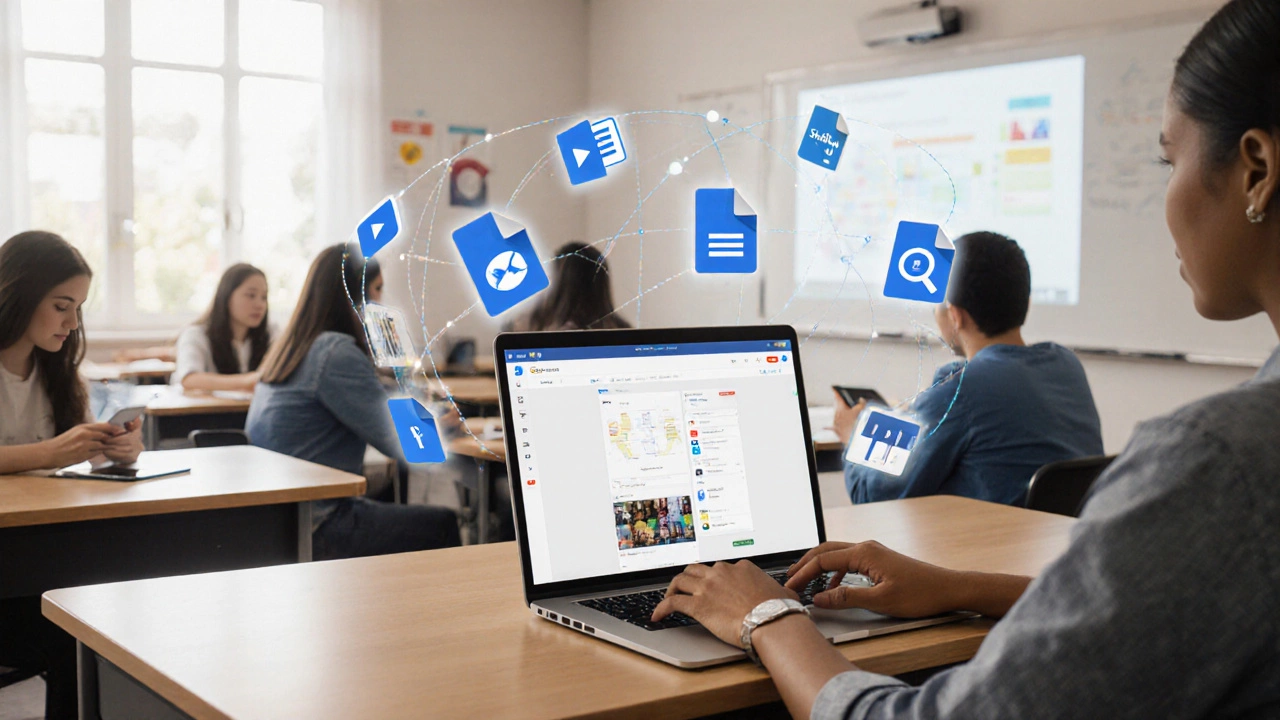
Have you ever scrolled through an endless list of courses and felt completely stuck? You aren't alone. In 2026, the digital classroom is bigger than ever, but finding the right place to learn can feel like searching for a needle in a haystack. The question isn't just "what exists," but rather "what actually works" for your specific goals.
The landscape of online learning platforms has shifted dramatically over the last few years. It's no longer just about watching videos; it's about community, certification, and practical application. Whether you are looking to pivot careers, pick up a new hobby, or simply satisfy a curiosity, understanding which platforms dominate the market helps you save time and money. Let's break down the giants of the industry and see where they fit into your life.
The Big Three: Market Leaders in E-Learning
When we talk about usage numbers, three names consistently rise to the top. These platforms have built massive ecosystems that cater to different types of learners. They aren't just websites; they are entire educational infrastructures.
Coursera stands out as the heavyweight champion for academic credibility. Launched in 2012 by Stanford professors Andrew Ng and Daphne Koller, it partners with over 300 universities and companies, including Yale, Google, and IBM. If you need a certificate that holds weight on a resume, this is usually your first stop. Their model focuses on structured, university-style courses that often lead to full degrees or professional certificates.
On the other hand, Udemy operates on a completely different philosophy. Think of it as the Amazon of education. Anyone can create a course, which means the quality varies wildly, but the selection is unmatched. With over 200,000 courses available, you can find everything from Python programming to sourdough baking. It’s perfect for self-paced, skill-specific learning where you pay per course rather than subscribing.
Then there is edX, founded by Harvard and MIT. Like Coursera, it leans heavily into academic rigor. However, edX has carved out a niche in STEM fields and offers some of the most rigorous micro-masters programs available. For students aiming for technical depth, edX provides a pathway that feels closer to traditional higher education than any other platform.
| Platform | Best For | Pricing Model | Certificate Value |
|---|---|---|---|
| Coursera | Career pivots, university credits | Subscription (Coursera Plus) or Per Course | High (University-backed) |
| Udemy | Specific skills, hobbies, quick fixes | One-time purchase per course | Medium (Skill verification) |
| edX | STEM, academic depth, MicroMasters | Audit free, Pay for cert | High (Ivy League backed) |
| Khan Academy | K-12 foundation, basic math/science | Free | Low (Personal mastery) |
Niche Giants: When Generalists Fall Short
Sometimes, the big three don't hit the mark. Maybe you are a developer who needs code challenges, or a creative who wants feedback on design work. This is where specialized platforms shine. They might have fewer total users, but their engagement rates are often higher because the community is so focused.
LinkedIn Learning (formerly Lynda.com) integrates directly into your professional profile. This is a huge advantage for corporate learners. When you complete a course, the badge appears on your LinkedIn profile automatically. It’s less about deep academic theory and more about soft skills, leadership, and business software proficiency. Companies love it because it tracks employee development seamlessly.
For coders, Codecademy remains the go-to interactive platform. Instead of just watching someone type, you type. The immediate feedback loop is crucial for programming languages. While Udemy has great coding courses, Codecademy’s browser-based IDE makes it easier for beginners to start without setting up complex local environments.
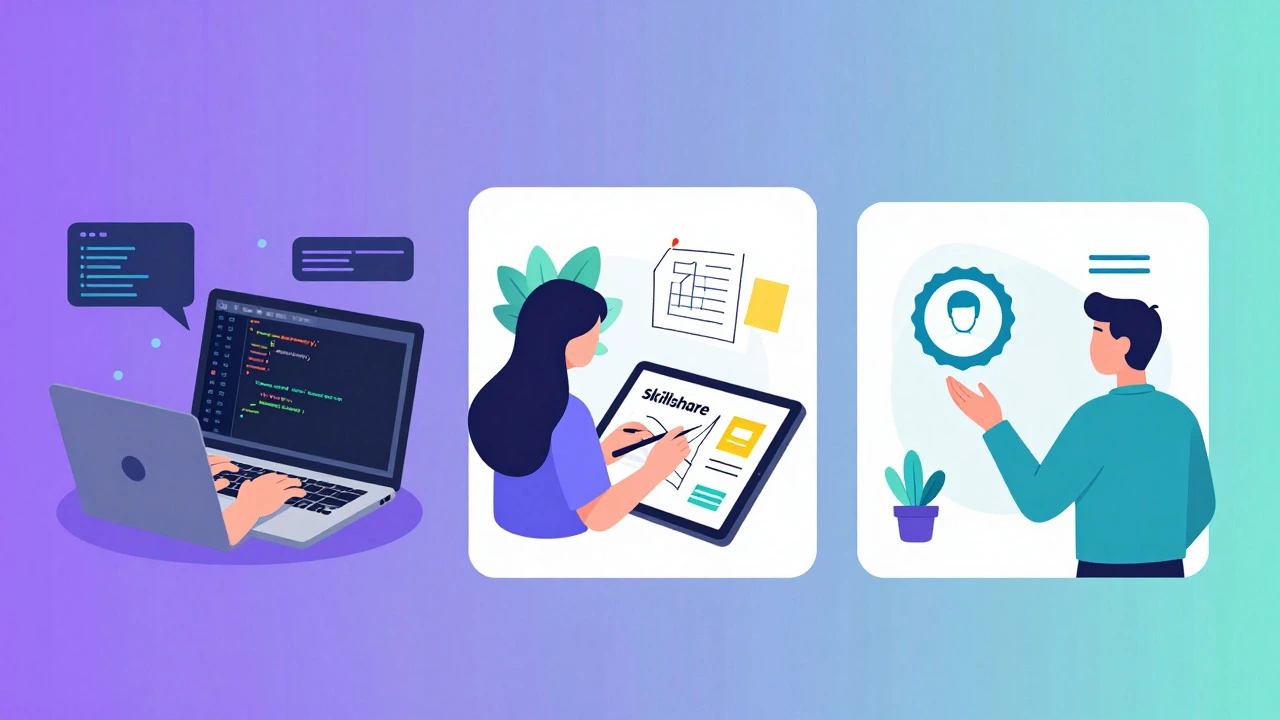
Creatives flock to Skillshare. Unlike the certificate-driven models of Coursera, Skillshare is community-driven. You join classes, post projects, and get comments from peers. It’s fantastic for graphic design, photography, and writing. The subscription model encourages binge-learning, which works well for creative exploration but less so for structured career training.
The Free Option: Khan Academy’s Enduring Legacy
We cannot discuss popular platforms without mentioning Khan Academy. Founded by Sal Khan in 2008, it remains entirely free. Why does it still matter in 2026? Because it builds foundational knowledge better than almost anyone else. If you are struggling with algebra, biology, or even financial literacy, Khan Academy breaks concepts down into bite-sized, logical steps. It doesn’t offer fancy certificates, but it offers mastery. Many paid platforms actually use Khan Academy content as a prerequisite for their advanced courses.
How to Choose the Right Platform for You
Selecting a platform depends entirely on your "job-to-be-done." Are you trying to get hired? Learn a hobby? Pass an exam? Here is a quick decision framework:
- Goal: Career Change. Go with Coursera or edX. Look for "Professional Certificates" or "Specializations." Employers recognize these brands.
- Goal: Quick Skill Fix. Use Udemy. Wait for a sale (they happen weekly), buy the specific course you need, and finish it in a weekend.
- Goal: Creative Exploration. Try Skillshare. The low barrier to entry lets you test multiple interests without a heavy financial commitment.
- Goal: Academic Foundation. Stick with Khan Academy or edX audit tracks. Build the base before paying for advanced credentials.
Trends Shaping Online Education in 2026
The way we learn is evolving. Two major trends are defining the current year. First, AI-powered personalization is becoming standard. Platforms like Coursera now use AI tutors to answer questions instantly, mimicking a human teaching assistant. Second, micro-credentials are replacing traditional degrees in many industries. A four-year degree is expensive and slow; a six-week intensive certificate in Data Analytics from Google via Coursera is fast and targeted.
Also, note the rise of cohort-based courses. While most platforms are self-paced, tools like Maven and Outschool (though smaller) emphasize live interaction. Human connection remains a powerful driver of completion rates. If you struggle with motivation, look for platforms that offer live Q&A sessions or peer groups.
Pitfalls to Avoid
Even the best platforms have traps. The biggest one is "course collection syndrome." Buying ten courses on Udemy and finishing zero is a common failure mode. Set a rule: do not buy a new course until you have completed the previous one. Quality beats quantity every time.
Another pitfall is ignoring prerequisites. Jumping into an advanced Machine Learning course on Coursera without knowing basic statistics will lead to frustration. Always check the "Who this course is for" section. If it mentions linear algebra, make sure you are comfortable with matrices before enrolling.
Final Thoughts on Finding Your Fit
There is no single "best" platform. There is only the best platform for your current goal. Coursera builds resumes, Udemy builds skills, Khan Academy builds foundations, and Skillshare builds creativity. Mix and match based on what you need today. Start small, stay consistent, and remember that the platform is just a tool-your discipline is the engine.
Is Coursera or Udemy better for getting a job?
Coursera is generally better for employment purposes because its courses are often created by universities and major corporations like Google or IBM. These certificates carry more weight with recruiters. Udemy is excellent for learning specific technical skills quickly, but the certificates are less recognized by HR departments unless the skill itself is demonstrable in a portfolio.
Can I learn programming for free online?
Yes. Khan Academy offers free computer science basics. Codecademy has a robust free tier for introductory courses. Additionally, both Coursera and edX allow you to "audit" most courses for free, meaning you can access all video lectures and reading materials without paying. You only pay if you want a graded certificate or access to assignments.
What is the difference between edX and Coursera?
Both are academic-focused, but edX was founded by Harvard and MIT and tends to have a stronger focus on hard sciences and engineering (STEM). Coursera has a broader range of partners, including many non-Ivy League universities and large tech companies, making it slightly more diverse in subject matter, particularly in business and humanities.
Are online certificates worth the money?
It depends on the field. In tech, data science, and digital marketing, certificates from recognized platforms (like Coursera Professional Certificates) can help you land interviews. In highly regulated fields like medicine or law, online certificates hold little value compared to accredited degrees. For soft skills or hobbies, the value is purely in the knowledge gained, not the paper.
Which platform is best for beginners with no experience?
Khan Academy is the best starting point for absolute beginners due to its clear, step-by-step instructional style and lack of cost. For professional skills, Coursera’s "Guided Projects" or Udemy’s highly-rated beginner courses (look for those with 4.5+ stars and recent reviews) provide good hand-holding without overwhelming you.