CBSE vs ICSE vs State Board — Which Fits You?
Not sure which board suits you? Answer these five quick questions. Your answers are scored across all three boards, and we'll highlight the best match for your situation.
Have you ever looked at a report card from an Indian school and seen the acronym CBSE but wondered exactly what it meant? If you are new to the Indian education landscape, or perhaps helping a child prepare for exams abroad, this question comes up constantly. It is not just a random string of letters; it represents one of the most influential educational bodies in the country.
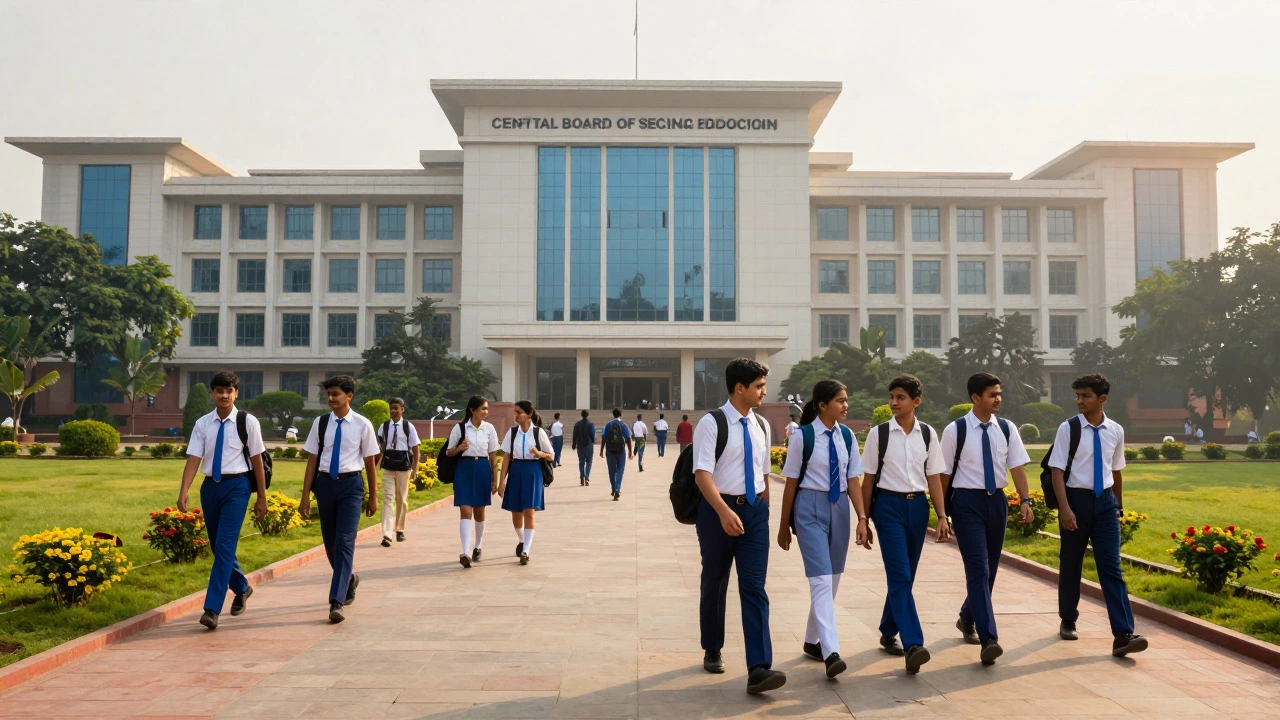
CBSE stands for the Central Board of Secondary Education. It is a national-level board that sets the curriculum, conducts examinations, and manages academic standards for schools across India. Founded in 1963, it has grown from a small body into a massive organization that oversees millions of students every year. Understanding what it actually does helps clarify why so many parents and students choose it over other boards like ICSE or State Boards.
The Core Identity of the Board
To really grasp the scope of CBSE, you have to look at its official status. It operates under the Ministry of Education in the Government of India. This means it is not a private entity or a state-run local authority; it is a central government body. Its primary job is to provide a uniform standard of education for schools that follow its guidelines. These schools are often referred to as CBSE-affiliated schools.
The board covers classes 8 through 12, which includes secondary and higher secondary education. While it doesn't handle primary education (classes 1-7), its influence starts early because many schools align their lower-grade teaching with the eventual CBSE framework. The headquarters are located in New Delhi, which serves as the administrative hub for all policy decisions and exam scheduling.
How CBSE Differs from Other Boards
India has multiple examination boards, which can be confusing for outsiders. The two main alternatives to CBSE are the ICSE (Indian Certificate of Secondary Education) and various State Boards. Each has a distinct approach to teaching and testing.
ICSE, run by the Council for the Indian School Certificate Examinations, is known for being more comprehensive and detailed in its syllabus. It tends to focus heavily on conceptual understanding rather than rote memorization. On the other hand, State Boards vary significantly from one region to another. A student in Tamil Nadu follows a different curriculum than a student in Kerala, even if they are both studying Class 10.
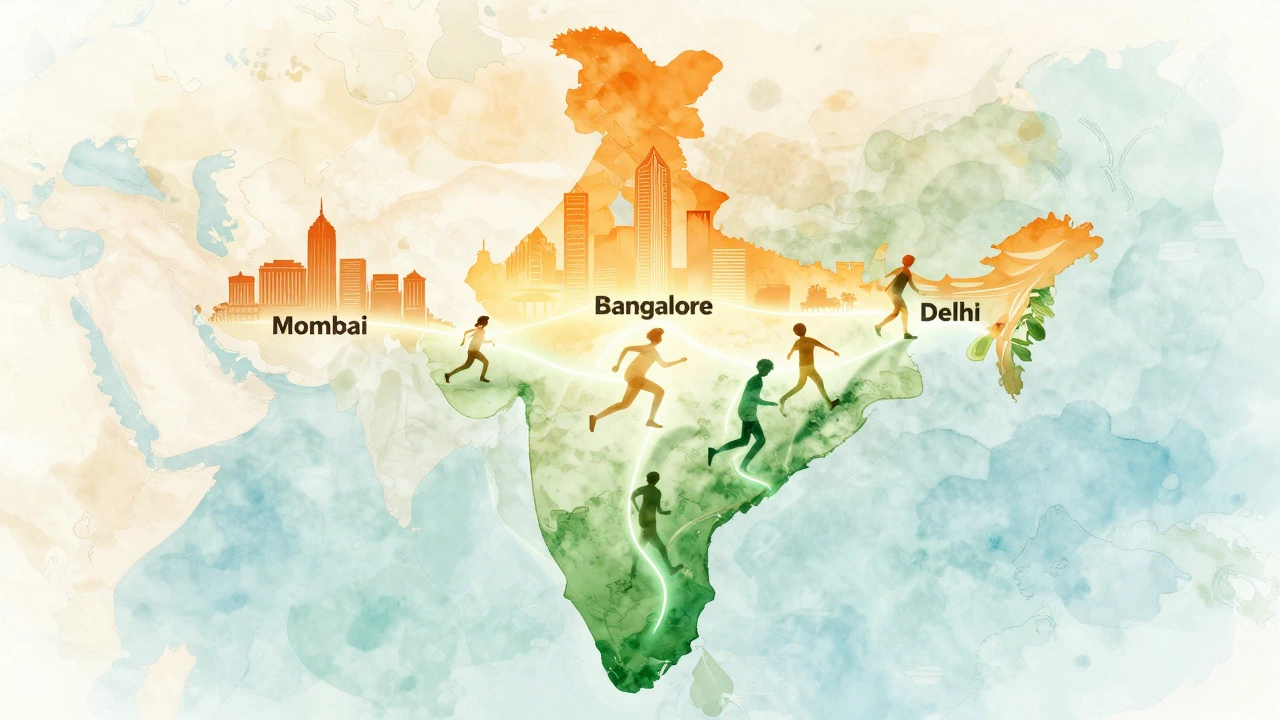
CBSE sits in the middle but leans towards a standardized, national approach. Its syllabus is designed to be consistent regardless of where the school is located. This consistency makes it easier for students who move between cities or states. If your family relocates from Mumbai to Bangalore, a CBSE student can continue their studies without major curriculum gaps. This portability is a huge reason why international schools and diplomatic missions often opt for the CBSE curriculum.
| Feature | CBSE | ICSE | State Boards |
|---|---|---|---|
| Governing Body | Ministry of Education, Govt of India | Council for Indian School Certificates | Respective State Governments |
| Syllabus Style | National, standardized | Comprehensive, conceptual | Regional, varies by state |
| Exam Focus | National Uniformity | In-depth Analysis | Local Curriculum |
| Portability | High (Pan-India) | Medium (Limited Schools) | Low (State-specific) |
The Structure of the CBSE Syllabus
When people ask about the syllabus, they are usually asking about the depth and breadth of topics covered. The CBSE syllabus is structured around core subjects: Mathematics, Science, Social Science, Language, and Electives. For Classes 11 and 12, students choose streams: Science, Commerce, or Arts/Humanities.
One key aspect of the modern CBSE syllabus is its alignment with the National Education Policy (NEP) 2020. This policy introduced significant changes, including flexible subject combinations and a reduced focus on rote learning. The board now emphasizes competency-based assessment. This means exams test how well you can apply knowledge to solve problems, not just whether you can recite definitions.
For example, in Mathematics, instead of just solving equations, questions might present a real-world scenario requiring you to model the situation mathematically. In Science, practical components carry significant weight. Students must perform experiments and maintain lab records, which count towards their final grade. This hands-on approach aims to bridge the gap between theoretical knowledge and practical application.
Examination Pattern and Grading
The end-of-year examinations are the most visible part of the CBSE system. They are conducted twice a year for some levels, but primarily once for the final years (Class 10 and 12). The papers are marked centrally, meaning examiners in different locations grade the same set of scripts to ensure fairness.
Grading has evolved over the years. Previously, it was purely percentage-based. Now, while percentages are still calculated, there is a greater emphasis on holistic development. Internal assessments, which include unit tests, projects, and practicals, make up a portion of the final score. For Class 10, internal marks typically account for 20% of the total, while external exams account for 80%. This split encourages continuous learning throughout the year rather than cramming only before the final test.
The marking scheme is also transparent. After results are declared, sample answer keys are often released, allowing students to understand where they lost marks. This transparency helps in identifying weak areas for improvement in future attempts or higher studies.
Why Do Students Choose CBSE?
There are several practical reasons why families prefer the CBSE route. First, recognition. CBSE certificates are widely accepted by universities and employers across India. If you plan to pursue competitive exams like JEE (for engineering) or NEET (for medicine), the CBSE syllabus aligns closely with the topics tested in these entrance exams. This alignment saves time during preparation because you don't need to learn extra material specific to another board.
Second, global mobility. Many CBSE schools are recognized internationally. If you move abroad, transferring credits is often smoother compared to state boards. Universities in Australia, Canada, and the UK generally have clear pathways for accepting CBSE Class 12 results for undergraduate admissions.
Third, resource availability. Because CBSE is so popular, there is a vast ecosystem of coaching centers, online tutorials, and study materials available. Whether you need help with Physics concepts or English literature essays, finding quality support is easier due to the large user base.

Common Misconceptions About CBSE
A lot of confusion surrounds the board, so let's clear up a few myths. One common belief is that CBSE is "easier" than ICSE. In reality, difficulty depends on the individual student's strengths. Some find CBSE's direct questioning style easier, while others prefer ICSE's analytical depth. There is no objective measure of which is "better," only which suits your learning style.
Another myth is that CBSE ignores creativity. With the recent NEP reforms, the board has introduced more project-based learning and activity-oriented assessments. The rigid structure of the past is slowly giving way to more flexible frameworks that allow for creative expression within defined parameters.
Practical Tips for Navigating the System
If you are new to the CBSE system, here are a few actionable tips to get started smoothly:
- Check Affiliation Status: Not every school claiming to be CBSE is officially affiliated. Verify the affiliation number on the official CBSE website to avoid surprises during exam registration.
- Focus on Practical Components: Don't neglect lab records and project work. These internal marks are guaranteed points if you put in the effort, unlike external exams which depend on performance on a single day.
- Understand the Blueprint: Every CBSE paper follows a specific blueprint that outlines the distribution of easy, medium, and difficult questions. Familiarizing yourself with this structure can reduce exam anxiety.
- Use Official Resources: The CBSE website provides sample papers and previous year questions. These are the best resources for understanding the tone and style of questions asked.
By understanding what CBSE stands for and how it functions, you can make informed decisions about your educational path. It is a robust system designed to provide a consistent foundation for higher studies and career opportunities. Whether you are a parent planning your child's schooling or a student preparing for exams, knowing the basics of this board gives you a significant advantage.
Is CBSE better than ICSE?
Neither is objectively better; it depends on your goals. CBSE is preferred for its national uniformity and alignment with competitive exams like JEE and NEET. ICSE is often favored for its deeper conceptual approach and stronger language skills. Choose based on your location, future plans, and learning style.
Does CBSE cover primary education?
Officially, CBSE conducts examinations for Classes 8 to 12. However, many schools affiliated with CBSE offer primary education (Classes 1-7) following the CBSE curriculum guidelines, though these grades are not examined by the board itself.
Can I switch from a State Board to CBSE midway?
Yes, but it requires careful planning. You need to check if the syllabi overlap sufficiently for the transition year. Usually, switching is easiest at the start of a new academic year. Consult with the receiving school to ensure credit transfer and smooth integration into the new curriculum.
What is the role of the Ministry of Education in CBSE?
The Ministry of Education governs CBSE, setting broad policies and approving curriculum changes. CBSE handles the day-to-day operations, including exam scheduling, marking, and result declaration, but remains accountable to the Ministry for national educational standards.
Are CBSE results valid for university admission abroad?
Yes, CBSE Class 12 results are widely accepted by universities in countries like Australia, Canada, the UK, and the USA. However, specific requirements may vary by institution, so always check the admission criteria of your target university.