JEE Subject Strategy Estimator
Input your current proficiency levels to see where you should focus your remaining study hours.
| Subject | Recommended Hours | Focus Area |
|---|---|---|
| Chemistry | 0 hrs | - |
| Physics | 0 hrs | - |
| Mathematics | 0 hrs | - |
You’ve probably heard it a hundred times: "Maths is hard, Chemistry is easy." But if you ask toppers who actually cracked JEE with top ranks, they’ll tell you something different. The "easiest" subject isn’t always the one that gives you the most marks per hour of study. In fact, many students lose their rank by ignoring Chemistry because they assume it’s just rote learning.
So, what is the actual answer? It depends on your brain type and how you define "scoring." Are you looking for speed? Accuracy? Or deep conceptual understanding? Let’s break down the reality of JEE Main and JEE Advanced scoring patterns based on recent trends and data from successful aspirants.
The Quick Verdict: Which Subject Yields the Best ROI?
| Subject | Effort vs. Reward | Volatility | Best For |
|---|---|---|---|
| Chemistry | High Return, Low Effort | Low (Stable) | Students who memorize well and want quick marks. |
| Physics | Medium Return, High Effort | Medium (Formula-based) | Logical thinkers who enjoy problem-solving mechanics. |
| Mathematics | Variable Return, Very High Effort | High (Tricky) | Those who love abstract logic and have strong calculation speed. |
If you are short on time, Inorganic Chemistry is objectively the highest scoring section per minute spent studying. Why? Because the questions are direct. You either know the fact or you don’t. There is no complex derivation. However, if you hate memorizing the periodic table, this "easy" subject becomes a nightmare.
Why Chemistry Is Often the Hidden Gem
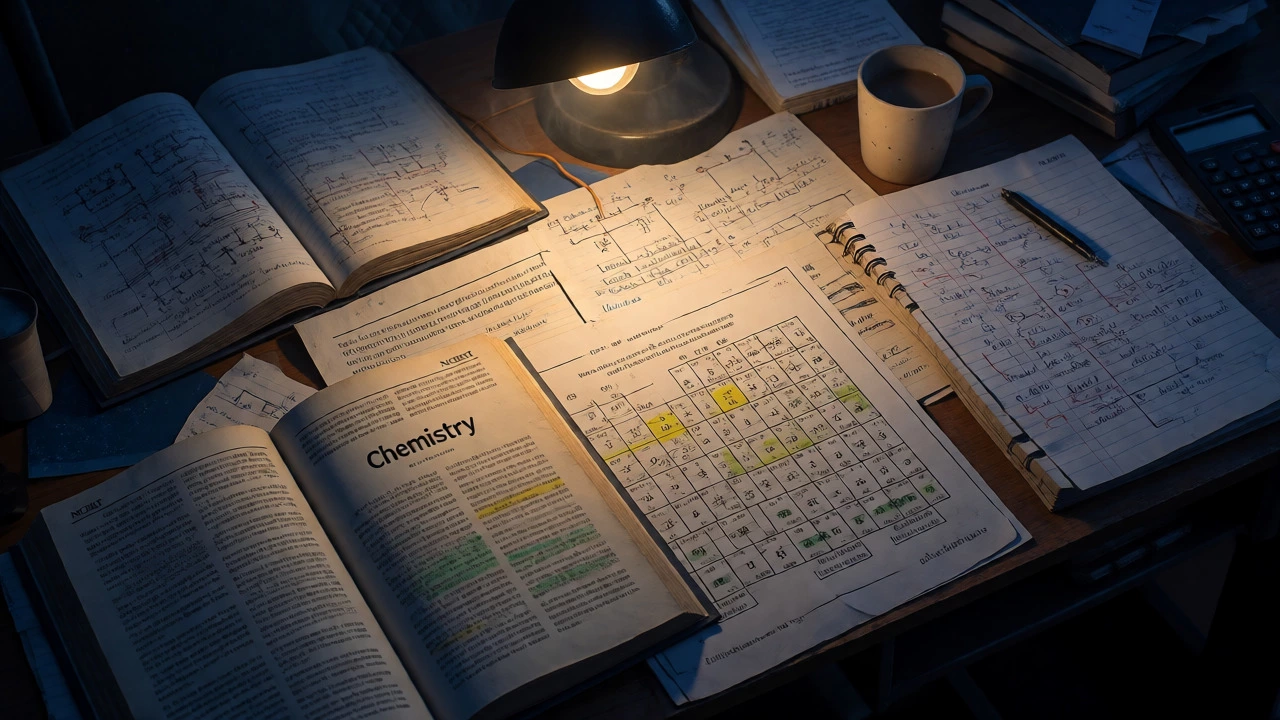
Most students treat NCERT Chemistry as secondary material. That’s a mistake. In recent years, NTA (National Testing Agency) has shifted towards NCERT-centric questions, especially in Inorganic and Organic chemistry.
- Inorganic Chemistry: This is pure memory. If you read NCERT line-by-line, you can score nearly full marks here. Questions on coordination compounds, p-block elements, and chemical bonding are repetitive.
- Organic Chemistry: This requires logic, not just memory. Once you understand reaction mechanisms (like SN1, SN2, electrophilic substitution), you can solve any question, even if you haven’t seen it before. It’s less volatile than Maths but more conceptual than Inorganic.
- Physical Chemistry: This is basically applied physics and math. Formula-based problems dominate. If you are good at calculations, this section is fast. But watch out for numerical precision errors.
Here’s a pro tip: Don’t ignore Biomolecules, Polymers, and Chemistry in Everyday Life. These small chapters often yield 4-6 marks directly from NCERT lines. Ignoring them leaves free marks on the table.
Physics: The Balance Between Logic and Calculation
Physics sits in the middle. It’s not as memory-heavy as Chemistry, nor as abstractly difficult as Mathematics. The scoring potential here comes from mastering specific high-weightage topics rather than trying to cover everything equally.
Focus on these areas where questions are predictable:
- Mechanics: Newton’s laws, work-energy theorem, and rotational motion form the backbone. If you master free-body diagrams, half the battle is won.
- Modern Physics: Topics like semiconductors, communication systems, and dual nature of radiation are formula-driven and rarely tricky.
- Current Electricity: Circuit analysis is standard. Practice KVL/KCL applications until they become second nature.
A common trap in Physics is over-calculating. Many students spend 5 minutes solving an integral when a dimensional analysis trick could have solved it in 30 seconds. Always check the units. If your answer for velocity is in meters squared, you made a mistake before finishing the calculation.
Mathematics: The Rank Decider
Let’s be honest: Mathematics is the toughest section in JEE Main and Advanced for most students. It consumes the most time and has the highest negative marking impact due to silly mistakes.
However, it’s also where you can differentiate yourself. While everyone struggles with Calculus, those who master Coordinate Geometry and Vectors & 3D Geometry find consistent scoring opportunities.
Why is Maths considered low-scoring for average students? Because the questions are multi-step. One error in step 1 ruins the final answer. Plus, the syllabus is vast. Trying to cover every chapter deeply is impossible. Instead, aim for 40-50% accuracy in Maths rather than 80%. A safe 30/90 in Maths is better than a risky attempt that drops you to 10/90 due to negatives.
Strategic Weightage Analysis: Where to Focus Your Energy
You don’t need to study all subjects equally. Here’s a breakdown of high-yield chapters based on past 5-year trends in JEE Main:
| Subject | Top Scoring Chapters | Average Marks Expected |
|---|---|---|
| Chemistry | Coordination Compounds, Chemical Bonding, Aldehydes & Ketones, Biomolecules | 20-25 |
| Physics | Semiconductors, Current Electricity, Modern Physics, Thermodynamics | 15-20 |
| Maths | Matrices & Determinants, Statistics, Vectors & 3D, Sequences & Series | 15-20 |
Notice how Statistics in Maths is often ignored but yields easy marks. Similarly, Semiconductors in Physics is straightforward theory + simple circuits. Mastering these "low-effort" chapters boosts your score without burning you out.
Common Myths That Hurt Your Score
Myth 1: "I’m bad at Maths, so I’ll focus only on Chem and Phy." Wrong. You cannot clear cutoffs if you leave Maths entirely. Aim for selective attempts.
Myth 2: "Chemistry is just cramming." False. Organic Chemistry requires logical deduction. Physical Chemistry requires math skills. Only Inorganic is heavy on memory.
Myth 3: "Advanced is completely different from Main." Not really. 70% of Advanced concepts are similar, but the application is deeper. If you build strong basics in Main-style problems, Advanced becomes manageable.
How to Maximize Scores Based on Your Strengths
If you are a Visual Learner: Focus on Physics diagrams and Organic reaction maps. Use flowcharts for Chemistry.
If you are a Logic-Oriented Student: Excel in Mathematics and Physical Chemistry. Derive formulas instead of memorizing them.
If you are a Memory Powerhouse: Dominate Inorganic Chemistry and Biology-related Chemistry topics. Ensure your factual recall is flawless.
Remember, consistency beats intensity. Studying 2 hours daily for 3 months is far more effective than 12-hour binge sessions. Track your accuracy in mock tests, not just the score. If you’re getting questions right but taking too long, speed up. If you’re guessing, slow down and review concepts.
Which subject should I start preparing first for JEE?
Start with Chemistry (specifically Physical and Inorganic). It builds confidence quickly because the results are visible early. Then move to Physics to build logical thinking, and tackle Mathematics last as it requires the most practice time to mature.
Is JEE Advanced harder than JEE Main?
Yes, significantly. While JEE Main tests speed and basic application, JEE Advanced tests depth and multi-concept integration. However, the core syllabus is identical. Strong fundamentals in Main-level problems are prerequisites for Advanced success.
Can I get a good rank without being good at Maths?
It’s tough but possible. You need exceptional scores in Physics and Chemistry to compensate. However, for top 1000 ranks, some proficiency in Maths is usually required. Focus on easier Maths chapters like Matrices, Determinants, and Statistics to secure partial marks.
How many hours should I dedicate to each subject daily?
A balanced split is recommended: 30% Chemistry, 35% Physics, and 35% Mathematics. Adjust based on your weak areas. If you struggle with Maths, increase its share to 45% temporarily while maintaining touch with others.
Are NCERT books enough for JEE Chemistry?
For Inorganic and Organic, yes, NCERT is the bible. For Physical Chemistry, you need additional practice problems from reference books like O.P. Tandon or N. Awasthi to handle numerical variety and speed.