eLearning Success Risk Calculator
Answer these 5 questions honestly to analyze your potential challenges with online education.
Your Assessment Results
Dropout Risk Level
Personalized Recommendations:
You’ve probably heard the hype. eLearning is the future of education, offering flexibility, accessibility, and cost savings for millions of learners worldwide. It’s supposed to be this seamless revolution where you can learn coding from a startup founder in Silicon Valley or master Spanish while sipping coffee in Melbourne. But if you’ve ever stared at a blank screen, clicked through a boring module, or felt completely isolated during a "live" session, you know the reality isn’t quite that shiny. So, what is the actual problem with eLearning?
The issue isn’t that online learning doesn’t work. It does. The problem is that it often fails to replicate the human elements that make traditional learning effective. We’re talking about motivation, connection, and immediate feedback. When these pieces are missing, even the best-designed course feels like a chore. Let’s break down why so many people drop out of online courses and how we can fix it.
The Engagement Gap: Why Attention Spans Shrink
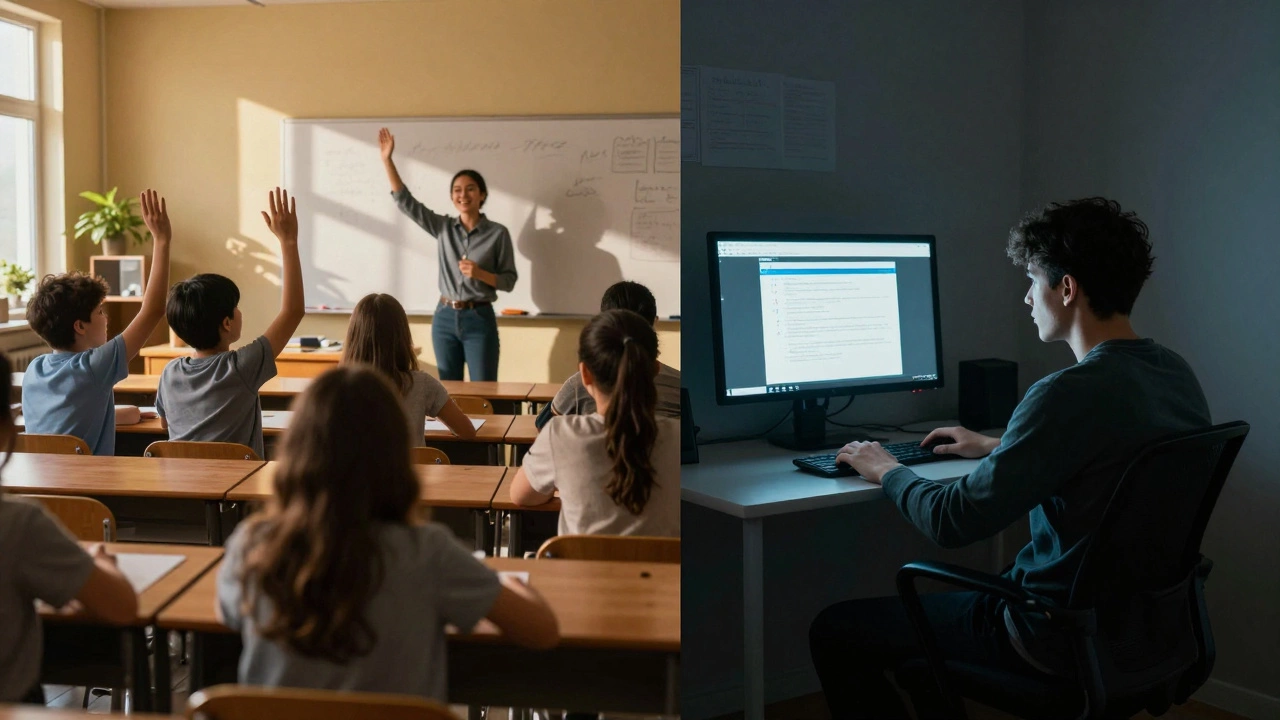
The biggest hurdle in online education is simple: keeping your eyes on the prize. In a physical classroom, a teacher can read the room. They see confused faces, adjust their pace, or crack a joke to wake everyone up. On a screen, you’re alone. There’s no one watching to keep you accountable, and there’s no social pressure to stay focused.
This leads to what experts call "passive consumption." You watch a video, nod along, and move to the next slide without actually processing the information. It’s easy to multitask-checking emails, scrolling through social media, or just zoning out. A study by the U.S. Department of Education found that while online learning can be as effective as face-to-face instruction, it requires significantly more self-discipline. Without that discipline, the content slides right off.
To combat this, top platforms now use interactive elements. Think quizzes that pop up mid-video, drag-and-drop exercises, or peer discussion boards. These force you to engage actively rather than just passively absorbing data. If your course looks like a static PowerPoint presentation played back as a video, you’re already fighting an uphill battle against distraction.
The Isolation Factor: Learning is a Social Activity
Humans are wired to learn together. We debate, we collaborate, and we bounce ideas off each other. Traditional classrooms provide a built-in community. You have classmates who become friends, study groups, and spontaneous hallway conversations that spark new insights. eLearning often strips this away.
When you log into a virtual classroom, you might see twenty black squares representing other students. No one talks. The chat box is silent. This lack of social presence creates a sense of isolation that can quickly kill motivation. You start wondering, "Why am I doing this? Who cares if I finish?"
Successful online programs solve this by building intentional communities. They create small cohort groups, assign peer mentors, or host regular live Q&A sessions where interaction is mandatory, not optional. Some platforms even gamify the experience, allowing learners to compete or cooperate on projects. The goal is to recreate that "water cooler" effect digitally. If you feel like you’re shouting into the void, the platform has failed to design for social learning.
Technical Friction: The Invisible Barrier
We often forget that eLearning relies entirely on technology. And technology fails. Bad internet connections, outdated browsers, incompatible devices, and clunky user interfaces can turn a promising learning experience into a frustrating nightmare. This is known as technical friction.
Imagine trying to join a live lecture only to have your audio cut out every thirty seconds. Or trying to submit an assignment on a mobile app that keeps crashing. These aren’t just minor annoyances; they break the flow of learning. Cognitive load theory suggests that our brains have limited capacity for processing information. When you spend half your energy figuring out how to click the right button, you have less energy left for understanding the subject matter.
Platforms need to prioritize user experience (UX) design. This means ensuring courses are mobile-friendly, load quickly, and work across different devices. It also means providing robust technical support. If you’re stuck on a login issue for two hours, you won’t just lose time-you’ll likely quit the course entirely. The best eLearning systems are invisible; they get out of your way so you can focus on the content.

The Quality Control Crisis
Because anyone can publish a course online, the quality varies wildly. One day you might take a masterclass taught by an industry expert with years of real-world experience. The next day, you might enroll in a poorly recorded tutorial by someone who knows the topic but can’t teach it. This inconsistency makes it hard for learners to trust the value of their investment.
There’s also the issue of outdated content. In fast-moving fields like technology or digital marketing, information can become obsolete within months. A course on SEO strategies from three years ago might be teaching tactics that no longer work. Unlike textbooks, which go through rigorous editorial review, many online courses are uploaded with minimal vetting.
To navigate this, learners need to do their homework. Look for reviews, check the instructor’s credentials, and see when the course was last updated. Reputable platforms curate their content, ensuring that only high-quality, current materials make it onto their shelves. Don’t just look at the price tag; look at the production value and the depth of the curriculum.
Motivation and Self-Discipline
Let’s be honest: most of us struggle with procrastination. In a traditional setting, the schedule is imposed on you. Classes happen at specific times, assignments are due on specific dates, and showing up is part of the deal. With eLearning, you control the schedule. That freedom is a double-edged sword.
Without external structure, it’s easy to put off studying until it’s too late. The "I’ll do it later" mentality becomes a habit. This is particularly true for working professionals who are juggling jobs, families, and personal lives. By the time they sit down to learn, they’re exhausted, and the willpower required to push through a difficult lesson is gone.
The solution lies in creating artificial structure. Set specific times for studying, treat them like non-negotiable appointments. Break large modules into smaller, manageable chunks. Use techniques like the Pomodoro method (25 minutes of focus, 5 minutes of rest) to maintain momentum. Remember, motivation is fleeting; discipline is reliable. Build systems that make it easier to show up, even when you don’t feel like it.

Assessment and Feedback Loops
In a physical classroom, you get immediate feedback. You raise your hand, ask a question, and get an answer. You submit a paper, and your teacher writes comments in the margins. In eLearning, feedback can be delayed or automated. Multiple-choice quizzes give you a score, but they don’t explain *why* you got something wrong. Essay grading can take weeks.
This delay breaks the learning loop. To improve, you need to know what you’re doing wrong and how to fix it. If you don’t get that information quickly, you reinforce bad habits. Automated feedback is efficient, but it lacks nuance. It can tell you that your code didn’t run, but it can’t explain the logic error in a way that helps you think differently.
High-quality eLearning programs incorporate frequent, low-stakes assessments with detailed explanations. They use AI-driven tools to provide personalized hints and suggestions. Some even offer access to human tutors for complex questions. The key is ensuring that feedback is actionable and timely. If you’re guessing whether you understood the material, you’re not truly learning.
| Challenge Area | Traditional Classroom | eLearning Environment |
|---|---|---|
| Engagement | Teacher-led, social pressure | Self-directed, prone to distraction |
| Social Interaction | Immediate, face-to-face | Often asynchronous, requires effort |
| Technical Issues | Minimal (projector failures) | High (internet, software, devices) |
| Feedback Speed | Immediate verbal correction | Delayed or automated |
| Flexibility | Fixed schedule | Self-paced, location-independent |
While the challenges are real, they aren’t insurmountable. The key is recognizing them upfront and choosing platforms that address these gaps. For instance, some niche directories and specialized services operate with similar verification and community-building principles to ensure quality and trust, much like how reputable eLearning platforms verify instructors. You can see examples of how structured directories work in various industries, such as [this resource](https://almatyeliteescorts.org/) which focuses on verified listings and clear communication channels, a model that educational platforms could borrow for better user assurance.
How to Overcome eLearning Problems
So, how do you make eLearning work for you? First, choose the right platform. Look for ones that emphasize interactivity and community. Avoid passive video libraries unless you’re highly disciplined. Second, create a dedicated learning space. Remove distractions, close other tabs, and set boundaries with family or roommates. Third, connect with others. Join study groups, participate in forums, and reach out to peers. Finally, track your progress. Visualizing your advancement can boost motivation and help you stay on course.
The problem with eLearning isn’t the medium itself; it’s the execution. When done well, online education offers unparalleled opportunities for growth. But it requires intentionality from both the provider and the learner. By understanding the pitfalls-engagement, isolation, technical friction, quality control, motivation, and feedback-you can navigate them effectively and get the most out of your digital education journey.
Is eLearning less effective than traditional classroom learning?
Not necessarily. Research shows that eLearning can be just as effective as face-to-face instruction, provided it includes active learning strategies and adequate support. The effectiveness depends largely on the learner's self-discipline and the quality of the course design.
Why do people drop out of online courses?
Common reasons include lack of motivation, feeling isolated, technical difficulties, and poor course quality. Without the structure of a physical classroom, many learners struggle to maintain consistency and engagement over time.
How can I stay motivated while studying online?
Set specific goals, create a routine, and find an accountability partner. Break tasks into smaller chunks and reward yourself for completing them. Engaging with a community of learners can also provide the social support needed to stay on track.
What makes a good eLearning platform?
A good platform offers interactive content, responsive technical support, verified instructors, and opportunities for social interaction. It should be user-friendly, accessible on multiple devices, and regularly updated to reflect current information.
Can I get a degree through eLearning?
Yes, many accredited universities offer fully online degree programs. These programs follow the same academic standards as on-campus degrees and are recognized by employers. Always verify the accreditation status of the institution before enrolling.