
Online Course ROI Calculator
Course Details
Enter your details to see if the course is a good financial investment.
You’ve probably scrolled through endless lists of online courses, wondering which one is actually worth your money. Is it the $500 bootcamp promising a job in six weeks? The free certificate from a major university? Or that niche workshop on advanced Excel macros? The truth is, "value" isn’t about price tags or fancy certificates. It’s about return on investment (ROI). You want a course that changes your trajectory, not just fills your digital wallet with PDFs you’ll never open.
In 2026, the landscape of online education has shifted dramatically. We’re past the era where any certificate held weight. Employers and clients now look for demonstrable skills, project portfolios, and specific competencies. So, how do you pick the winner? Let’s break down what actually creates value in an online course, who benefits most from each type, and how to avoid wasting time on low-impact learning.
Defining Value: Beyond the Certificate
Before picking a platform, you need to define what "value" means for your specific situation. For some, value is immediate employability. For others, it’s salary negotiation power. For freelancers, it’s the ability to charge higher rates. If you don’t have a clear goal, no course will deliver value because there’s no metric to measure success against.
High-value courses typically share three traits:
- Actionable Skills: You can apply what you learn immediately in your current job or a new role.
- Industry Recognition: The issuing body or platform is respected by employers in your field.
- Network Access: You gain access to peers, mentors, or alumni who can help you advance.
A free Coursera audit might teach you Python syntax, but does it get you hired? Probably not on its own. However, a specialized Data Science specialization from IBM, combined with a GitHub portfolio of projects you built during the course, has tangible value. The difference lies in the application and the credential’s signaling power.
The Heavy Hitters: Professional Certifications vs. Academic Degrees
When comparing broad categories, professional certifications often outpace academic degrees in short-term ROI for tech and business roles. Why? Because they are focused. An MBA takes two years and costs tens of thousands. A Project Management Professional (PMP) certification takes months of study and costs a few hundred dollars, yet it can immediately qualify you for senior management roles.
| Learning Path | Typical Cost | Time Commitment | Primary Value Driver | Best For |
|---|---|---|---|---|
| Professional Certification (e.g., AWS, PMP) | $300 - $1,000 | 1 - 3 Months | Job eligibility, salary bump | Career switchers, upskillers |
| University Microdegree (e.g., edX, Coursera) | $500 - $3,000 | 3 - 6 Months | Academic rigor, brand prestige | Corporate climbers, academia |
| Bootcamp (Coding, Design) | $5,000 - $15,000 | 3 - 6 Months | Portfolio, career services | Total beginners, rapid switchers |
| Niche Skill Workshop (Udemy, LinkedIn) | $10 - $100 | Hours to Days | Immediate task completion | Current employees, hobbyists |
If you’re looking at cloud computing, an AWS Certified Solutions Architect is a globally recognized credential that validates expertise in designing distributed systems on Amazon Web Services often carries more weight than a generic IT degree. Employers know exactly what that certification means. They know you can deploy infrastructure. That specificity is value.
Tech Skills: Where the Money Is
In the current market, technical skills offer the highest measurable ROI. But not all tech skills are equal. General programming knowledge is less valuable than specialized expertise.
For example, learning basic HTML/CSS is useful, but mastering React.js is a JavaScript library for building user interfaces, widely used in modern web development opens doors to frontend engineering roles. Even better, combining React with TypeScript and state management libraries makes you a highly hireable candidate. Courses that focus on these stacks-like those offered by platforms such as Frontend Masters or specialized Udemy instructors like Jonas Schmedtmann-provide concrete, buildable projects.
Data science remains a top contender. However, the bar has risen. A basic Python course won’t cut it anymore. You need courses that cover data cleaning, statistical modeling, and visualization tools like Tableau or Power BI. Look for specializations that include capstone projects. The value here comes from the portfolio piece you create, not just the certificate.
Soft Skills and Leadership: The Hidden Multipliers
We often overlook soft skills because they’re harder to quantify. Yet, for mid-to-senior level professionals, leadership and communication courses can be the difference between stagnation and promotion. Platforms like LinkedIn Learning and Coursera offer courses on negotiation, emotional intelligence, and strategic management.
Why are these valuable? Because technical skills get you hired, but soft skills get you promoted. A course on "Leading Remote Teams" might seem fluffy, but if it provides frameworks for asynchronous communication and conflict resolution, it directly impacts your team’s productivity. The value is in the immediate application to your daily work challenges.
How to Evaluate a Course Before You Buy
Don’t trust the marketing copy. Here’s a checklist to determine if a course has real value:
- Check the Instructor’s Credentials: Are they actively working in the field? Do they have a track record of hiring people?
- Read Recent Reviews: Ignore reviews older than six months. Tech and business practices change fast. A course from 2022 might be obsolete today.
- Look for Projects: Does the course require you to build something? If it’s only multiple-choice quizzes, the retention and practical value are low.
- Assess Community Support: Is there a Discord, Slack, or forum where you can ask questions? Learning in isolation is hard. Peer support increases completion rates and quality of learning.
- Verify Employer Recognition: Search LinkedIn for people who have taken this course. Did it lead to a job change? Did they mention it in their profile updates?
For instance, if you’re considering a digital marketing course, check if the instructor follows Google’s latest algorithm updates. If they’re teaching outdated SEO tactics, the course has negative value-it teaches you bad habits.

The Role of Platforms: Coursera, Udemy, edX, and More
Different platforms serve different purposes. Understanding this helps you choose the right venue for your goals.
Coursera is an online learning platform that offers courses, certificates, and degrees from top universities and companies excels in academic rigor and recognized credentials. It’s ideal for learners seeking university-backed certificates or full degrees. The value here is prestige and structured curriculum.
Udemy is an online learning and teaching marketplace with over 213,000 courses and 62 million students is best for specific, tactical skills. You can find a course on "Advanced Excel VBA" for $15. The value is affordability and specificity. However, quality varies wildly, so vetting is crucial.
edX is a nonprofit online learning platform founded by Harvard University and MIT sits somewhere in between, offering rigorous computer science and humanities courses from elite institutions. Its MicroMasters programs are particularly valuable as they can sometimes count toward graduate degrees.
For coding specifically, interactive platforms like Codecademy is an online educational platform for learning computer programming provide immediate feedback, which is critical for retaining syntax and logic. The value is in the hands-on practice environment.
Avoiding Common Pitfalls
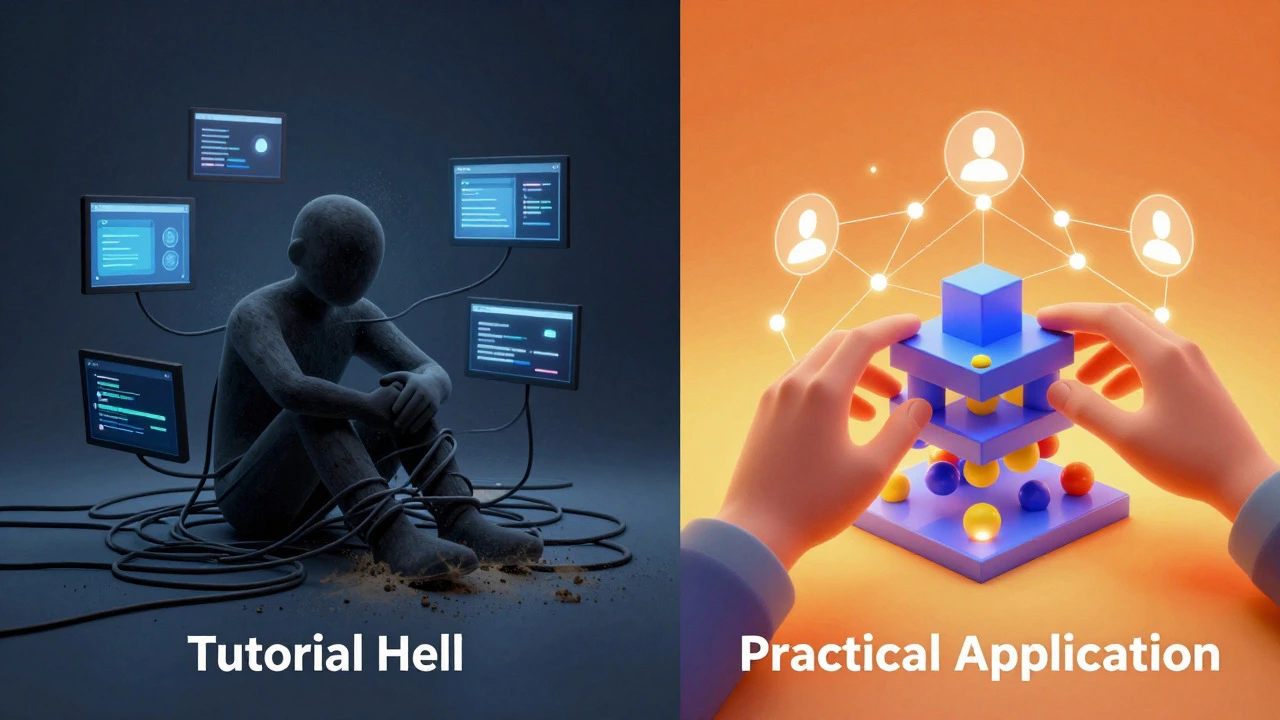
Many learners fall into the "tutorial hell" trap. They consume content endlessly without building anything. This is the fastest way to destroy the value of any course. To maximize ROI, adopt the 70-20-10 rule: spend 70% of your time practicing, 20% discussing with peers, and only 10% watching videos.
Another pitfall is chasing trends without foundation. Jumping into AI courses without understanding basic statistics or Python will leave you confused and frustrated. Build a strong base first. The value of a foundational course compounds over time as you add specialized layers.
Also, beware of income guarantees. Some bootcamps promise jobs or refunds. While attractive, these often come with hidden clauses or require you to take on debt. Research the actual placement rates and salaries of graduates, not just the marketing promises.
Final Thoughts: Your Career, Your Choice
The online course with the most value is the one that aligns perfectly with your next career step. If you’re a junior developer aiming for seniority, a system design course is invaluable. If you’re a marketer wanting to move into analytics, a SQL and Tableau certification is key. There is no single "best" course for everyone. The best course is the one you complete, apply, and leverage to demonstrate your competence to the world.
Start small. Pick one skill gap. Find a highly-rated, recent course with project-based learning. Invest your time wisely. The return will come not from the certificate itself, but from the confidence and capability you gain.
Is a free online course valuable?
Yes, but with caveats. Free courses provide knowledge, which has intrinsic value. However, they often lack the credentialing power of paid courses. If you need proof of completion for a resume, consider paying for the certificate option. The value of a free course is highest when you use it to build a portfolio project that demonstrates your skills.
Do employers care about online certificates?
It depends on the industry and the issuer. In tech, certifications from providers like AWS, Google, or Microsoft are highly valued. In other fields, certificates from reputable universities (via Coursera or edX) carry weight. Generic certificates from unknown platforms may not impress recruiters unless accompanied by a strong portfolio.
What is the highest ROI online course category?
Currently, specialized technical skills in cloud computing, data science, and cybersecurity offer the highest financial ROI. These fields have high demand and a shortage of skilled workers, leading to significant salary increases for certified professionals.
How long should I spend on an online course?
Most effective courses range from 40 to 100 hours of total effort. Shorter courses risk being superficial, while longer ones may suffer from drop-off rates. Aim for courses that fit into your schedule consistently, such as 5-10 hours per week, to maintain momentum.
Can I switch careers with just online courses?
Yes, many people successfully switch careers using online education. However, it requires more than just taking courses. You need to build a robust portfolio, network actively, and tailor your resume to highlight transferable skills and new competencies gained from the courses.