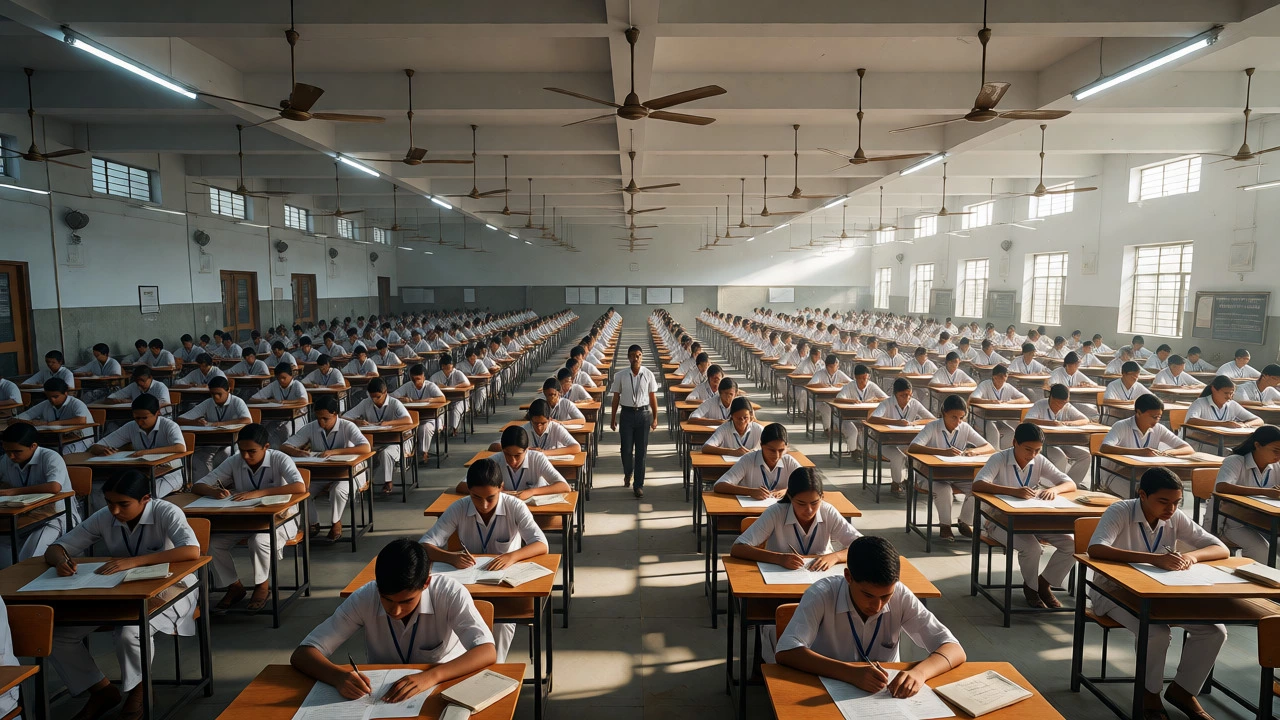
CBSE Exam Reality Checker
Confused about whether your child in Delhi gets a "special" easier paper? Select their school type to see the truth about exam standards.
It’s one of the most persistent rumors in Indian student circles: "Delhi students get easier CBSE papers." If you’ve ever heard a cousin in Mumbai complain that their friend in New Delhi scored 95% because "their questions were basically open-book," you know exactly what I mean. But here is the twist that actually matters: for the vast majority of CBSE-affiliated schools in Delhi, there is no different paper. The confusion stems from a misunderstanding of how India's education boards operate, specifically the difference between the Central Board of Secondary Education (CBSE) and the Directorate of Education (DoE) under the Government of NCT of Delhi.
Let’s clear the air right now. If your child goes to a private school like DPS, Modern School, or Bal Bharati Public School in Delhi, they sit for the exact same question paper as a student in Kerala, Punjab, or West Bengal. The exam happens on the same day, at the same time, with the same marking scheme. So, why does this myth persist? And when do Delhi students actually face a different exam scenario? To answer this, we need to look at the structural split between central government schools, private affiliated schools, and state-run government schools within the National Capital Territory.
The Myth of the "Special Delhi Paper"
First, let’s tackle the biggest misconception. Many parents believe that because Delhi is the capital and has a unique administrative status, its CBSE students receive a privileged set of questions. This isn’t true for the standard Class 10 and Class 12 board exams. The CBSE conducts a single national-level examination for all affiliated schools. Whether you are sitting in an exam hall in Connaught Place or in a remote town in Assam, the question paper is identical.
So where does the idea come from? It likely mixes up two things:
- Compartment/Supplementary Exams: If a student fails a subject, they take a re-exam later in the year. These papers are different from the main annual exam, but this applies to every state, not just Delhi.
- State Board Confusion: Delhi has its own state board curriculum for government schools, which is distinct from CBSE. People often conflate "Delhi Schools" with "CBSE Schools," but they are two different ecosystems.
If you are looking for a reason why Delhi scores seem higher, it’s not about easier papers. It’s about access to resources, coaching culture, and the sheer density of quality educational institutions in the capital. But let’s dig deeper into who actually takes different papers in Delhi.
Who Actually Takes Different Papers in Delhi?
While CBSE-affiliated schools follow the national standard, the landscape of schooling in Delhi is complex. There are three main categories of students, and only some of them deal with non-CBSE papers.
| School Type | Exam Conducted By | Paper Standard | Recognition |
|---|---|---|---|
| Private CBSE Affiliated (e.g., DPS, Sanskriti) |
CBSE (Central Board) | National Standard | All India & International |
| Kendriya Vidyalaya (KV) & Navodaya Vidyalaya (JNV) |
CBSE (Central Board) | National Standard | All India & International |
| Government Schools (MCD/DoE) |
State Board (DoE) | State Specific | Primarily State/National |
As the table shows, if you are in a Kendriya Vidyalaya (KV) or Jawaharlal Navodaya Vidyalaya (JNV), you are taking the CBSE exam. These are central government schools located across India, including many in Delhi. They do not have a special Delhi paper. Their students compete on the same footing as everyone else.
The real divergence happens with schools run by the Municipal Corporation of Delhi (MCD) or the Directorate of Education (DoE). These schools generally follow the state curriculum or have transitioned to CBSE recently. Historically, these schools had their own board exams conducted by the Delhi government. These papers were indeed different from CBSE papers-often more localized in context, focusing on Delhi-specific history or geography, and sometimes perceived as less rigorous in science and math compared to the national CBSE standard.
The Transition: From State Board to CBSE
Here is where things get interesting for the current academic year (2026). Over the last decade, the Delhi government has been actively converting MCD schools into CBSE-affiliated institutions. The goal was to provide a uniform, high-standard education to government school children, ensuring they weren't disadvantaged when competing for college admissions nationwide.
This shift means that fewer and fewer students in Delhi are taking "different" papers. Ten years ago, a large chunk of Delhi’s student population took state board exams. Today, the majority of recognized schools in Delhi, whether private or government-aided, are moving toward or already using the CBSE framework. This convergence reduces the disparity in exam difficulty and recognition.
However, remnants of the old system linger. Some older students or those in transitional phases might still encounter hybrid assessment models. But for a new student enrolling in Grade 9 or 10 in 2026, the likelihood of taking a non-CBSE paper in Delhi is dropping rapidly unless they are in a very specific niche institution that hasn’t yet aligned with the central board.
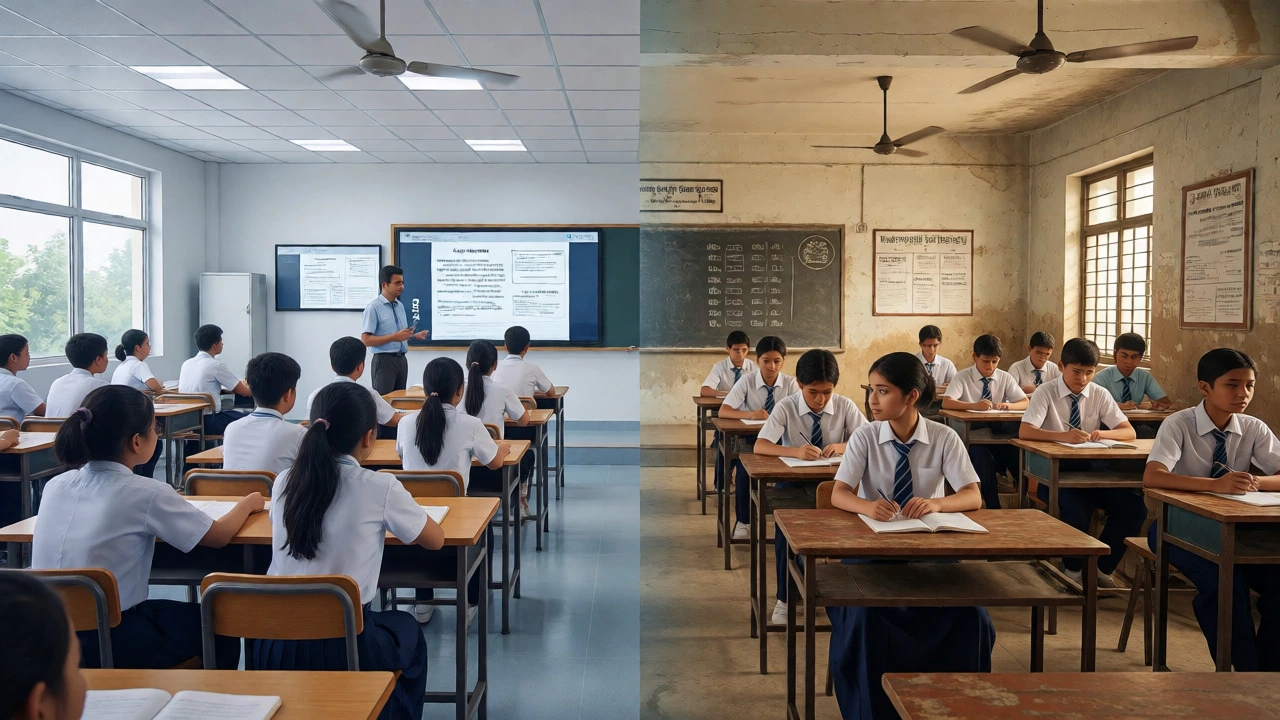
Why Do People Think Delhi Papers Are Easier?
If the papers are the same, why does the stereotype stick? Several factors contribute to this perception bias.
1. The Coaching Hub Effect: Delhi, particularly areas like Mukherjee Nagar and Kota (though Kota is in Rajasthan, it feeds Delhi aspirants), is a massive hub for competitive exam preparation. Students in Delhi often start preparing for JEE, NEET, and CUET much earlier than peers in other regions. When these well-prepared students score high in CBSE boards, outsiders assume the paper was easy, ignoring the intense preparation behind the scenes.
2. Internal Assessment Weightage: CBSE has increased the weightage of internal assessments and practicals over the years. In Delhi, schools often have robust infrastructure for practical labs and project work. A strong performance in internals can boost overall percentages, creating an impression of higher achievement without necessarily reflecting a harder external exam.
3. Media and Social Media Echo Chambers: When top scorers from Delhi dominate headlines, it reinforces the narrative. You rarely hear about the average performer struggling with the same paper in a rural district. The visibility of Delhi’s elite academic performers skews the public perception of the entire board’s difficulty level.
How Does This Affect College Admissions?
Does having a "Delhi CBSE" background give you an edge? Not directly in terms of the mark sheet. Universities like DU, JNU, and IITs treat CBSE marks equally regardless of the state of origin. However, indirect advantages exist.
- Counseling Access: Being in Delhi provides physical proximity to major universities and counseling sessions. Attending offline fairs and workshops is easier.
- Peer Network: Studying in Delhi often means being surrounded by a highly competitive peer group, which can drive motivation.
- Information Flow: Updates regarding entrance exams, scholarship deadlines, and application nuances tend to circulate faster in metropolitan hubs.
But remember, if you are applying through CUET (Common University Entrance Test) for central universities, your CBSE board marks matter less than your CUET rank. The board exam is primarily a qualifying gatekeeper. Once you pass, the game changes entirely. The "ease" of the paper becomes irrelevant; what matters is your consistency and preparation strategy.
What About Compartment and Supplementary Exams?
This is another area where confusion arises. Every year, CBSE conducts supplementary exams for students who fail or wish to improve their grades. These papers are definitely different from the main annual exam. They are often shorter and focus on core concepts rather than intricate details.
Students in Delhi take these same supplementary papers. There is no special Delhi version. If you failed Math in March, you take the same Math supplementary paper in July as a student in Chennai. The rumor mill often mistakes this legitimate variation for a regional privilege.
Practical Advice for Delhi Students
If you are a student or parent in Delhi navigating this landscape, here is what you should focus on instead of worrying about "paper differences":
- Verify Affiliation Status: Check if your school is fully CBSE-affiliated. Look for the affiliation number on the school website or ask the principal. This ensures you are writing the national exam.
- Focus on NCERT: Since the paper is national, the source material is standard. Stick to NCERT textbooks. They are the bible for CBSE exams everywhere.
- Leverage Local Resources: Use Delhi’s library systems and online communities for past papers. Solving previous years' questions from different zones helps understand the pattern better.
- Don’t Underestimate Internals: With the shift towards competency-based education, projects and presentations carry significant weight. Ensure your documentation is thorough.
Ultimately, the playing field is level. The CBSE board strives for uniformity across India. While logistical challenges exist, the integrity of the question paper remains intact. The advantage lies not in the paper itself, but in how you use the resources available to you in a city like Delhi.
Do Delhi students get easier CBSE papers than other states?
No, students in CBSE-affiliated schools in Delhi take the exact same question papers as students in any other part of India. The exams are conducted simultaneously nationwide. The perception of easier papers often stems from the high concentration of coaching centers and academically strong students in Delhi, leading to higher average scores, not easier questions.
Are Kendriya Vidyalayas in Delhi part of the CBSE board?
Yes, Kendriya Vidyalayas (KVs) are directly run by the Ministry of Education and follow the CBSE curriculum. Students in KVs in Delhi appear for the standard CBSE board examinations, identical to those taken by students in private CBSE schools across the country.
What is the difference between Delhi State Board and CBSE?
The Delhi State Board (under the Directorate of Education) sets its own syllabus and exams, primarily for government schools. CBSE is a national board with a standardized syllabus used by private and central government schools. Recently, many Delhi government schools have shifted to CBSE to align with national standards, reducing the gap between the two systems.
Does the location of my school affect my CBSE results?
Indirectly, yes. Location affects access to quality teachers, libraries, and peer support. However, the evaluation process is centralized. Answer sheets are scanned and evaluated centrally by CBSE-appointed checkers, ensuring that a student in Delhi is graded by the same rubric as a student in Mumbai.
Are supplementary exams different from main exams?
Yes, supplementary exams have different question papers. They are designed to test core competencies and are often slightly less extensive than the main annual exams. However, this applies uniformly to all students across India, regardless of their state or city.