CBSE Syllabus Navigator
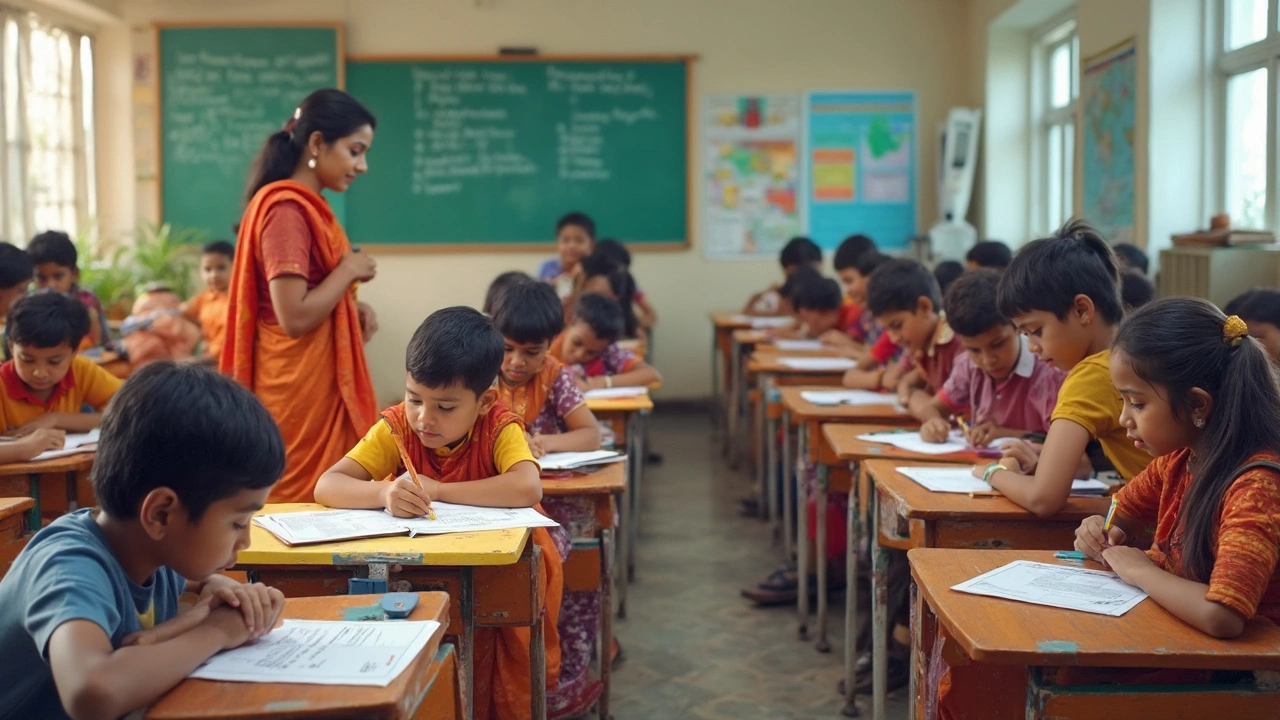
Select your grade level or academic stage to view the core subjects, key topics, and assessment focus areas as per the latest CBSE guidelines.
Holistic Foundation (Classes 1-5)
Focus is on language proficiency, basic numeracy, and environmental awareness. There are no distinct 'subjects' in the traditional sense yet.
Subject Specialization Begins (Classes 6-8)
Subjects split into distinct disciplines. Internal assessments (20 marks) become part of the grading system.
| Subject | Key Introduction |
|---|---|
| Science | Basic concepts of matter, energy, and life processes. |
| Social Science | History, Geography, Civics, and Economics basics. |
| Mathematics | Algebraic expressions, integers, and geometry. |
| Languages | Advanced grammar and literature appreciation. |
The Critical Shift (Classes 9-10)
Standardized syllabus across all CBSE schools. High emphasis on conceptual clarity and application.
Science
High Weightage
- • Chemical Reactions
- • Electricity & Magnetism
- • Life Processes
- • Heredity & Evolution
Mathematics
Very High Weightage
- • Trigonometry
- • Quadratic Equations
- • Probability & Statistics
- • Advanced Geometry
Social Science
Moderate Weightage
- • Nationalism in India
- • Economic Development
- • Resources & Agriculture
English
Moderate Weightage
- • Literature Analysis
- • Writing Skills
- • Grammar Proficiency
Choosing Your Path (Classes 11-12)
Specialized streams with elective choices. No single standard syllabus; depends on chosen combination.
Most rigorous track. Aligns with JEE/NEET.
Mirrors professional certifications like CA Foundation.
Focus on critical thinking, debate, and essay writing.
Ever felt like you’re trying to solve a puzzle with missing pieces? That’s how many students feel when they first open the CBSE syllabus. It looks massive, intimidating, and honestly, a bit confusing. But here’s the secret nobody tells you upfront: it’s not just a list of topics. It’s a roadmap. If you know how to read it, you can stop memorizing everything in sight and start studying what actually matters.
The Central Board of Secondary Education (CBSE) doesn’t just pick random facts to test you. They follow a structured framework based on the National Education Policy (NEP) guidelines, shifting focus from rote learning to competency-based education. Whether you are in Class 6 or preparing for your final boards in Class 12, understanding the structure saves you hundreds of hours. Let’s break down exactly what is inside this syllabus, how it changes by grade, and why it matters for your future exams.
The Core Philosophy Behind the Curriculum
Before we look at specific subjects, you need to understand the "why." The CBSE curriculum is designed around three pillars: conceptual clarity, application, and skill development. In recent years, specifically post-2020 reforms, the board removed about 30% of the content from various subjects to reduce student stress. This wasn’t just about making things easier; it was about removing redundancy.
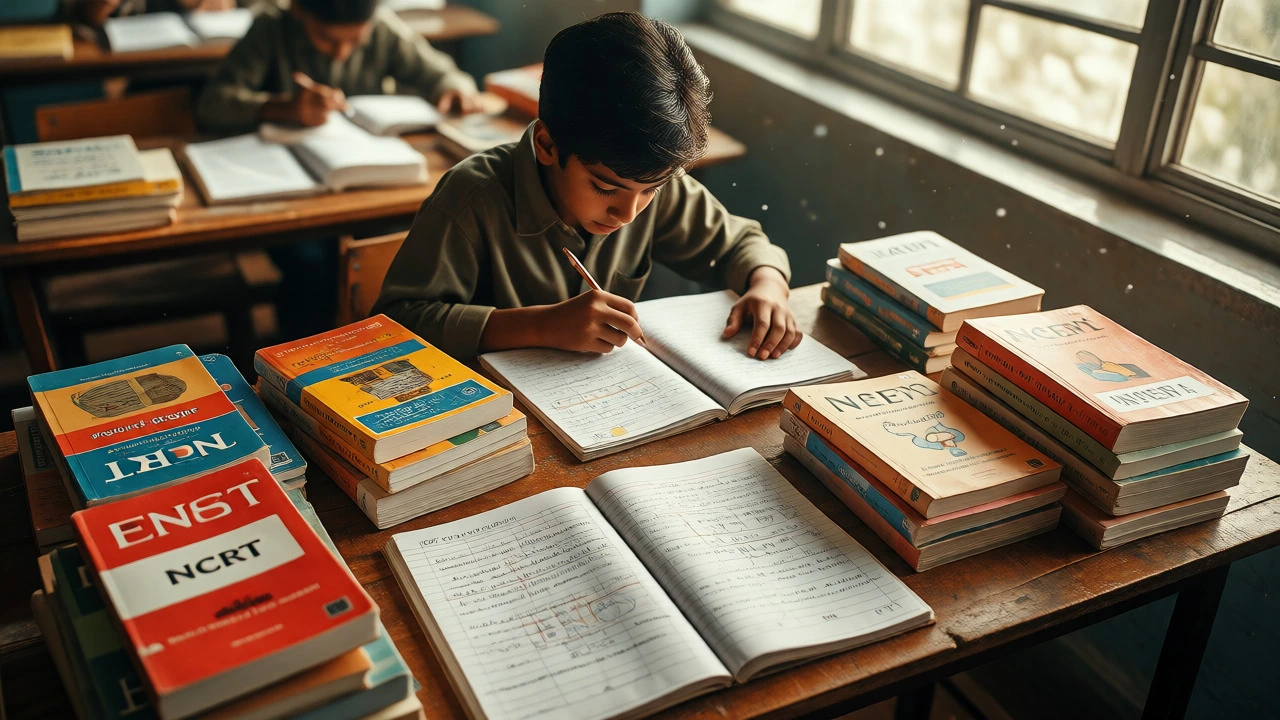
You’ll notice that questions now ask "how" and "why" more than "what." For example, instead of asking for the date of a historical event, a question might ask you to analyze its impact on modern society. This shift aligns with global standards, making Indian students competitive internationally. The syllabus is strictly aligned with NCERT textbooks, which serve as the primary source material. If a topic isn’t in the NCERT book, it’s rarely in the exam. Period.
Primary and Middle School: Building Foundations (Classes 1-8)
In the early years, the syllabus focuses on holistic development rather than subject-specific depth. From Class 1 to Class 5, the emphasis is on language proficiency, basic numeracy, and environmental awareness. There are no formal "subjects" in the traditional sense until Class 6. Instead, you have integrated themes.
- Languages: Usually Hindi and English, plus a regional language if applicable. The goal is fluency, not grammar rules.
- Mathematics: Focuses on mental math, geometry basics, and real-life problem solving.
- Environmental Studies (EVS): A mix of science and social studies, teaching kids about their immediate surroundings.
Once you hit Class 6, things split up. You get distinct subjects: Science, Social Science, Mathematics, and Languages. The jump in difficulty here surprises many students. Suddenly, you’re dealing with algebraic expressions and map reading. The syllabus introduces internal assessments worth 20 marks, testing your project work and participation. This is where good study habits start forming.
Secondary Stage: The Critical Shift (Classes 9-10)
Class 9 and 10 are often called the "foundation years" because they set the stage for higher secondary education. The Class 10 CBSE syllabus is standardized across all schools affiliated with the board. This uniformity allows for fair comparison of students nationwide.
Here is a breakdown of the key subjects and what they entail:
| Subject | Core Topics | Weightage Focus |
|---|---|---|
| Science | Chemical Reactions, Electricity, Life Processes, Heredity | High (Conceptual & Numerical) |
| Mathematics | Trigonometry, Quadratic Equations, Probability, Geometry | Very High (Problem Solving) |
| Social Science | Nationalism, Economics Basics, Geography of Resources | Moderate (Factual & Analytical) |
| English | Literature Analysis, Writing Skills, Grammar | Moderate (Expression) |
A common mistake students make is ignoring the practical components. In Science, lab manuals are part of the syllabus. You might be asked to identify apparatus or explain an experiment procedure in the theory paper. Don’t skip these chapters. Also, note that Mathematics has introduced new topics like Statistics and Probability earlier than before, reflecting a push towards data literacy.
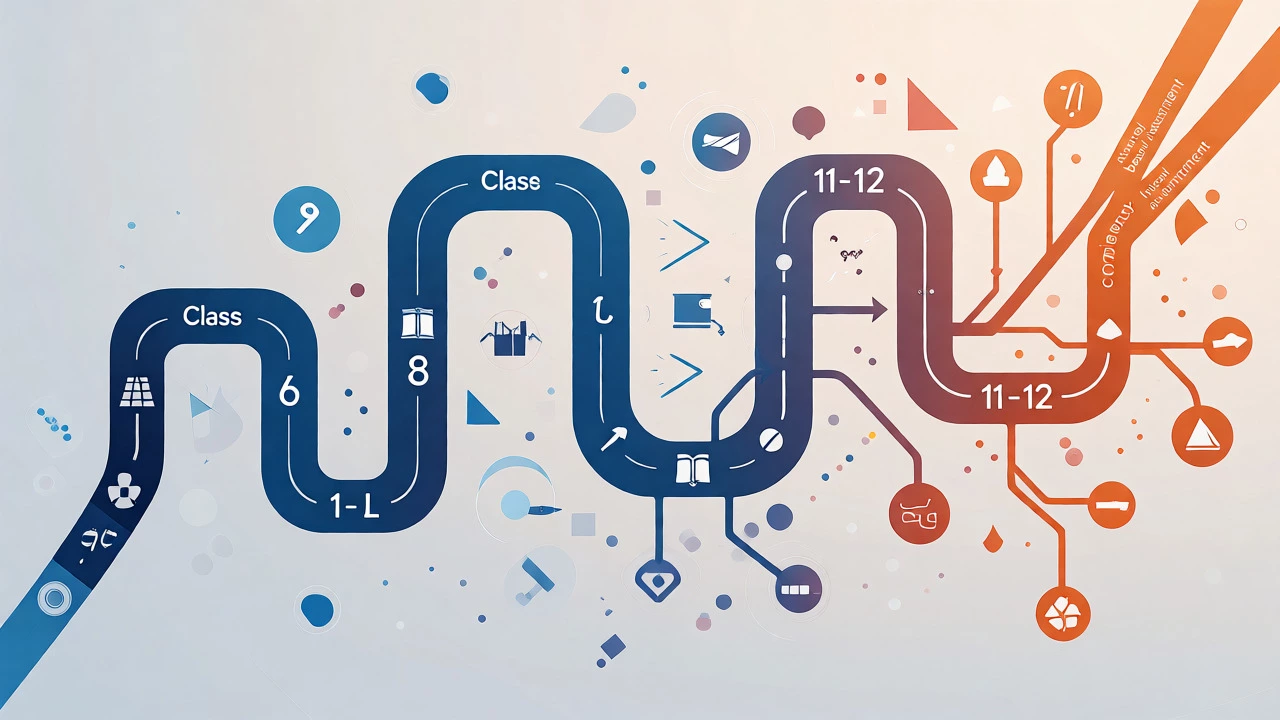
Senior Secondary: Choosing Your Path (Classes 11-12)
This is where the road forks. In Class 11, you choose a stream: Science, Commerce, or Humanities. The syllabus becomes highly specialized. Unlike Classes 9-10, there is no single "standard" syllabus for everyone; it depends entirely on your chosen electives.
Science Stream: This is the most rigorous track. Physics, Chemistry, and Biology (or Computer Science/Mathematics) form the core. The depth is significant. For instance, in Physics, you move beyond basic formulas to calculus-based derivations. In Chemistry, organic chemistry takes center stage, requiring strong memory and logical linkage skills.
Commerce Stream: Accountancy, Business Studies, and Economics are the big three. The syllabus mirrors professional certifications like CA Foundation. You’ll learn double-entry bookkeeping, corporate laws, and macroeconomic theories. Math or Applied Math is usually compulsory, though some schools offer Informatics Practices.
Humanities/Arts Stream: History, Political Science, Psychology, Sociology, and Literature options. This stream demands critical thinking and essay-writing skills. The syllabus covers complex socio-political issues, encouraging debate and perspective-taking rather than right-or-wrong answers.
How Assessment Works: Theory vs. Practical
Understanding the marking scheme is half the battle won. For Class 10 and 12, the total score is out of 100 marks. Typically, 70 marks are for the written theory exam, and 30 marks are for internal assessment.
The internal assessment includes:
- Periodic Tests: Conducted by the school throughout the year.
- Notebook Submission: Checking if you’ve maintained records properly.
- Practical/Lab Work: For Science subjects, this involves performing experiments and writing reports.
- Project Work: Often seen in Social Science and Languages.
Why does this matter? Because getting full marks in theory is hard, but securing those 30 internal marks is relatively easy if you stay consistent. Many students fail to clear the cutoff because they neglect internal assessments while obsessing over the final exam.
Recent Changes and Competency-Based Questions
If you’re looking at older question banks, be careful. The syllabus has evolved. Since 2023-24, there has been a marked increase in competency-based questions. These include case studies, assertion-reason types, and multi-disciplinary problems.
For example, a Math problem might present a real-world scenario involving business profit and loss, requiring you to apply quadratic equations to find the optimal price point. It’s no longer just "solve for x." It’s "use x to solve this problem." This change aims to prepare students for university-level thinking and entrance exams like JEE and NEET, which also favor application over memorization.
Tips for Mastering the Syllabus
So, how do you tackle this mountain of content? Here is a practical approach used by top scorers:
- Map the Weightage: Check the chapter-wise weightage sheet released by CBSE annually. Spend time proportional to the marks allotted. Don’t spend two weeks on a 2-mark chapter.
- Stick to NCERT: Solve every exercise in the textbook. Back exercises are gold mines for board questions.
- Past Papers: Solve the last 5 years’ papers. Patterns repeat. You’ll spot frequently asked questions quickly.
- Sample Papers: Download official sample papers from the CBSE website. They show the exact format and difficulty level expected.
Remember, the syllabus is finite. It ends. You don’t need to know everything about Physics; you need to know what is in the Class 12 CBSE Physics syllabus. Stay focused on that boundary.
Is the CBSE syllabus the same for all schools?
Yes, the theoretical syllabus is identical for all CBSE-affiliated schools across India and abroad. However, internal assessments and projects may vary slightly depending on the school's specific implementation, provided they meet CBSE guidelines.
Are NCERT books sufficient for the CBSE syllabus?
For board exams, NCERT books are absolutely sufficient. All questions are derived directly from them. However, for competitive exams like JEE or NEET, additional reference books are recommended to handle higher-difficulty problems.
How often is the CBSE syllabus updated?
The syllabus undergoes minor revisions annually and major overhauls every few years. Recently, significant rationalization occurred to remove outdated content. Always check the latest academic year's circulars on the official CBSE website for current updates.
What is the difference between CBSE and ICSE syllabus?
CBSE focuses more on science and mathematics with a standardized national approach. ICSE (Indian Certificate of Secondary Education) tends to have a broader, deeper literature component and emphasizes English language proficiency more heavily. CBSE is generally considered better suited for engineering and medical aspirants due to its alignment with national entrance exams.
Can I change my subject combination after Class 10?
Yes, you can choose a different stream (Science, Commerce, or Arts) in Class 11 regardless of your Class 10 performance, provided you meet the minimum eligibility criteria set by your school for that specific stream.