Coding Math Path Estimator
Not sure how much math you actually need? Select a career path to see the requirements.
Path Details
LevelCore Mathematical Concepts:
💡 Pro Tip:
Tip goes here.
Please select a path above to see the mathematical requirements.
You've probably seen the memes: someone staring at a chalkboard full of Greek symbols and complex integrals, claiming that's what a day in the life of a software engineer looks like. If you're staring at a coding and math textbook and feeling a wave of panic because you struggled with algebra in high school, let me stop you right there. For the vast majority of people writing code, the "math" isn't about solving for X or calculating the area of a trapezoid; it's about logic, patterns, and problem-solving.
Here is the reality: you don't need to be a math genius to build a website, create a mobile app, or automate a boring task at work. However, depending on what you want to build, the amount of math you'll encounter varies wildly. It's like the difference between learning to drive a car and learning how to build an engine from scratch. You can be a world-class driver without knowing the thermodynamics of internal combustion.
Key Takeaways for Aspiring Coders
- Basic arithmetic (addition, subtraction, multiplication, division) is enough for 80% of web and app development.
- Logic and algorithmic thinking are more important than memorizing formulas.
- Advanced math is only required for specialized fields like Game Development, AI, and Data Science.
- You can learn the necessary math *while* you learn to code, rather than before.
The Logic Link: Why People Confuse Math with Coding
When people say coding is "math," they usually mean Logic is the systematic way of thinking that allows a programmer to break a complex problem into smaller, solvable steps. This is often called computational thinking. If you can follow a recipe or organize a bookshelf, you're already doing a form of logic.
In programming, this manifests as Boolean Logic is a system of algebraic operations where all values are reduced to either true or false. You'll use this every single day. For example, if you're building a login page, you're essentially writing a logical statement: "IF the password is correct AND the email exists, THEN let the user in." See? No calculus required. Just a simple set of conditions.
Where Math Actually Shows Up (The Levels)
To give you a concrete answer, let's break down the "Math Levels" based on what you're actually doing. Not all paths in tech are created equal.
| Path | Math Level | Key Concepts Used |
|---|---|---|
| Frontend Web Dev | Basic | Arithmetic, Percentages, Basic Geometry |
| Backend Dev | Intermediate | Logic, Set Theory, Basic Statistics |
| Data Science / AI | Advanced | Linear Algebra, Calculus, Probability |
| Game Development | Advanced | Trigonometry, Vectors, Physics |
Web Development: The Low-Math Entry Point
If you're interested in Frontend Development is the practice of producing HTML, CSS and JavaScript for a website so that a user can see and interact with them, you're in luck. Most of your time will be spent on layout and user experience. You'll use basic math to figure out if a sidebar should be 25% of the screen width or if a button needs a 10px margin.
Even when you move into JavaScript is a high-level, interpreted programming language that enables interactive web pages, you're mostly manipulating strings of text or arrays of data. You might use a loop to repeat a task ten times, which is just basic counting. If you can use a calculator, you have enough math for this path.
The "Heavy Hitters": When You Actually Need the Big Guns
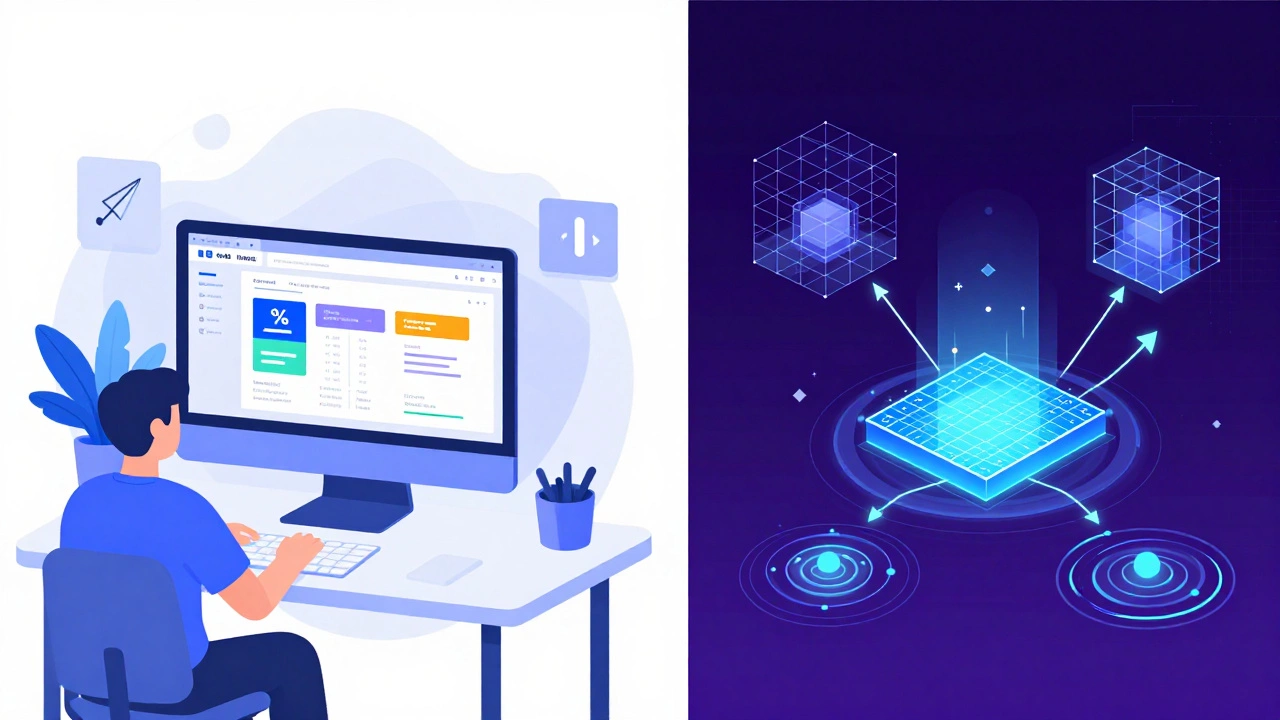
Now, let's be honest. There are areas where you cannot escape the math. If you want to get into Machine Learning is a field of AI that uses statistical techniques to give computer systems the ability to "learn" from data, you're going to need Linear Algebra is the branch of mathematics concerning linear equations and matrices. Why? Because AI models essentially treat data as giant grids of numbers (matrices) and perform operations on them to find patterns.
Similarly, if you're building a 3D game in Unity is a cross-platform game engine used to create 2D and 3D games, you'll need to understand vectors and trigonometry. If you want a character to move toward a target at a specific angle, you aren't just typing "move character"; you're calculating the cosine and sine of an angle to determine the X and Y coordinates on the screen.
How to Learn Coding If You Hate Math
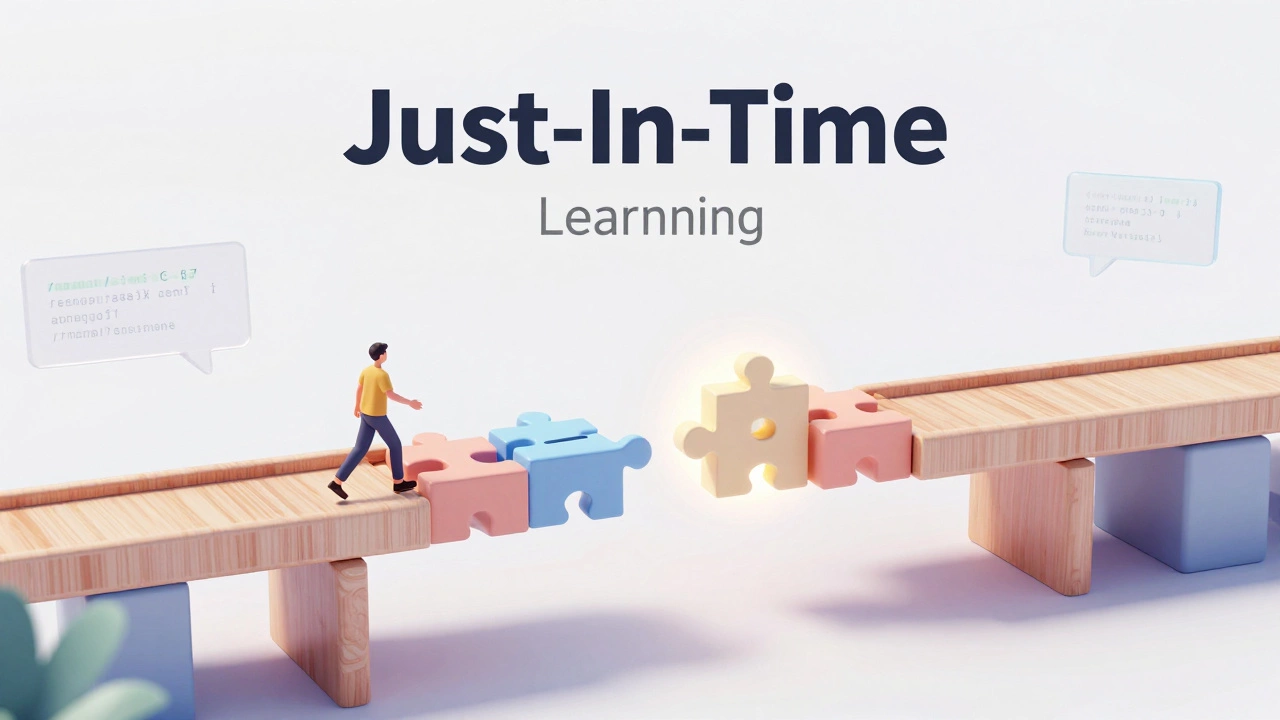
The biggest mistake beginners make is trying to "brush up on math" before they start coding. That's a recipe for burnout. Instead, try the "Just-in-Time" learning method. Start building things. When you hit a wall where you actually *need* a math concept to move forward, that's when you learn it.
For instance, don't spend a month studying Discrete Mathematics is the study of mathematical structures that are fundamentally discrete rather than continuous. Instead, start writing a simple program. When you realize you need to organize data efficiently, look up Data Structures is specialized formats for organizing, processing, retrieving and storing data like Hash Maps or Trees. By linking the math to a concrete problem, it stops being a scary formula and starts being a useful tool.
Common Pitfalls and Misconceptions
One common myth is that you need to be a fast mental calculator. In reality, the computer does the calculating for you. Your job is to tell the computer *how* to calculate. If you need to find the square root of a number in Python is a high-level, general-purpose programming language known for its readability, you don't do it by hand; you use a built-in function like math.sqrt(). The skill isn't knowing the answer, but knowing which tool to use to get the answer.
Another trap is thinking that "logic" is something you're born with. Logic is a muscle. The more you write code, the more you develop the ability to think structurally. You'll start seeing the world in terms of inputs, outputs, and edge cases. This is the "math" of the real world, and it's far more valuable in a job interview than knowing how to derive a quadratic equation.
Do I need to know calculus to learn Python?
Absolutely not. You can become a professional Python developer without ever touching a derivative or integral. Calculus is only necessary if you're diving into deep learning, advanced physics simulations, or highly specialized quantitative finance algorithms.
What is the most important type of math for a beginner?
Discrete math and basic logic. Understanding how "True" and "False" interact, how to use sets, and how to break a problem into a sequence of steps (algorithms) will serve you better than any other branch of mathematics in your first year of coding.
Can I be a software engineer if I failed high school math?
Yes. Many successful engineers struggled with traditional classroom math because it felt abstract and boring. Coding provides a practical application for math, which often makes it much easier to understand for those who learn by doing.
Will I have to do math every day while coding?
You will use "math-like" thinking every day, such as comparing numbers or calculating the length of a list. But you won't be doing manual calculations. You'll be writing logic that tells the computer to do the math for you.
Is there any coding language that requires zero math?
No language requires "zero" math because basic counting and arithmetic are fundamental to how computers work. However, languages used for web design (like HTML and CSS) require the least amount of mathematical knowledge to get started.
Next Steps for Your Journey
If you're still nervous, don't start with a math course. Start with a project. Try building a simple calculator app. In doing so, you'll actually learn the math required for that specific project. If you find you enjoy the logic but hate the numbers, steer toward Frontend Development or UX Design.
If you discover you love the patterns and the data, then gradually introduce concepts like Big O Notation is a mathematical notation that describes the limiting behavior of a function when the argument tends towards a particular value to understand how your code performs as it scales. The beauty of modern coding is that the path is flexible; you can start simple and add the complexity as your curiosity grows.