
Coding Pathway Planner for Adults 50+
Discover the best coding path and timeline tailored to your goals, experience, and available time.
Your Profile
Recommended Pathway
Build interactive websites and web applications using modern technologies.
Learning Timeline
Select your preferences
Complete the form on the left to generate a personalized coding roadmap based on your goals and schedule.
You stare at the screen. The blinking cursor mocks you. You’ve heard that learning to code is like picking up a new language, but unlike Spanish or French, this one feels like it requires a brain rewired in kindergarten. If you are turning 50 this year-or have already passed that milestone-the question isn’t just about curiosity. It’s about viability. Is it too late to build software, automate your job, or pivot into a tech career?
The short answer is no. The long answer involves some hard truths about energy levels, hiring biases, and the specific strategies you need to survive as an older learner. This isn’t a motivational speech; it’s a tactical guide for adults who want to learn coding without wasting time on myths.
The Myth of the "Young Genius" Programmer
We’ve all seen the movies: the hoodie-wearing teenager hacking mainframes in a basement. Hollywood sold us the idea that coding is exclusively for the young and sleep-deprived. In reality, the industry is full of developers who started after 40, 50, or even 60. Why do we believe the myth? Because early adopters tend to be younger, and because companies love to market their culture as "young and disruptive."
But look at the data from platforms like GitHub and Stack Overflow. While the median age of developers is indeed lower than many other professions (often cited around 29-32), there is a massive tail of experienced contributors well into their 50s and 60s. More importantly, the barrier to entry has dropped significantly. You don’t need to understand memory management in C++ to build a functional website today. High-level languages like Python and JavaScript allow you to create value with less foundational computer science knowledge upfront.
Your advantage isn’t raw processing speed or the ability to pull all-nighters. Your advantage is context. You know how businesses work. You understand communication, project management, and domain-specific problems. A 22-year-old might write cleaner code faster, but can they explain why that feature hurts the customer experience? Probably not yet. You can.
Why Age Actually Helps in Learning Logic
Learning to code isn’t about memorizing syntax; it’s about logical problem-solving. And here is where age becomes an asset. Neuroplasticity doesn’t stop at 50; it just changes. While you might take longer to form new neural pathways for rote memorization, your crystallized intelligence-your ability to use learned knowledge and experience-is at its peak.
Consider debugging. For a beginner, a missing semicolon is a catastrophe. For an experienced professional used to auditing financial statements or managing complex supply chains, it’s just another detail to check. You have decades of practice in breaking down large, ambiguous problems into smaller, manageable steps. That is exactly what programming is.
- Persistence: Younger learners often quit when things get hard because they haven’t faced enough failure in life yet. You have. You know that frustration is temporary.
- Focused Goals: You aren’t learning to "see what happens." You are likely learning to solve a specific problem or achieve a career shift. This focus accelerates learning.
- Communication Skills: Code is read more often than it is written. Being able to document your logic and collaborate with others is a skill you already possess.
The Real Challenges: Energy, Time, and Bias
Let’s be honest about the downsides. Ignoring them will set you up for failure.
1. Cognitive Load and Fatigue Your brain is tired. Between work, family, and aging joints, the mental bandwidth available for deep focus is limited. Coding requires intense concentration. You cannot multitask while learning loops and arrays. You need to protect your "deep work" hours fiercely. This means waking up earlier or sacrificing weekend leisure time. It’s a trade-off you must accept.
2. The Hiring Bias If your goal is to land a junior developer role at a startup, you will face ageism. Recruiters often assume older candidates are overqualified, expensive, or culturally misaligned. This is unfair, but it is real. However, this bias diminishes significantly if you position yourself as a "domain expert who codes" rather than a "junior dev." Companies in healthcare, finance, logistics, and manufacturing value industry knowledge over raw coding speed.
3. The Pace of Change Tech moves fast. Frameworks die every few years. At 20, you might not care because you’re building your first app. At 50, you might feel overwhelmed by the constant need to relearn. The solution is to focus on fundamentals (HTML, CSS, JavaScript, SQL) rather than chasing the latest trendy framework. Fundamentals last decades; frameworks last months.
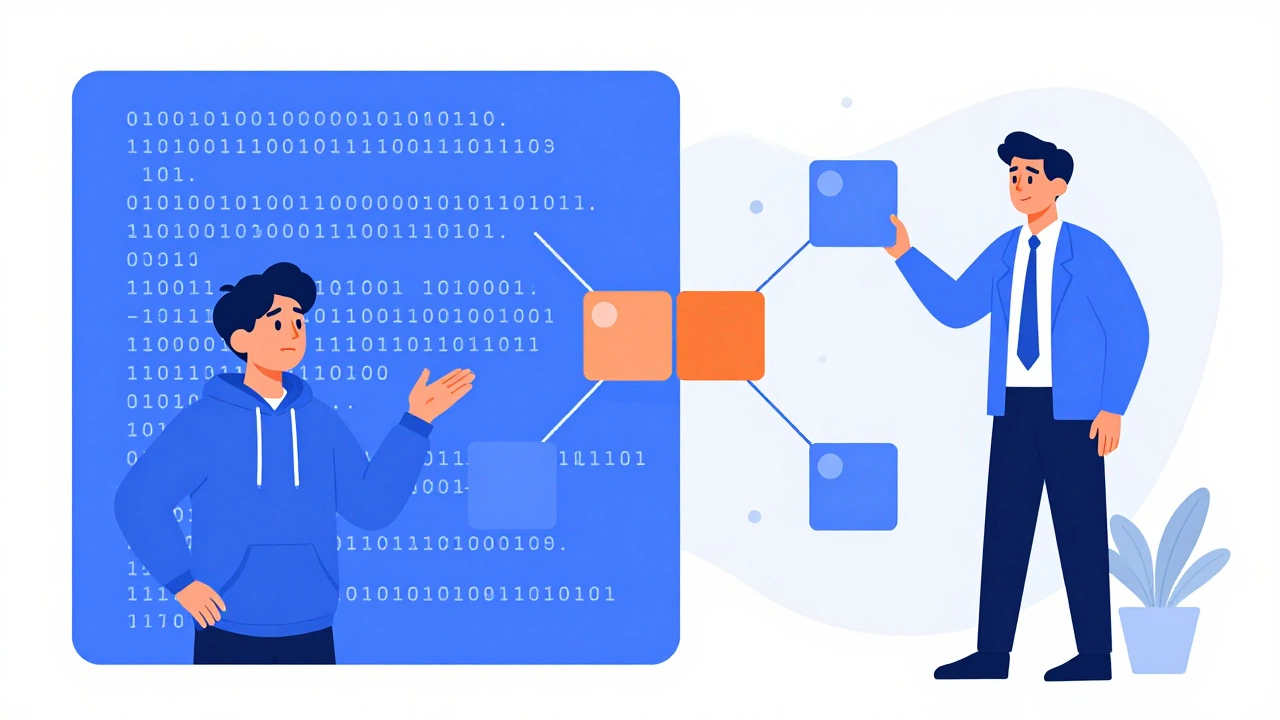
Choosing the Right Path: What Should You Learn?
Don’t start with C++ or Assembly. Don’t try to build an operating system. Start with tools that give you immediate visual feedback and practical utility.
| Path | Primary Language | Why It Fits Older Learners | Time to First Project |
|---|---|---|---|
| Web Development | JavaScript, HTML/CSS | Visual results, high demand, flexible remote work options. | 2-4 weeks |
| Data Analysis | Python, SQL | Leverages existing analytical skills, less UI/UX complexity. | 4-8 weeks |
| Automation/Scripting | Python, PowerShell | Solves immediate workplace problems, low barrier to entry. | 1-2 weeks |
Python is a versatile programming language known for its readable syntax and wide range of applications in web development, data analysis, and automation. It is widely considered the best first language for adults because it reads like English. You spend less time fighting the compiler and more time solving problems.
If you want to see immediate visual results, go with Web Development. Building a simple portfolio page gives you a sense of accomplishment quickly. If you come from a business background, Data Analysis with Python and SQL allows you to talk to your current colleagues in a new, powerful way.
How to Study Without Burning Out
Tuition-based bootcamps are popular, but they are designed for people who can study 8 hours a day for 12 weeks. At 50, that schedule is unsustainable. Here is a better approach:
- The 30-Minute Rule: Commit to 30 minutes of focused coding daily. Consistency beats intensity. Your brain needs sleep to consolidate new skills. Cramming doesn’t work well for procedural memory.
- Project-Based Learning Only: Stop watching tutorial videos passively. Build something broken immediately. Try to recreate a button from a website you like. Try to calculate your taxes using a script. Failure teaches you more than success.
- Use AI as a Tutor: Tools like ChatGPT or GitHub Copilot are not cheating; they are assistants. Ask them to explain a concept in simple terms. Ask them to review your code for errors. Use them to bridge the gap between confusion and clarity.
- Join Communities: Isolation kills motivation. Join local meetups or online forums like Reddit’s r/learnprogramming. You’ll find thousands of people in their 40s and 50s doing the same thing. Their encouragement is genuine.

Career Pivot vs. Hobbyist: Setting Expectations
Before you write a single line of code, define your "why."
Scenario A: The Career Pivot You want to leave your current job and become a software engineer. This is possible, but difficult. You will likely need to take a pay cut initially. You will need to network aggressively. Focus on roles that value your previous industry experience. For example, if you were a nurse, look for health-tech companies. If you were a teacher, look for ed-tech firms. Your domain expertise is your differentiator.
Scenario B: The Augmentation Strategy You want to keep your current job but make yourself indispensable. Learn to automate Excel reports with Python. Learn to scrape data for market research. Learn to build internal dashboards. This is the safest and most rewarding path for most adults. You get the benefits of coding (higher efficiency, potential raises) without the risk of unemployment during the transition.
Scenario C: The Creative Outlet You just want to build apps for fun or for small clients. This is low pressure. You can move at your own pace. Focus on enjoyment rather than optimization. Build the blog, the recipe tracker, or the family photo gallery. The joy of creation is reward enough.
Tools You Need to Start Today
You don’t need a powerful computer. You don’t need expensive software. Here is the minimal stack:
- Code Editor: Visual Studio Code (VS Code). It’s free, lightweight, and has extensions for everything.
- Breathable Environment: Install Git. Version control is non-negotiable. It saves you when you break your code (which you will).
- Learning Platform: FreeCodeCamp (web dev), Coursera (academic structure), or Udemy (specific projects). Avoid YouTube rabbit holes unless you have a specific error to fix.
- Note-Taking: Keep a digital journal. Write down what you learned each day. Teaching yourself by writing notes reinforces memory.
Start small. Write a program that prints "Hello, World." Then modify it to print your name. Then make it ask for someone else’s name. These tiny victories build momentum.
Is 50 too old? No. It’s just different. You bring wisdom, patience, and perspective that younger developers lack. The code doesn’t care how old you are. It only cares if your logic is sound. So open the editor, type the first line, and begin.
Can I really get a job as a developer if I start coding at 50?
Yes, but it requires strategy. Pure junior developer roles are competitive and biased toward youth. However, roles that combine technical skills with industry experience (e.g., Health Tech, FinTech, Logistics) are highly valuable. Position yourself as a subject matter expert who can code, not just a coder.
What is the easiest programming language for beginners over 50?
Python is widely regarded as the easiest due to its readable, English-like syntax. JavaScript is also a strong contender if you are interested in web development because you can see results instantly in your browser. Both have massive community support and extensive learning resources.
Do I need a Computer Science degree to learn coding later in life?
No. Most modern web development and automation roles do not require a CS degree. Employers prioritize portfolios, practical skills, and problem-solving ability. Bootcamps, self-study, and certifications are often sufficient, especially when combined with your existing professional experience.
How much time per day should I dedicate to learning?
Consistency is more important than volume. Aim for 30-60 minutes of focused practice daily. This prevents burnout and allows your brain to consolidate learning during sleep. Weekend marathons are less effective than daily micro-sessions.
Is it worth learning coding if I'm close to retirement?
Absolutely. Coding keeps your mind sharp, improves logical thinking, and can provide a fulfilling hobby or freelance income stream post-retirement. Many retirees enjoy building websites for local charities or creating personal projects, finding deep satisfaction in the creative process.