Python Learning Timeline Estimator
Consistency beats intensity. Adjust your daily practice to see when you'll realistically hit each milestone.
Aim for 30–60 minutes of focused practice. Quality over quantity — active problem-solving beats passive watching.
Let’s be honest: starting a new skill always feels like standing at the edge of a cliff. You want to jump in, but you’re terrified you might not know how to swim. If you’ve been wondering is Python hard to learn, you are asking the right question before you dive in. The short answer is no, it is not hard, but it does require patience. Python is designed to be readable, almost like plain English. However, "easy" doesn't mean "effortless." You still need to think logically. But compared to languages like C++ or Java, the barrier to entry is significantly lower.
You don’t need a computer science degree to start. Many successful developers began with zero prior experience. The key is understanding what makes Python different and setting realistic expectations for your first few weeks. This guide breaks down the actual difficulty levels, common pitfalls, and how long it really takes to get comfortable.
Why Python Feels Easier Than Other Languages
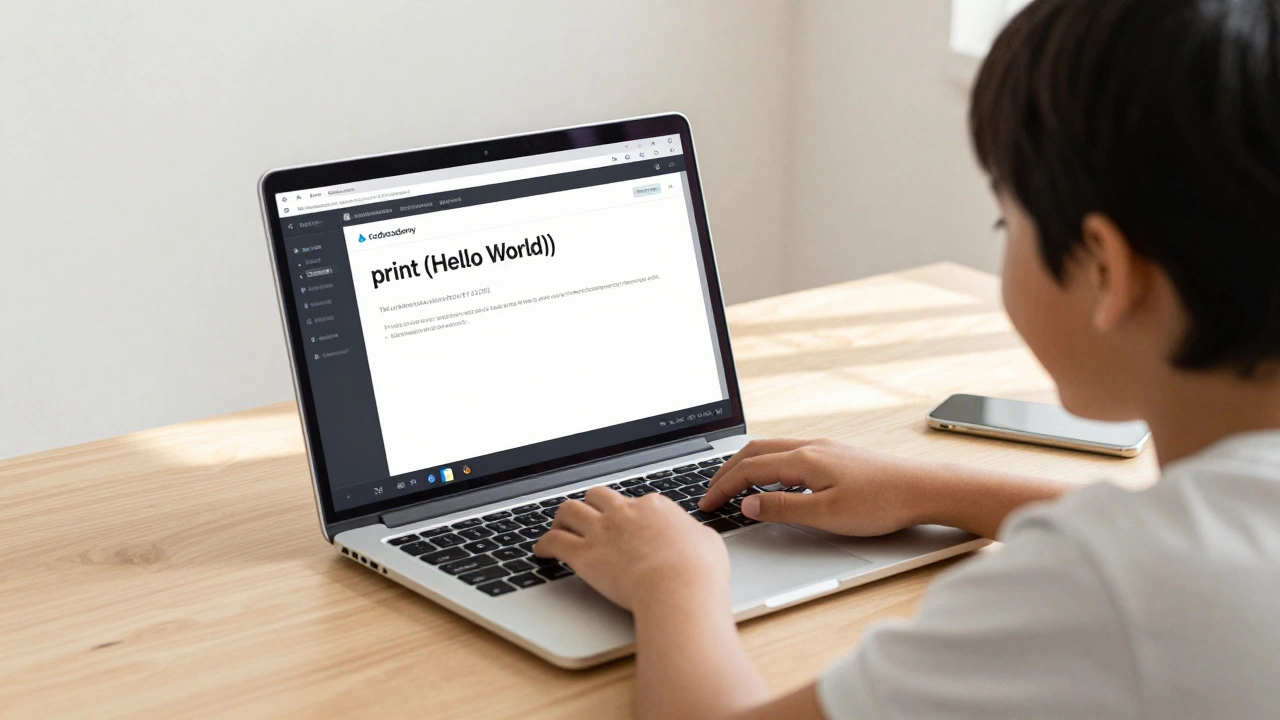
When people ask about the learning curve, they usually compare it to other popular languages. Python stands out because of its syntax. In many languages, you have to write a lot of boilerplate code just to say "Hello, World." In Python, it’s just two lines. This simplicity reduces cognitive load, meaning your brain can focus on logic rather than memorizing strict formatting rules.
Python is a high-level programming language known for its clear syntax and readability. It uses indentation to define blocks of code instead of curly braces. This forces you to write clean, organized code from day one. While this might seem restrictive at first, it actually helps beginners avoid messy code structures that plague experienced developers in other languages.
Another major factor is the ecosystem. Python has a massive community. If you get stuck, someone else has likely solved your exact problem. You can find answers on forums, documentation sites, and video tutorials within minutes. This support network acts as a safety net, making the learning process less isolating and frustrating.
The Real Challenges Beginners Face
Even though the syntax is friendly, there are specific hurdles that trip up new learners. Recognizing these early saves time and frustration. Here are the most common pain points:
- Indentation Errors: Because Python relies on spaces to define structure, mixing tabs and spaces can break your code silently. One missing space can cause an error that looks confusing if you don’t know why it happened.
- Variable Types: Python handles data types dynamically. You don’t declare whether a variable is a number or text. While convenient, this can lead to bugs where you accidentally add a string to a number without realizing it.
- Logic vs. Syntax: Knowing how to write a loop is easy. Knowing *when* to use a loop versus a list comprehension is harder. The real challenge isn’t typing commands; it’s breaking down problems into steps a computer can understand.
Many students fail not because Python is hard, but because they try to memorize everything instead of practicing. Coding is a skill, like playing guitar. You don’t learn it by reading sheet music; you learn it by playing. The same applies here. You need to type code, break it, fix it, and repeat.
How Long Does It Actually Take?
This is the million-dollar question. The answer depends entirely on how much time you invest daily. There is no single timeline, but we can look at typical milestones based on consistent practice (about 1-2 hours per day).
| Timeframe | Skill Level | What You Can Do |
|---|---|---|
| Weeks 1-4 | Novice | Write basic scripts, handle variables, use loops and conditionals. |
| Months 2-3 | Intermediate | Create small projects, use functions, work with files and lists. |
| Months 4-6 | Competent | Build web apps or automate tasks, understand object-oriented programming. |
| Year 1+ | Advanced | Design complex systems, optimize code, choose appropriate libraries. |
Notice that "competent" happens around six months. This means you can build useful tools and solve real problems, not just pass a quiz. If you study part-time while working or studying, expect this timeline to stretch slightly. Consistency beats intensity. Studying 30 minutes every day is far more effective than studying 5 hours once a week.
Best Ways to Start Learning Python
You don’t need to buy expensive software. Python is free and open-source. Here is a practical roadmap to get started without getting overwhelmed.
- Install the Right Tools: Download Python 3.12 from the official website. Use a simple text editor like VS Code or even Notepad++. Avoid heavy IDEs until you understand the basics.
- Learn the Core Concepts First: Focus on variables, data types, control flow (if/else), loops, and functions. Don’t jump into web development or AI yet. Master the foundation.
- Build Tiny Projects: Instead of following a tutorial blindly, build something small. A calculator, a to-do list, or a simple game. Struggling through a project teaches you more than watching a video.
- Read Code Daily: Look at how others solve problems. Sites like GitHub allow you to see real-world code. Reading good code improves your intuition faster than writing bad code.
- Join a Community: Isolation kills motivation. Join online forums or local meetups. Explaining your code to others helps solidify your understanding.
Avoid the trap of "tutorial hell." This is when you watch endless courses but never build anything independently. Once you finish a module, close the video and try to recreate what you learned from memory. That’s where the real learning happens.
Common Myths About Python Difficulty
There are plenty of myths circulating in the tech world that discourage beginners. Let’s bust a few of them so you can approach learning with the right mindset.
Myth 1: You Need Math Skills. Unless you are diving deep into data science or machine learning, you don’t need advanced calculus. Basic algebra is enough for most general-purpose programming. Logic matters more than math.
Myth 2: Python is Only for Data Science. While Python dominates data analysis, it is also widely used for web development, automation, scripting, and even game creation. It is a versatile tool, not a niche one.
Myth 3: It’s Too Easy to Be Serious. Some programmers argue that Python’s simplicity hides complexity. While true for large-scale enterprise applications, this is irrelevant for beginners. Starting simple allows you to scale up gradually. You can always switch to another language later if needed.
How to Stay Motivated When It Gets Hard
Every learner hits a wall. Maybe your code won’t run, or a concept just won’t click. This is normal. Here are some strategies to keep going when motivation dips.
First, set micro-goals. Instead of aiming to "become a developer," aim to "write a script that renames 10 files today." Small wins build confidence. Second, track your progress. Keep a journal of what you learned each week. Looking back after a month shows how far you’ve come, even if it felt slow during the process.
Finally, remember why you started. Did you want to automate boring tasks? Build a portfolio site? Analyze sports stats? Connect your daily practice to that original goal. When the syntax gets annoying, remind yourself of the end result. The struggle is temporary, but the skills are permanent.
Frequently Asked Questions
Do I need to know another programming language before Python?
No. Python is often recommended as the first language because its syntax is intuitive. Knowing another language can help, but it is not a prerequisite. Many self-taught developers started with Python and moved to JavaScript or Go later.
Is Python better for beginners than JavaScript?
For pure logic and backend tasks, Python is generally easier due to its simpler syntax. JavaScript is essential for web browsers and has a steeper learning curve regarding asynchronous behavior. If your goal is web development, you will eventually need both, but Python is a gentler introduction to programming concepts.
How many hours a day should I practice?
Consistency is key. Aim for 30 to 60 minutes daily. Quality matters more than quantity. Focused practice with active problem-solving is better than passive video watching for several hours. Burnout is a real risk if you overdo it initially.
Can I get a job knowing only Python?
Yes, especially in data analysis, automation, and backend roles. However, employers often look for project experience. Building a portfolio of small, functional projects demonstrates your ability to apply Python in real scenarios, which is more valuable than just knowing the syntax.
What is the hardest part of learning Python?
Debugging. When code fails, finding the root cause requires logical thinking and attention to detail. Learning to read error messages and use debugging tools effectively is a crucial skill that takes time to develop. It is less about the language and more about problem-solving discipline.