Distance Learning Era Selector
Explore how education evolved across historical periods - from postal correspondence to AI tutors
Discover Your Era
Enter a year to see how distance learning worked during that period
Try: 1850, 1940, 1985, 2005, or 2020
People think distance learning began with Zoom calls and learning management systems. But the truth? It started over 150 years ago-with envelopes, stamps, and handwritten lessons sent through the mail.
The First Distance Learning Program Wasn’t Digital
In 1840, Isaac Pitman, a British shorthand teacher, mailed out the first known distance learning course. He taught shorthand through printed lessons sent to students across England. Students completed exercises, mailed them back, and Pitman graded them with corrections. No internet. No video. Just paper and persistence.
This wasn’t a fluke. By the 1870s, universities in the U.S. and Europe were doing the same. The University of London launched its External Programme in 1858, letting anyone, anywhere, take exams and earn degrees without ever stepping onto campus. Women, working-class people, and those in remote colonies could now access higher education for the first time. Over 1,000 students enrolled in the first year.
Before television, before radio, before computers-distance learning was built on postal systems. It was slow. It was messy. But it worked.
Radio, TV, and the Rise of Broadcast Education
By the 1920s, radio changed everything. The University of Iowa started broadcasting college lectures over the airwaves. In 1930, the BBC began airing educational programs for schoolchildren across Britain. These weren’t just entertainment-they were structured courses with homework assignments and reading lists.
Then came television. In the 1950s and 60s, public broadcasters in the U.S., Canada, and Australia launched televised university classes. The University of Illinois ran a TV-based degree program for adult learners. In Australia, the Australian Broadcasting Corporation (ABC) partnered with universities to deliver lectures to rural communities. Farmers, nurses, and factory workers tuned in after their shifts.
These weren’t perfect. You couldn’t pause a TV broadcast. If you missed a lecture, you missed it. But for people without access to traditional schools, it was the only way forward.
The Computer Age and the Birth of Modern E-Learning
The real shift happened in the 1980s. Personal computers started appearing in homes and workplaces. In 1982, the University of Illinois launched PLATO IV, one of the first computer-based learning systems. It allowed students to log in via terminals, take quizzes, and interact with lessons using graphics and sound.
By the mid-90s, the internet made it possible to send lessons instantly. In 1995, the University of Phoenix began offering fully online degree programs. It wasn’t just email and PDFs anymore-it was discussion boards, live chats, and digital assignments. Enrollment exploded. By 2000, over 1.5 million students in the U.S. were taking at least one online course.
What made this different from earlier methods? Control. You could learn at your own pace. Review material as many times as you needed. Submit work anytime. The system adapted to you, not the other way around.

Why Distance Learning Survived When Other Educational Experiments Failed
Many educational innovations die out. But distance learning kept growing. Why?
Because it solved real problems. It didn’t just make learning easier-it made it possible for people who were locked out of traditional education. Single parents. People with disabilities. Workers with irregular hours. Residents of countries with no local universities.
During the 2003 SARS outbreak, schools in Hong Kong switched to remote learning. In 2014, Ebola forced closures in West Africa, and NGOs used SMS-based lessons to keep kids learning. When the pandemic hit in 2020, the world didn’t invent distance learning-it just scaled up what already existed.
It wasn’t about technology. It was about access. And access never goes out of style.
How Distance Learning Changed the Role of Teachers
Before distance learning, teachers were in the room. They saw confusion on faces. They adjusted their tone. They knew who needed help.
Online learning forced a new kind of teaching. Teachers became designers. They had to build lessons that worked without them being there. They needed to anticipate questions, create clear instructions, and design feedback loops that didn’t rely on body language.
It wasn’t easier. It was harder. A teacher in a physical classroom can say, “Does that make sense?” and see a nod. An online teacher has to write five different explanations, record a video, and add a quiz-all to make sure one student gets it.
Today, the best online educators don’t just lecture. They build communities. They reply to discussion posts. They host live Q&As. They treat learning as a conversation, not a broadcast.
What Distance Learning Looks Like Today-And Where It’s Headed
In 2025, distance learning isn’t one thing. It’s a mix of:
- Live Zoom classes with real-time interaction
- Self-paced video courses on platforms like Coursera and edX
- Mobile apps that teach languages or coding in 10-minute bursts
- AI tutors that adapt to your mistakes in real time
- Hybrid programs where you meet in person once a month but do the rest online
More than 100 million people worldwide are enrolled in online courses right now. In countries like India and Nigeria, over 60% of university students take at least one class remotely.
But the core hasn’t changed. The first student who mailed back a shorthand exercise in 1840 wanted the same thing the student in Lagos does today: a chance to learn, grow, and change their future-even if they can’t walk into a classroom.
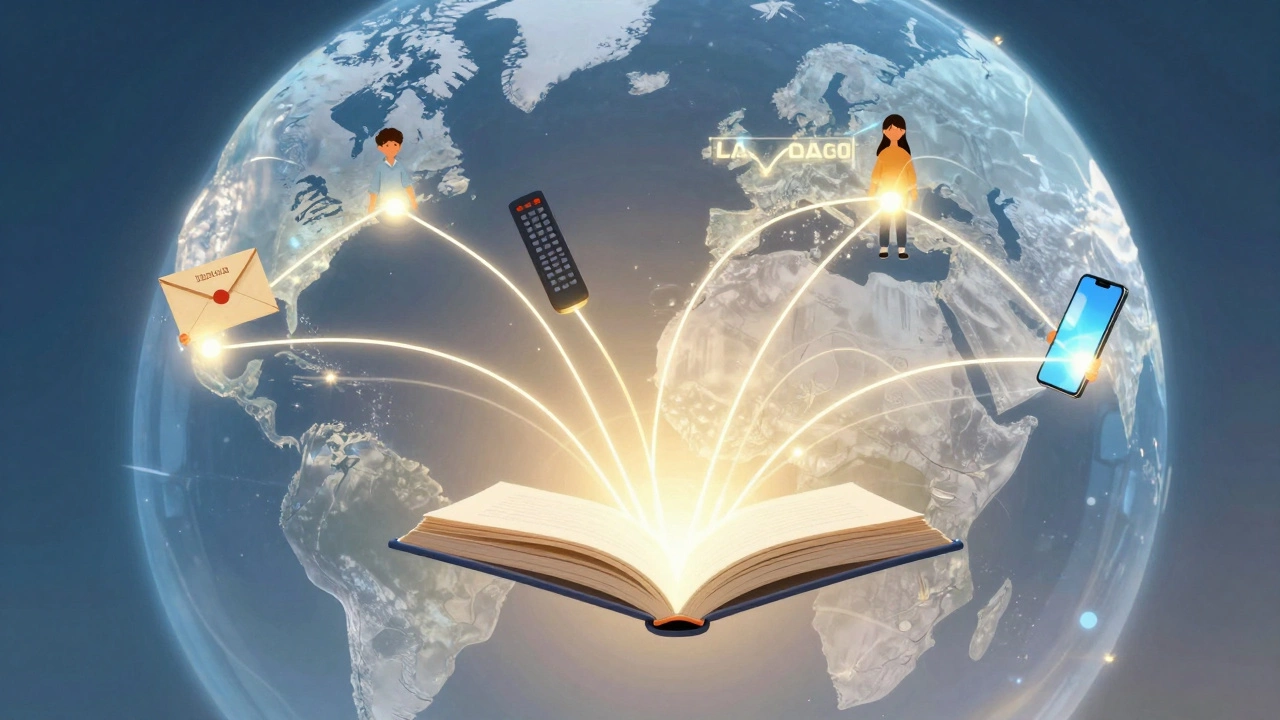
Key Milestones in Distance Learning History
| Year | Event | Significance |
|---|---|---|
| 1840 | Isaac Pitman mails shorthand lessons | First known correspondence course |
| 1858 | University of London launches External Programme | First degree-granting distance education program |
| 1920s | Radio lectures begin in U.S. and UK | First broadcast-based education |
| 1950s | TV-based university courses in Australia and U.S. | Mass reach to rural and working populations |
| 1982 | PLATO IV system launches | First computer-assisted learning platform |
| 1995 | University of Phoenix offers fully online degrees | First major university to go fully online |
| 2012 | Moonshot: MOOCs (Coursera, edX, Udacity) explode | Free, global access to top university courses |
| 2020 | Global pandemic forces mass shift to remote learning | Distance learning becomes mainstream for K-12 and higher ed |
Frequently Asked Questions
Was distance learning invented in the 2000s with the internet?
No. Distance learning began in the 1840s with postal correspondence courses. The internet made it faster and more interactive, but the idea of teaching remotely predates computers by over 100 years.
Who was the first person to offer distance learning?
Isaac Pitman, a British shorthand instructor, launched the first known distance learning course in 1840. He mailed printed lessons to students and returned graded exercises with corrections.
Did any universities accept distance learning degrees before the 20th century?
Yes. The University of London began awarding degrees to students who studied remotely in 1858. By 1870, over 5,000 students had earned degrees through its External Programme, including women in India and Australia who couldn’t attend campus.
How did distance learning survive during times without technology?
It relied on the postal system. Students received printed materials, completed assignments by hand, and mailed them back. Teachers graded them and returned feedback. It was slow, but it worked. Millions of people earned qualifications this way before computers existed.
Is distance learning less effective than in-person learning?
Studies show mixed results, but the biggest factor isn’t the format-it’s the design. A well-structured online course with regular feedback and peer interaction often outperforms a poorly taught in-person class. Effectiveness depends on how it’s built, not whether it’s online or in a room.
What You Should Take Away
Distance learning didn’t start with a Wi-Fi signal. It started with a person who believed education shouldn’t be locked behind walls. Whether it was a letter sent to a miner in Wales, a radio broadcast to a farmer in Queensland, or a video lecture watched on a phone in Lagos-the goal was always the same: give people a chance to learn, no matter where they were.
Today’s apps and AI tutors are just the latest tools in a 185-year-old mission. The real innovation wasn’t the technology. It was the belief that learning belongs to everyone-not just those who can afford to sit in a classroom.