Learning Style Advisor
Your Learning Preferences
Answer these questions to find your ideal learning format
Key Differences
Select your learning format
People often use virtual learning and eLearning interchangeably, but they’re not the same thing. If you’ve ever sat through a live Zoom class or watched a pre-recorded video course, you’ve experienced both-but they serve different purposes. Understanding the difference helps you pick the right kind of learning for your goals, whether you’re a student, a professional, or someone returning to education after years away.
What Is eLearning?
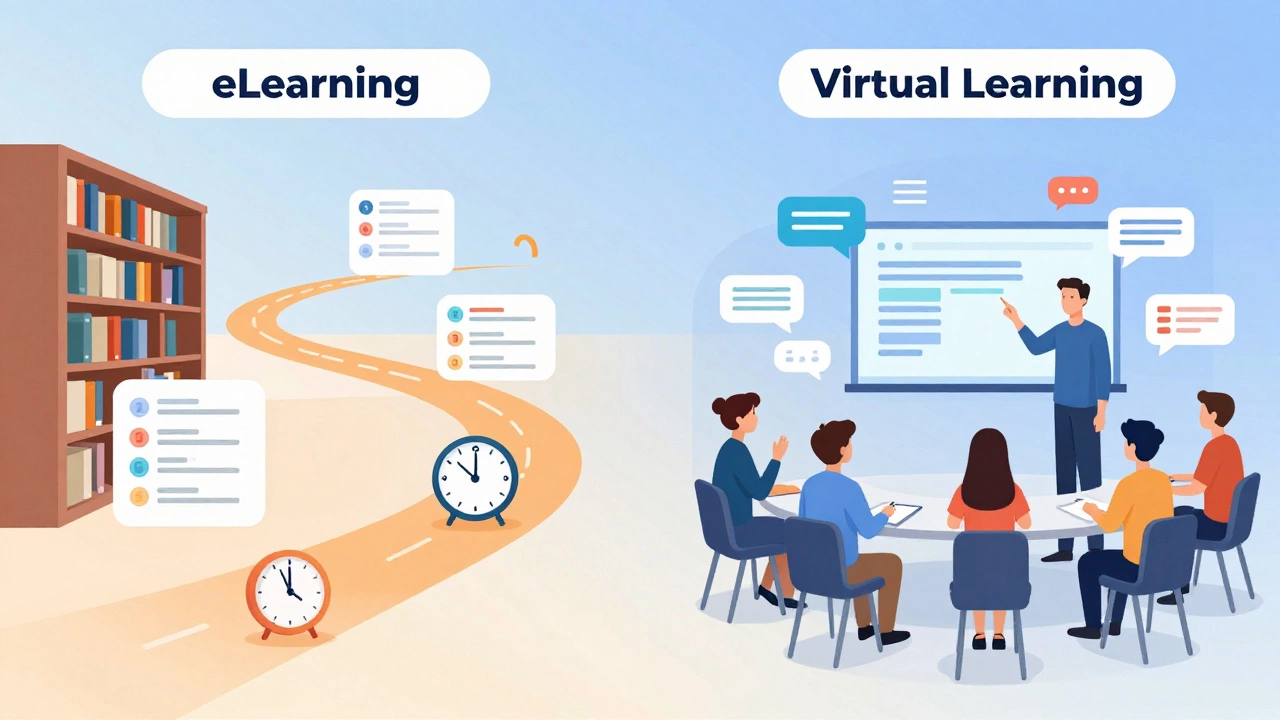
eLearning is any structured learning that happens through digital platforms, typically self-paced and delivered via software or websites. It doesn’t require real-time interaction. Think of platforms like Coursera, Udemy, or Khan Academy. You sign up, watch videos, take quizzes, and complete assignments on your own schedule. The content is usually pre-built, reusable, and designed for independent learners.
eLearning can include anything from short video tutorials to full degree programs. It’s common in corporate training, certification prep, and K-12 supplemental education. The key feature? No live instructor present during delivery. You learn when you want, where you want, and how fast you want.
What Is Virtual Learning?
Virtual learning is real-time, instructor-led education that happens online using video conferencing tools. It mimics a physical classroom but uses technology like Zoom, Google Meet, or Microsoft Teams to connect students and teachers in real time.
In virtual learning, you attend scheduled sessions. You raise your hand, ask questions, participate in discussions, and get immediate feedback. Teachers use whiteboards, screen sharing, breakout rooms, and live polls. It’s interactive, dynamic, and often follows a fixed timetable-just like a traditional school day, but online.
Virtual learning became widespread during the pandemic. Schools, colleges, and training centers shifted from in-person to live online classes. Even today, many universities offer hybrid programs where core courses are taught virtually.
Key Differences Between Virtual Learning and eLearning
Here’s how they compare side by side:
| Feature | Virtual Learning | eLearning |
|---|---|---|
| Interaction | Live, two-way communication | One-way or delayed feedback |
| Schedule | Fixed class times | Self-paced, anytime access |
| Instructor Presence | Always present during sessions | Not present during delivery |
| Tools Used | Zoom, Teams, Google Meet | Coursera, Udemy, LMS platforms |
| Assessment | Live quizzes, oral exams, real-time participation | Automated tests, submitted assignments |
| Best For | Structured programs, group learning, hands-on training | Flexibility, skill-building, self-motivated learners |
One big mistake people make is assuming all online learning is the same. A student taking a self-paced Python course on Udemy is doing eLearning. A student attending a live coding bootcamp via Zoom is doing virtual learning. One gives you freedom; the other gives you structure.
Why the Confusion Exists
The line between these two gets blurry because they often live under the same umbrella: online education. Many platforms offer both. For example, an LMS like Moodle might host pre-recorded lectures (eLearning) and also schedule live webinars (virtual learning). Schools might call their entire online program "eLearning" even when it includes live sessions.
Marketing language doesn’t help. Companies say "our virtual classroom" when they mean a video library. Educators say "eLearning module" when they’re referring to a live lecture. The terms are used loosely, even by experts.
But if you’re choosing a program, the difference matters. If you need accountability, peer interaction, or real-time feedback, virtual learning is better. If you’re juggling a job or have irregular hours, eLearning gives you control.
Which One Should You Choose?
Here’s how to decide:
- Choose virtual learning if you thrive on routine, need direct feedback, or are studying something hands-on like public speaking, lab work, or programming with live debugging.
- Choose eLearning if you’re self-disciplined, want to learn on your own time, or are building a skill like graphic design, financial modeling, or language basics.
Some learners combine both. For example, you might use eLearning to master theory and then join a weekly virtual session to practice with peers. That’s the most powerful approach.
What the Data Shows
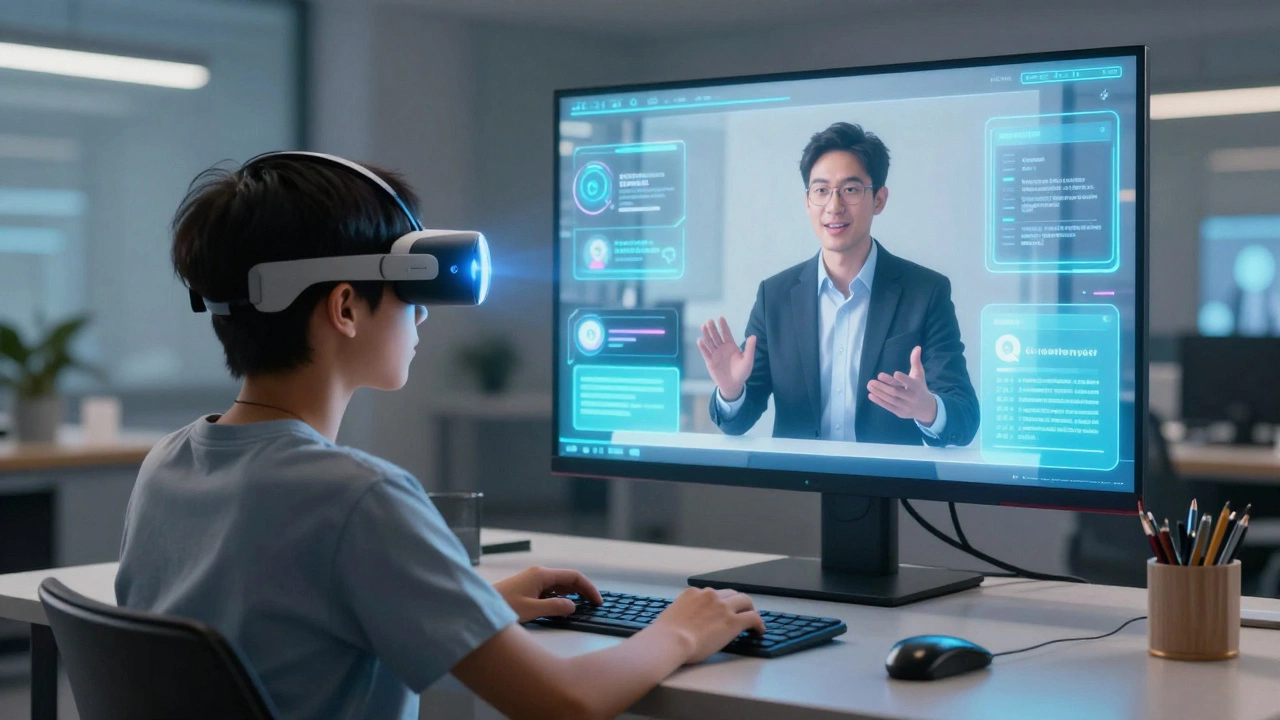
According to a 2025 global education report, 68% of adult learners prefer eLearning for skill upgrades because of flexibility. But 72% of high school and college students say they learn better with live, virtual classes-especially in STEM subjects. The reason? Engagement. When you see your teacher’s face, hear their voice, and can ask a question right away, retention goes up.
Companies are catching on too. Tech firms like Google and Microsoft use eLearning for onboarding basics, but require virtual sessions for team collaboration training. Why? Because teamwork can’t be learned from a video.
Future Trends
The future isn’t about choosing one over the other-it’s about blending them. AI-powered eLearning platforms are now adding live Q&A bots and scheduled virtual review sessions. Virtual classrooms are integrating pre-recorded modules so students can review lectures before live discussions.
By 2027, most hybrid programs will automatically adapt: if you fall behind on eLearning content, the system will invite you to a live help session. If you’re excelling, it might skip you ahead to a virtual advanced workshop.
The line between virtual and eLearning is fading-not because they’re the same, but because smart systems are using both where they work best.
Can virtual learning be recorded and used as eLearning later?
Yes, absolutely. Many institutions record live virtual sessions and upload them to their learning platforms for students to review. Once recorded and made available on-demand, those sessions become part of the eLearning library. But the original delivery was still virtual because it happened live with real-time interaction.
Is eLearning less effective than virtual learning?
Not necessarily. Effectiveness depends on the learner and the subject. eLearning works better for factual knowledge, repetitive skills, or self-paced mastery. Virtual learning wins for complex topics that require discussion, feedback, or emotional engagement-like leadership, counseling, or language practice. One isn’t better; they serve different needs.
Do employers care which one I used?
Most employers don’t distinguish unless the role requires specific interaction skills. But if you’re applying for a job that involves teamwork, training others, or client communication, having experience with live virtual sessions can be a plus. It shows you can engage in real-time environments, which many jobs still require.
Can I do both at the same time?
Yes, and many learners do. For example, you might use eLearning to study for a certification exam on your own time, then join a weekly virtual study group to quiz each other. This combo improves retention and builds community. It’s one of the most effective ways to learn online.
Are virtual learning platforms more expensive than eLearning platforms?
Often, yes. Virtual learning usually involves live instructors, scheduled sessions, and sometimes smaller class sizes-all of which cost more to run. eLearning platforms can automate delivery to thousands of students at once, so they’re typically cheaper or even free. But price doesn’t always reflect value; it depends on what you need.