Career Path Matcher
Answer these 5 questions to see which educational path aligns best with your personality and goals.
How do you prefer to learn new information?
What is your stance on debt and time investment?
How clear are you about your specific job role?
What kind of work environment appeals to you?
How do you feel about academic writing and exams?
Your Recommended Path
Calculating...
Best for: Those who value broad knowledge, critical thinking, and career flexibility. Ideal if you aren't sure of your specific job yet or aim for fields requiring advanced degrees (law, medicine, academia).
- Higher long-term salary ceiling potential.
- Stronger networking and social "college experience".
- Higher upfront cost and longer time to workforce entry.
Best for: Hands-on learners who want quick entry into the workforce with specific, high-demand skills. Ideal for trades, tech certifications, and healthcare support roles.
- Lower cost and faster return on investment.
- High job security due to skilled labor shortage.
- Less flexible for pivoting careers later without retraining.
You’re standing at a crossroads. On one side, there’s the traditional four-year college experience: dorm life, general education requirements, and a degree that opens many doors but takes years to unlock. On the other side, there’s vocational training, also known as trade school or technical education, which promises a faster route to specific jobs with hands-on skills. It’s not just about picking a major; it’s about choosing how you spend your next two to four years and, more importantly, how you start earning money afterward.
The confusion is real because both paths lead to successful careers, but they take very different roads. One focuses on broad theoretical knowledge and critical thinking over time. The other zeroes in on practical application and immediate employability. So, what actually separates them? Is one better than the other? Spoiler alert: No. But one might be better for you.
Understanding the Core Difference: Theory vs Practice
At its heart, the distinction between college and vocational training comes down to the type of knowledge you acquire. College education is typically academic and theoretical. You study subjects like history, literature, biology, or economics to understand systems, theories, and broad concepts. The goal is often to teach you how to think, rather than just what to do. A bachelor’s degree usually takes four years and includes general education courses alongside your major.
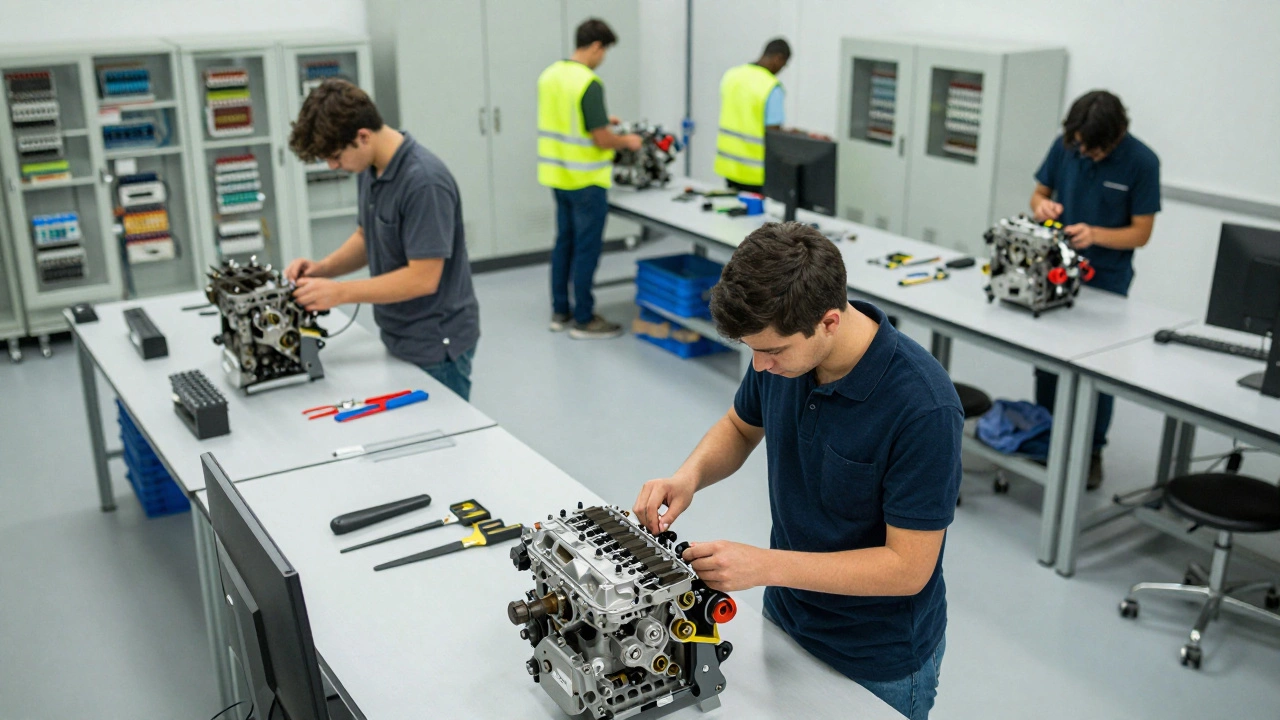
Vocational training, on the other hand, is strictly practical. It prepares you for a specific trade or job role. If you’re studying to be an electrician, you aren’t reading essays about the history of electricity. You’re wiring circuits, learning code compliance, and troubleshooting real-world problems from day one. This training often happens in community colleges, technical institutes, or apprenticeships and can last anywhere from six months to two years.
Think of it this way: College teaches you the "why" behind the world. Vocational training teaches you the "how" of doing a specific job. Neither is superior; they serve different purposes in the economy.
Time Investment and Cost Breakdown
Let’s talk numbers, because this is where most people get stuck. A standard four-year public university in the US costs an average of $25,000 to $35,000 per year for tuition and fees alone, according to recent data from the National Center for Education Statistics. That’s a significant chunk of change before you even buy textbooks or pay for housing.
Vocational programs are generally cheaper and shorter. Many certificate programs cost between $5,000 and $15,000 total and take less than two years to complete. For example, a medical assistant program might take nine months, while a welding certification could be done in six weeks to a year. This means you enter the workforce sooner, start earning sooner, and accumulate less debt.
| Feature | College (Bachelor's Degree) | Vocational Training |
|---|---|---|
| Average Duration | 4 Years | 6 Months - 2 Years |
| Average Cost (US) | $100,000+ (Total) | $5,000 - $20,000 (Total) |
| Focus | Theoretical, Broad Knowledge | Practical, Specific Skills |
| Entry Barrier | High (SAT/ACT, Essays) | Low (HS Diploma, Aptitude Test) |
| Career Flexibility | High (Pivotable) | Narrow (Specialized) |
Does this mean vocational training is always cheaper? Not necessarily. If you attend a private trade school with high fees, it can rival community college costs. However, the shorter timeline usually results in lower overall debt because you’re paying for fewer semesters.

Career Prospects and Earning Potential
Here’s the big question everyone asks: Who makes more money? The answer isn’t black and white. Traditionally, college graduates have earned a lifetime premium. According to the Bureau of Labor Statistics, workers with a bachelor’s degree earn significantly more median weekly wages than those with only a high school diploma.
But here’s the twist: Certain skilled trades now outpay many entry-level office jobs. Electricians, plumbers, HVAC technicians, and dental hygienists often command high hourly rates. An experienced electrician in a major city can easily make over $80,000 a year, sometimes exceeding the starting salary of a liberal arts graduate who hasn’t found their footing yet.
However, college degrees tend to offer higher ceiling potential. Management roles, executive positions, and specialized fields like law, medicine, or engineering almost exclusively require advanced degrees. If you want to climb into corporate leadership, a bachelor’s degree is often the minimum ticket to ride. Vocational careers, meanwhile, often cap out unless you move into business ownership or management yourself.
Job Security and Market Demand
AI and automation are changing the game. Jobs that involve repetitive cognitive tasks-like data entry or basic accounting-are increasingly vulnerable to software. These are often entry-level roles filled by college grads. Conversely, jobs requiring physical dexterity, complex problem-solving in unpredictable environments, and human interaction are harder to automate.
This is where vocational training shines. You can’t send a robot to fix a leaking pipe in a cramped basement or install solar panels on a steep roof. The demand for skilled tradespeople remains robust, especially as older workers retire. In contrast, some college majors face oversaturation. If you graduate with a degree in a field with few openings, you might find yourself underemployed, working a job that doesn’t require your degree.
Consider the healthcare sector. Both paths exist here. Becoming a surgeon requires years of college and med school. Becoming a nursing assistant or phlebotomist requires vocational certification. Both are essential, both are in demand, but the barriers to entry differ wildly.

Lifestyle and Learning Environment
Your daily life will look completely different depending on which path you choose. College is a social and intellectual journey. You’ll likely live on campus, join clubs, attend lectures, and write papers. It’s a period of personal growth, networking, and exposure to diverse ideas. The pace is slower, allowing time for exploration and internships.
Vocational training is intense and focused. There’s little room for distraction because you’re mastering a craft. Classes are smaller, often taught by industry veterans rather than academics. You spend hours in workshops, labs, or clinical settings. The vibe is professional from day one. You’re treated like a junior employee, not a student. This environment suits people who learn by doing and prefer clear, tangible outcomes over abstract debates.
If you thrive in structured, hands-on environments and hate writing long essays, vocational training might feel like a relief. If you love debating ideas, exploring new subjects, and value the "college experience," forcing yourself into a narrow trade school track might feel stifling.
Making the Right Choice for You
So, how do you decide? Don’t just follow your parents’ advice or peer pressure. Ask yourself these hard questions:
- Do I know exactly what job I want? If yes, vocational training gets you there faster. If no, college gives you time to explore.
- Am I good at hands-on work? If you enjoy fixing things, building, or working with tools, trades might be a natural fit.
- How much debt am I willing to take on? Can you afford four years of tuition, or does the financial risk scare you?
- What is my long-term career goal? Do you need a degree for licensing (like teaching or psychology)? Or is skill demonstration enough (like coding or graphic design)?
Remember, these paths aren’t mutually exclusive forever. Many people start with vocational training to earn money and gain skills, then return to college later with employer tuition assistance. Others go to college, realize they hate the theory, and switch to a trade. Your first choice isn’t your final destination.
Is vocational training considered "lesser" than college?
No. While societal stigma once favored college degrees, the modern job market values skills highly. Skilled tradespeople are in high demand and often earn competitive salaries. The perception is shifting as the cost of college rises and the shortage of tradespeople grows.
Can I transfer vocational credits to a college degree?
It depends on the institutions. Some community colleges offer associate degrees that combine vocational skills with general education, making transfer easier. Pure trade certificates may not transfer credit toward a bachelor's degree, so check articulation agreements beforehand if you plan to continue your education.
Which has better job placement rates?
Vocational programs often boast higher immediate job placement rates because they train specifically for open roles. Employers hire directly from these programs. College graduates may face a longer search period unless they have strong internships or networks, though their long-term career trajectory can be broader.
Do I need math skills for vocational training?
Yes, but usually applied math. Trades like electrical work, plumbing, and carpentry require geometry, algebra, and measurement skills. You don't need calculus, but you must be comfortable calculating angles, loads, and material quantities accurately.
Is online vocational training effective?
For hands-on trades like welding or nursing, online-only training is rare and often insufficient because physical practice is required. Hybrid models exist where theory is learned online and labs are done in person. For digital trades like web development or IT support, fully online vocational training is highly effective and common.