Vocational Training Cost & Time Calculator
When people talk about getting a job without a four-year degree, they’re often talking about vocational training. It’s not about theory. It’s not about essays or exams that test memory. It’s about learning how to actually do something that employers need done-right now.
Vocational training is hands-on, job-specific education
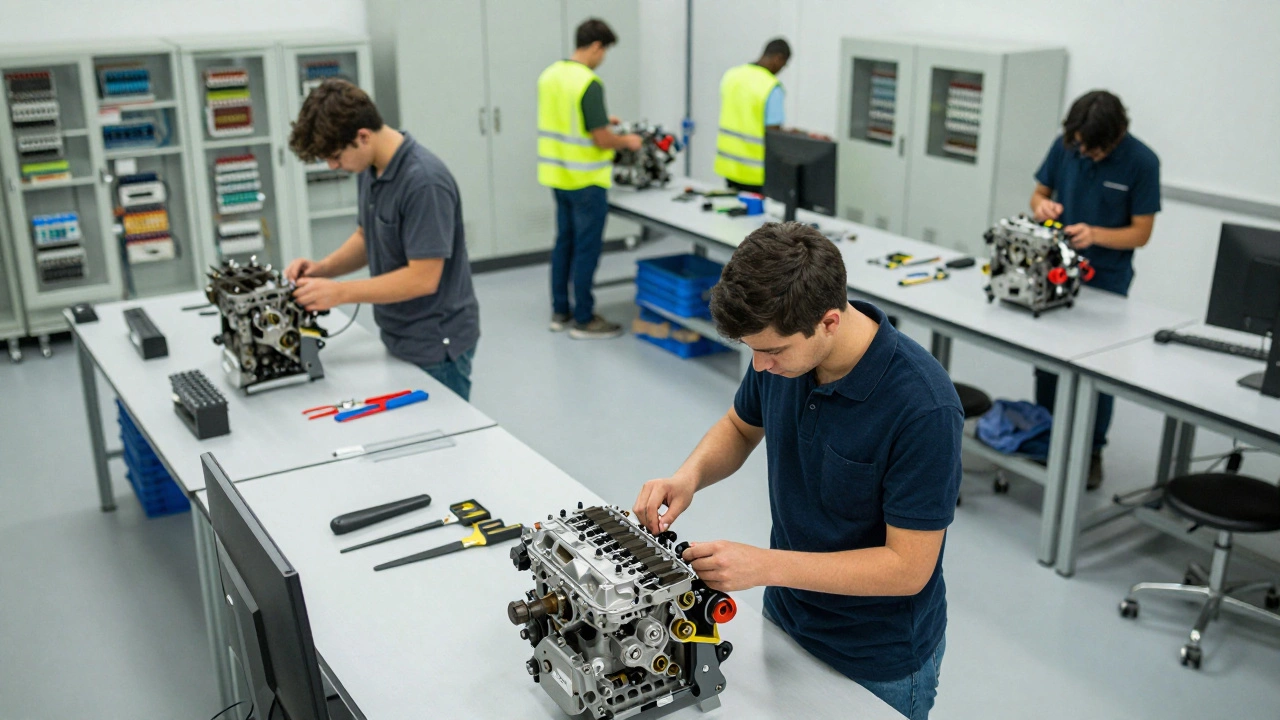
Think of it this way: if you’re learning to fix cars, install electrical wiring, or operate a CNC machine, you’re in vocational training. You’re not studying the history of automotive engineering-you’re learning how to diagnose a faulty fuel injector, tighten the right bolts, and test the system before handing the car back to the customer.
These programs are built around real workplace tasks. You don’t spend years reading textbooks. You spend weeks or months working on actual tools, in real environments, under the supervision of people who’ve done the job for decades. That’s why employers trust vocational graduates-they already know how to show up, use the equipment, and solve problems on the floor.
It’s not college. It’s not high school. It’s something else entirely.
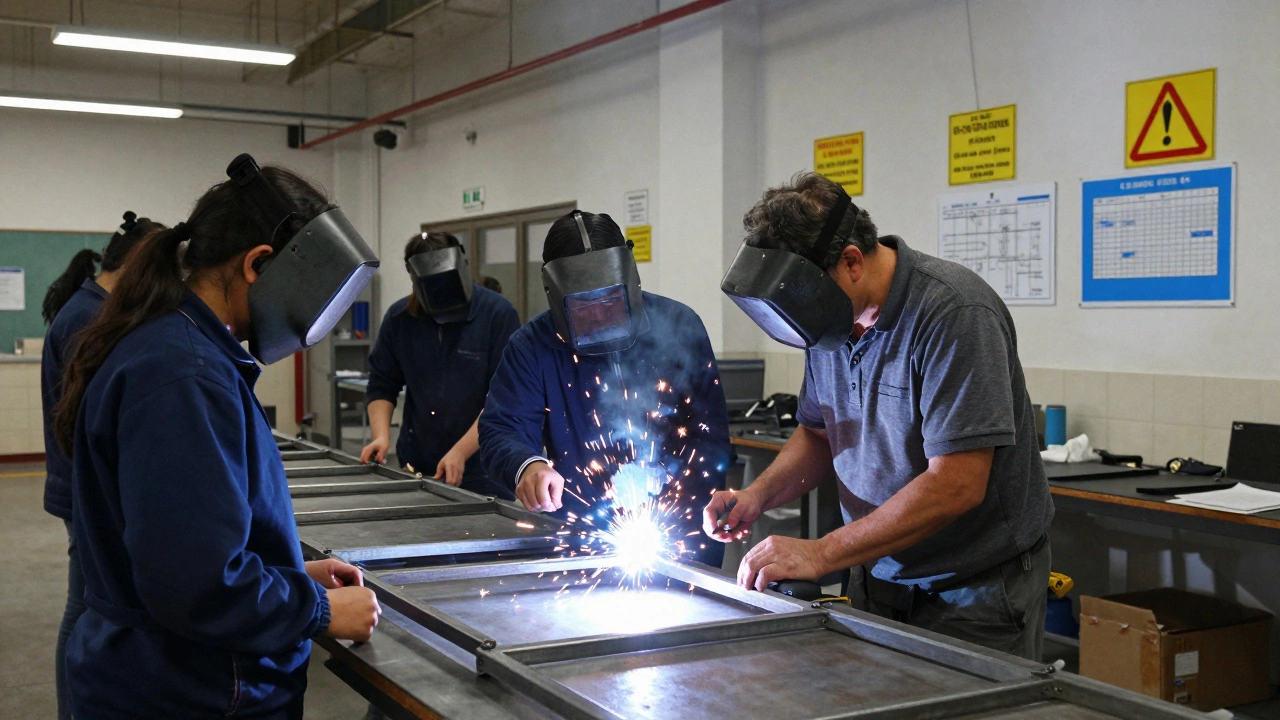
Vocational training sits between traditional education and on-the-job apprenticeships. Unlike university degrees, which often focus on broad knowledge and critical thinking, vocational programs drill down into one or two specific skills. A certificate in welding doesn’t require you to take philosophy or calculus. It requires you to pass a practical test where you weld three joints that meet industry standards.
And unlike high school, where you’re told what to learn, vocational training is usually chosen because you want a specific job. You’re not there because your parents pushed you. You’re there because you saw a welder earning $35 an hour and thought, ‘I can do that.’
Common examples of vocational training
Here’s what vocational training looks like in the real world:
- Electrical apprenticeships - Learning to wire homes and commercial buildings while working under a licensed electrician.
- Automotive technician programs - Fixing engines, transmissions, and hybrid systems using diagnostic tools and manufacturer specs.
- Certified nursing assistant (CNA) courses - Training to help patients with bathing, feeding, and mobility in hospitals or aged care facilities.
- Plumbing certifications - Installing pipes, fixing leaks, reading blueprints, and meeting local building codes.
- Commercial truck driving schools - Learning to handle big rigs, understand logbooks, and pass Department of Transportation exams.
- Cosmetology licenses - Cutting hair, coloring, skincare, and nail care with state-regulated practical exams.
- HVAC technician programs - Installing and repairing heating, ventilation, and air conditioning systems.
These aren’t online quizzes. You can’t just watch a YouTube video and get certified. You need to demonstrate skill in front of a licensed assessor. That’s what makes vocational training credible.
Who offers vocational training?
You’ll find these programs in several places:
- Technical and vocational colleges - Often called TAFEs in Australia, community colleges in the U.S., or polytechnics in Europe. These are public institutions focused on job-ready skills.
- Apprenticeship programs - Paid on-the-job training combined with classroom learning. You earn while you learn. Many are run by unions or industry groups.
- Private trade schools - Smaller, for-profit schools that specialize in one field, like welding or cosmetology. Quality varies, so check accreditation.
- Employer-sponsored training - Some companies train their own staff. For example, a hospital might run a CNA program for its support staff.
In Australia, TAFE institutes are the backbone of vocational education. They offer everything from certificate II in automotive mechanics to diploma-level courses in aged care. The government funds many of these programs because they fill real gaps in the workforce.
Why vocational training works
Here’s the truth most people don’t talk about: not everyone wants to be a manager, lawyer, or doctor. And that’s okay.
Vocational training gives people a direct path to stable, well-paying work without the debt of a university degree. A qualified electrician in Melbourne can earn between $70,000 and $110,000 a year. A skilled plumber can make even more, especially if they run their own business.
These jobs also don’t disappear when the economy slows. People still need their houses wired, their pipes fixed, their cars repaired, and their elderly relatives cared for. Automation hasn’t replaced these roles-it’s just changed the tools.
And unlike many white-collar jobs, vocational careers often come with clear progression: apprentice → licensed technician → supervisor → business owner. There’s a ladder, and you can start climbing it at 18.

What vocational training is NOT
Let’s clear up some confusion:
- It’s not online courses - Watching a course on Udemy about Excel or digital marketing doesn’t count as vocational training. Those are skill-building, not job-certified.
- It’s not internships - Interns learn by observing. Vocational trainees are expected to perform tasks to a standard.
- It’s not short workshops - A one-day seminar on resume writing isn’t vocational. You need at least 100+ hours of hands-on training.
- It’s not a degree - Vocational training leads to certificates, diplomas, or licenses-not bachelor’s or master’s degrees.
If you’re learning something that requires a license to practice (like electrical work or nursing), and you’re doing it in a lab or on-site under supervision, then you’re in vocational training.
How to pick the right vocational path
Not all vocational jobs are created equal. Here’s how to choose:
- Look at local job demand - Check government labor reports. In Melbourne, there’s a shortage of electricians, plumbers, and aged care workers. These are safe bets.
- Ask employers what they need - Call local trade businesses. Ask: ‘What kind of trainees do you hire?’ They’ll tell you exactly what skills matter.
- Check certification requirements - Some jobs require state or national licensing. Make sure the course you pick leads to that license.
- Consider the work environment - Do you want to work outside in the cold? In a noisy factory? Around people all day? Vocational training isn’t just about skills-it’s about lifestyle.
Don’t pick a trade because it sounds cool. Pick one because it fits your life and your city’s economy.
The future of vocational training
Vocational education isn’t fading-it’s evolving. New programs are popping up in areas like renewable energy installation, robotics maintenance, and cybersecurity for industrial systems. These aren’t just tech jobs-they’re hands-on, physical jobs that need trained people.
Employers are starting to value vocational training more than ever. A 2025 survey by the Australian Industry Group found that 72% of employers prefer hiring someone with a trade certificate over a university graduate with no practical experience for technical roles.
The stigma around vocational training is fading. More parents are encouraging their kids to consider apprenticeships. More high schools are partnering with TAFEs to let students start trade courses while still in Year 11 or 12.
This isn’t a backup plan anymore. It’s a smart, direct route to a good life.
Is vocational training the same as an apprenticeship?
Not exactly. An apprenticeship is a type of vocational training where you work for an employer while studying part-time. You get paid, and you earn a qualification over 3-4 years. Vocational training includes apprenticeships, but also includes full-time courses at TAFEs or trade schools where you might not be employed yet. All apprenticeships are vocational, but not all vocational training is an apprenticeship.
Can you go to university after vocational training?
Yes, absolutely. Many universities give credit for vocational qualifications. For example, completing a Diploma in Nursing can let you enter the second year of a Bachelor of Nursing. Some TAFE diplomas even count as ‘pathways’ into degrees. Vocational training doesn’t lock you out of higher education-it can actually speed it up.
Are vocational jobs lower status than office jobs?
No. That’s an old stereotype. Skilled tradespeople are essential. Electricians, plumbers, and welders are often in short supply and command high pay. Many run their own businesses, hire employees, and earn more than salaried office workers. Status comes from skill, reliability, and value-not the color of your shirt or whether you sit at a desk.
How long does vocational training take?
It varies. Short courses like first aid or food handling can take a week. Certificate III programs (like automotive or carpentry) usually take 1-2 years. Apprenticeships typically last 3-4 years. Some advanced diplomas, like in allied health or IT support, can take up to 2 years full-time. The length depends on the job, not your ability.
Do you need good grades to get into vocational training?
Not usually. Most vocational programs don’t require high ATAR scores or university entrance ranks. You might need to pass a basic literacy and numeracy test, or complete a pre-course interview. What matters more is your attitude, willingness to work hard, and ability to follow instructions. Many people who struggled in school thrive in vocational settings because the learning is practical, not theoretical.